










For decades, the name Bert Kreischer was synonymous with a specific, high-octane brand of chaos. As the real-life inspiration for the film National Lampoon’s Van Wilder and the architect of the legendary "Machine" story, Kreischer built a comedic empire on the back of his unfiltered, shirts-off, party-hard persona. His brand was the embodiment of the “everyman” who refused to grow up, a lifestyle that kept his comedy razor-sharp but left his physical health in a precarious state.
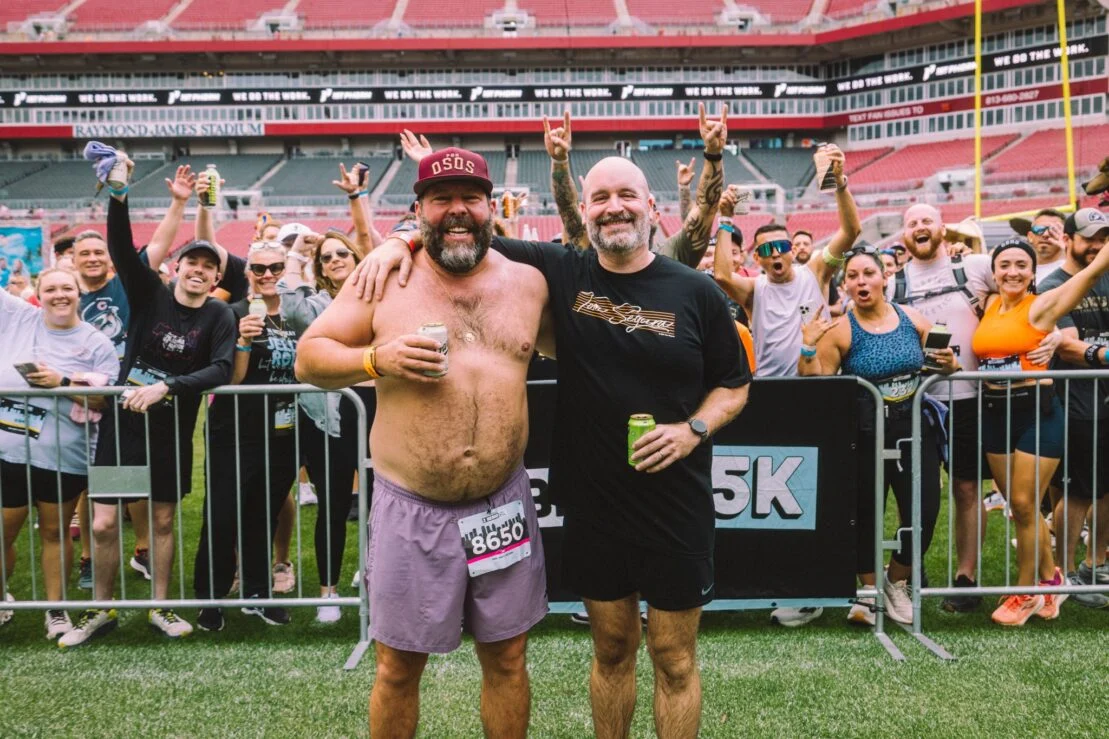
However, as he approaches this year’s installment of the 2 Bears 5K—the massive community fitness event he hosts alongside fellow comedy titan Tom Segura—it is clear that the "Machine" has undergone a fundamental, structural upgrade. Behind the trademark laughter and self-deprecating humor lies a man who has traded the late-night benders for a 10-hour sleep cycle, a 50-pound weight loss, and a newfound commitment to longevity.
The Genesis of the 2 Bears 5K: A Happy Accident
The 2 Bears 5K did not begin as a grand, calculated health crusade. In true Kreischer fashion, it was born from the absurdity of podcast banter. "To be honest with you, the funniest part is we had nothing to talk about that day," Kreischer recalls with a laugh. "Tom decided to run a 5K back in his hometown, and I’d already done marathons, Tough Mudders, you name it. It just started as us talking about our own fitness journeys."
What began as a fleeting conversation between two friends quickly ballooned into a cultural phenomenon. The event morphed into a full-scale community gathering, blending the irreverent spirit of stand-up comedy with the discipline of endurance training. But for Kreischer and Segura, the joke eventually gave way to a sobering realization: their audience was aging alongside them.
"Tom and I were getting healthier and we wanted our fans to get healthier too," Kreischer explains. "Your fans kind of look like you, and our fans were all big guys with beards married to chicks they didn’t deserve. We thought, ‘We need these guys healthy so we still have fans in our 60s.’"
Chronology of a Lifestyle Overhaul
The transition from party animal to fitness enthusiast wasn’t a linear progression. For years, Kreischer managed a grueling touring schedule while maintaining a lifestyle that would exhaust a person half his age. The pivot point came not from a desire for aesthetic vanity, but from a terrifying medical reality.
Following a series of health complications—specifically, the discovery of dangerous blood clots in his lungs and legs—Kreischer was faced with an ultimatum from his own body. It was a wake-up call that demanded a complete systemic reset.
- The Crisis: The diagnosis of blood clots served as the primary catalyst, forcing a total re-evaluation of his physiological limits.
- The Intervention: Kreischer began working with medical professionals to incorporate modern health interventions, including Mounjaro and hormone optimization through testosterone replacement therapy.
- The Foundation: He established a rigid, albeit flexible, routine focused on recovery, hydration, and consistent movement.
- The Current State: Today, he is 50 pounds lighter, running faster than he ever has, and approaching the 2 Bears 5K with a mindset that is entirely detached from the alcohol-fueled haze of his past.
Supporting Data: The Science of the "New" Machine
Kreischer’s transformation is backed by a shift in daily metrics that he monitors with newfound intensity. While he isn’t obsessing over microscopic data points, his overall volume of activity has shifted dramatically.
Flexibility as Structure
On the road, where the logistics of touring make consistent gym access a challenge, Kreischer has adopted a philosophy of "flexible consistency." He abandons the idea of a perfect, periodized training split in favor of what he calls "functional maintenance."
"Most days it’s something quick," he says. "I’ll run, hit 30 minutes on the StairMaster, or get a lift in if there’s a gym. It’s not glamorous, but it works."
When he returns home, the intensity spikes. "That’s when I really go in," he notes. "I’ll do an hour on the court, then an hour lifting. Five days a week." This dual-track approach—balancing the demands of travel with the high-intensity structure of home life—has allowed him to sustain his weight loss while preventing the overtraining injuries that often plague middle-aged athletes.
The Sobriety Variable
Perhaps the most significant change is his decision to enter this year’s 5K completely sober. "Every other 2 Bears 5K I’d been drinking right up to it," he admits. "This is the first one I won’t."
The impact on his recovery has been profound. By eliminating alcohol, he has seen a marked improvement in his REM sleep, resting heart rate, and overall inflammatory markers. He notes that drinking 160 ounces of water a day and securing 10 hours of sleep has replaced the "adrenaline and humor" he once relied on to survive the race.
Official Perspectives: The Philosophy of Movement
Kreischer’s perspective on fitness is refreshingly unpretentious. He views the act of running not as a pursuit of athletic perfection, but as a mental test of endurance and self-worth. When asked about his competitive edge against Segura, his bravado returns.
"Tom is the most likely to start strong and dramatically fall off," Kreischer jokes. "Running is entirely mental. Mentally, I am superior."
However, his deeper takeaway for his fans remains consistent: the goal is participation. "Our goal is just to get people off the couch," he says. "Get people outside. Get people in the sunshine."
He acknowledges that even with his 50-pound weight loss and sharpened discipline, he is still a work in progress. His current "kryptonite" is a classic one: the soft-batch cookie. His detailed, nostalgic breakdown of the 1983 soft-batch revolution reveals that while the "Machine" may be cleaner and faster, his personality remains deeply rooted in the relatable, gluttonous joys that endeared him to his audience in the first place.
The Broader Implications: Redefining Middle-Aged Masculinity
The transformation of Bert Kreischer is significant because it challenges the archetype of the "perpetual teenager" in comedy. For a long time, the industry rewarded comedians for being broken, exhausted, and self-destructive. By openly discussing his use of weight-loss medication, hormone therapy, and his struggles with sobriety, Kreischer is normalizing a more nuanced conversation about male health.
He is not presenting himself as a fitness influencer or a bio-hacking guru. Instead, he is presenting himself as a man who realized that his comedy career—and his life—required a better vessel. The 50-pound weight loss is merely a secondary byproduct of a primary goal: longevity.
As he prepares for the 2 Bears 5K, his vision for the finish line is simple. "The first thing I’m doing is looking for my wife," he says. "I want to give her a hug and thank her for all the years of support."
And after the finish line? The man who spent years fueled by excess will likely celebrate with a simple cigar—a small, measured indulgence in a life that is now defined by the thrill of what he can accomplish when he is fully present.
The "Machine" hasn’t stopped; it has simply been recalibrated. For the millions of fans who have followed his journey, the message is clear: it is never too late to start, the intensity doesn’t have to be perfect, and the most important race isn’t the one against your friends—it’s the one against your own limitations.