










The landscape of American mental health policy has long been dominated by a bipartisan consensus favoring the expansion of involuntary treatment. From the "broken windows" policing of the 1990s to modern-day initiatives aimed at clearing the unhoused from urban centers, the use of state-sanctioned force in psychiatry has remained a largely unquestioned tool of social management. However, the upcoming midterm elections for California’s 3rd Congressional District may signal a seismic shift in this paradigm.
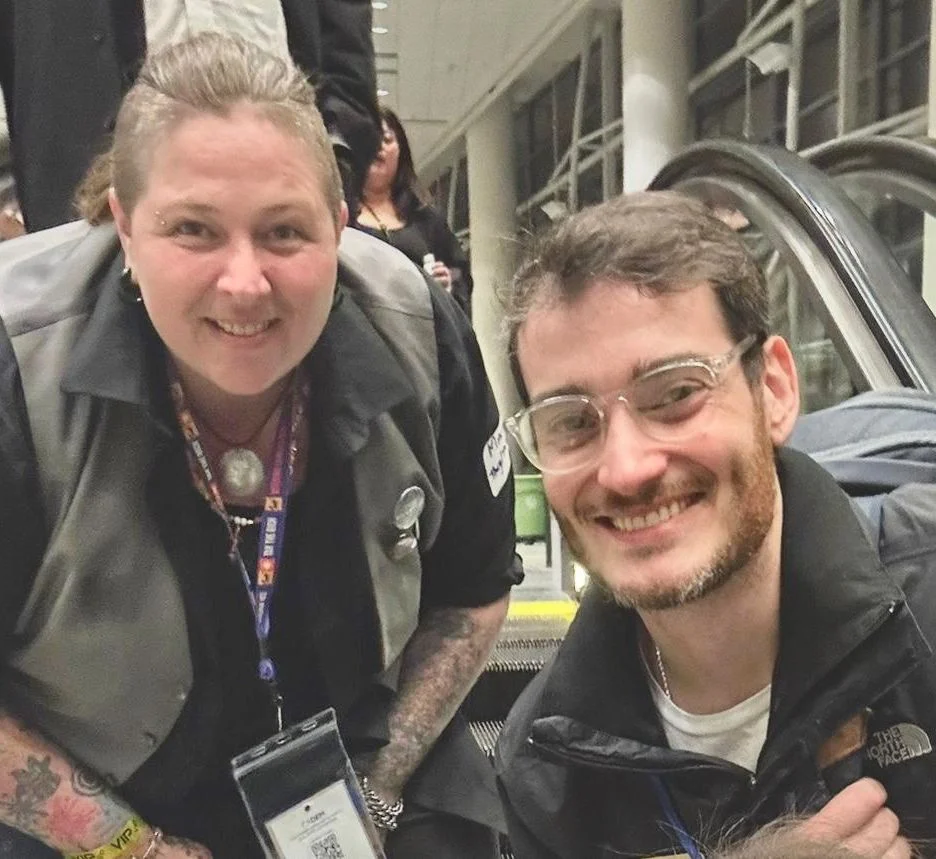
Chris Bennett, a U.S. Army veteran and disability rights activist, is mounting a campaign that does more than just critique the status quo; it calls for its total dismantlement. By formally adopting the "Abolish Forced Psychiatry" platform, Bennett has become the first federal candidate in modern history to align himself fully with the psychiatric survivor movement. His candidacy poses a provocative question: Can a policy of human rights, evidence-based voluntary care, and absolute bodily autonomy survive the rigors of a Washington establishment fueled by corporate interests and carceral logic?
Main Facts: A Platform of Bodily Autonomy and Human Rights
Chris Bennett’s campaign for the House of Representatives is built on a foundation of "mad liberation"—a term used by activists to describe the struggle for the rights of those labeled with psychiatric disabilities. Unlike traditional progressives who argue for the reduction of involuntary commitment, Bennett’s platform is uncompromising in its call for abolition.
The core of his policy is the endorsement of the "Abolish Forced Psychiatry" initiative. This international manifesto demands the end of all involuntary psychiatric interventions, including forced drugging, forced hospitalizations, and coercive "outpatient commitment" programs. Bennett’s platform argues that these practices are not medical necessities but are, in fact, violations of fundamental human rights that disproportionately target the marginalized.
Key pillars of Bennett’s platform include:
- Abolition of Coercion: Ending the legal framework that allows individuals to be detained and treated against their will based on psychiatric diagnostic labeling.
- Voluntary Support Systems: Diverting funding from carceral psychiatric wards toward community-led mutual aid, peer-run respite centers, and voluntary crisis sanctuaries.
- Ratification of the CRPD: Pushing for the U.S. to finally ratify the United Nations Convention on the Rights of Persons with Disabilities (CRPD), which prohibits forced treatment.
- Addressing Social Determinants: Recognizing that "mental health crises" are often the result of poverty, housing insecurity, and systemic exclusion, Bennett advocates for a living wage, universal healthcare, and affordable housing as the primary "treatments" for psychological distress.
Chronology: From the Battlefield to the Ballot Box
Bennett’s journey to this radical platform was not instantaneous but was forged through a decade of disillusionment and grassroots organizing.
The Awakening (2016)
Bennett, a veteran living with a disability, credits the 2016 Bernie Sanders presidential campaign as his entry point into political consciousness. Sanders’ critique of the "billionaire class" prompted Bennett to investigate the intersection of U.S. foreign policy and domestic neglect. "I had a realization that patriotism is about standing up for what’s right, even if that goes against U.S. government policy," Bennett notes. This period marked his transition from a disillusioned veteran to a dedicated activist focusing on basic human needs.
The "Red Line" of State Abduction (2017–2020)
The catalyst for Bennett’s move into electoral politics was the rise of aggressive immigration enforcement. Seeing ICE agents "snatch people off the street" served as a "red line" for Bennett. Drawing parallels to historical fascist regimes, he concluded that the state’s willingness to disappear its most vulnerable citizens was a precursor to broader authoritarianism. This fear was compounded when he observed the suppression of protesters, leading him to conclude that the existing corporate-controlled Democratic leadership was failing to provide an adequate defense against these systemic threats.
The Sacramento Encounter and Proposition 50 (2025–2026)
Following the passage of California’s Proposition 50, which redrew congressional maps, Bennett saw an opening in District 3. During a mutual aid shift in Sacramento with his campaign manager, Mack Wilson, Bennett encountered a man in dire need of medical help for a physical injury. The man refused to go to the hospital, stating, "They just say I’m crazy, lock me up, and then treat me like an animal."
This encounter served as Bennett’s "aha" moment. He realized that the fear of psychiatric incarceration was a primary barrier preventing people from seeking any form of help. Shortly thereafter, Bennett met with organizers from the Abolish Forced Psychiatry initiative and officially integrated their demands into his campaign.
Supporting Data: The Statistics of Coercion
The urgency of Bennett’s platform is underscored by data highlighting the rise of psychiatric detention in the United States. According to research cited by investigative journalist Rob Wipond, author of Your Consent Is Not Required, psychiatric detentions have seen a marked increase over the last two decades, even as general hospital stays have decreased.

- Rise in Detentions: In many states, involuntary commitment rates have outpaced population growth, often driven by "preventative" laws that allow detention based on a perceived risk of future deterioration rather than immediate danger.
- The "Pro-Force" Lobby: Groups like the Treatment Advocacy Center (TAC) and the National Alliance on Mental Illness (NAMI) have historically lobbied for the expansion of Assisted Outpatient Treatment (AOT) laws. Bennett’s platform stands in direct opposition to these well-funded organizations, which he characterizes as part of a "pro-force" industry.
- Economic Interests: The private psychiatric hospital industry is a multi-billion dollar sector. Facilities owned by private equity firms often rely on high occupancy rates, creating a financial incentive for the "revolving door" of involuntary commitment.
Leah Ida Harris, a prominent psychiatric survivor and journalist, points out that even Bernie Sanders’ 2020 platform only went as far as opposing the expansion of involuntary treatment. Bennett’s call for total abolition represents a leap beyond the most progressive stances previously recorded in American federal politics.
Official Responses and Institutional Resistance
Bennett’s candidacy has sent ripples through both activist circles and the established political order. However, the path to legislative change is fraught with institutional hurdles.
The Democratic Socialists of America (DSA) Strategy
As a member of the DSA, Bennett utilizes a "movement-based" electoral strategy. Unlike traditional candidates who prioritize party loyalty, the DSA aims to hold representatives accountable to a grassroots base. This was recently demonstrated when the DSA withdrew its endorsement of Alexandria Ocasio-Cortez over specific policy disagreements. Bennett’s campaign manager, Mack Wilson, emphasizes that their goal is "long-term liberation," not just a seat in Congress.
Expert Skepticism and Pragmatism
While activists celebrate Bennett’s platform, some experts warn of the immense pressure he will face. Rob Wipond notes that even when similar policies were passed by the Green Party in British Columbia, they were abandoned once representatives gained actual power. "The whole system of forced psychiatry is so deeply corrupted by unchecked powers," Wipond says. He suggests that while abolition is the goal, Bennett might find more immediate success in pushing for federal oversight, better tracking of commitment rates, and funding for non-coercive housing.
The Global Context
Leah Ida Harris highlights the "diametrically opposite direction" the U.S. is moving in compared to international human rights standards. While the UN has called for an end to coercive psychiatry, U.S. policy—under both Democratic and Republican administrations—has trended toward "resurgent eugenics" and increased social control. Bennett’s commitment to the CRPD is seen as a radical departure from the American political norm.
Implications: A New Frontier for the Mad Movement
If Chris Bennett wins the primary and goes on to represent California’s 3rd District, the implications for federal policy would be profound. His candidacy represents the first time the "Mad Movement" has had a direct voice in the halls of power.
Shifting the "Overton Window"
Even if Bennett does not achieve immediate abolition, his presence on the national stage shifts the "Overton Window"—the range of policies considered politically acceptable. By framing forced psychiatry as a human rights violation rather than a medical necessity, he forces his opponents to defend the use of state violence in healthcare.
Countering Private Interests
A Bennett victory would serve as a challenge to the private psychiatric industry and its lobbyists. By refusing "dark money" and corporate donations, Bennett positions himself to investigate the financial ties between private equity firms and the expansion of coercive mental health laws.
The Risk of Incrementalism
The greatest challenge for Bennett’s movement is the temptation of "crumbs." Activists often warn that minor reforms can be used to pacify movements while leaving the underlying structures of coercion intact. Bennett’s strategy of combining electoral politics with "street-level" mutual aid is designed to prevent this co-option, ensuring that the movement remains rooted in the lived experiences of those most harmed by the system.
In conclusion, Chris Bennett is not merely running for Congress; he is running against a centuries-old institution of social control. Whether or not he reaches Washington, his campaign has already succeeded in bringing a marginalized struggle into the light of the national political discourse. For the psychiatric survivor movement, Bennett represents more than a candidate—he represents a step toward a future where "help" is never synonymous with "handcuffs."