For decades, the concept of "glute training" was virtually non-existent in the iron-pumping lexicon of bodybuilding. If you walked into a gym in the 1980s or 90s, the training philosophy was monolithic: you trained "legs." Whether you were a male bodybuilder chasing massive quads or a female athlete looking to improve your physique, the lower body was treated as a single, indivisible entity.
You trained your quadriceps, hamstrings, and calves in a singular session, or perhaps split them into two sessions—quads one day, hamstrings the next—but the glutes were merely the silent, passive partners in these movements. They were a byproduct of heavy squats and leg presses, not a primary target. That has changed. Today, the gluteal muscles have become the centerpiece of modern aesthetics, fueled by social media trends and the emergence of the Wellness division in professional bodybuilding.
The Chronology of a Training Shift
The transition from general leg training to the hyper-focused isolation of the posterior chain did not happen overnight. It was a cultural and athletic pivot.
The Era of "Leg Day" (Pre-2000s)
In the classic bodybuilding era, the glutes were relegated to the background. Exercises like the barbell squat, the hack squat, and the leg press were the kings of the gym. If you had a strong, well-developed lower body, the glutes were assumed to be part of the package. There was no such thing as a "glute-focused" day. The focus was on mass, symmetry, and leg separation.
The Rise of the "Big Booty" Aesthetic (2000s–2015)
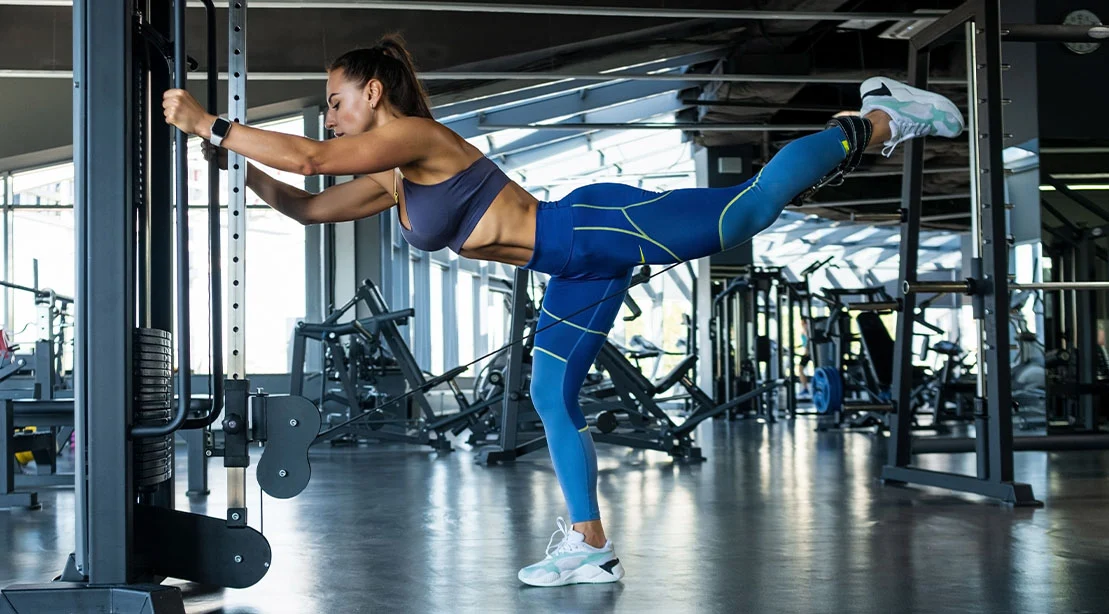
As the cultural standard shifted toward a more pronounced posterior, the gym floor began to reflect this change. The demand for specific, targeted glute exercises exploded. This is when the "cable kickback" emerged as the primary tool of the trade. Gym owners from that era often recall the ankle cuff as the most stolen piece of equipment in the facility; they were being ordered in bulk just to keep up with the demand of members trying to isolate their glutes.
The Modern Specialized Era (2015–Present)
With the formal adoption of the Wellness division in the IFBB Pro League, the intensity of glute training reached a new plateau. We now see athletes training their glutes upwards of three to six times per week, often incorporating a massive volume of specialized movements. The "leg day" of the past has been largely replaced or supplemented by "glute days" that prioritize hypertrophy of the gluteus maximus, medius, and minimus.
The Cable Kickback: A Controversial Catalyst
The cable kickback is, perhaps, the most contentious exercise in the modern gym. To the hardcore bodybuilder of the old school, it is often dismissed as a "girl exercise," a low-weight movement for those who haven’t yet learned the value of heavy compound lifting.
However, this dismissive attitude ignores a fundamental tenet of kinesiology: there is no such thing as a useless exercise. The utility of a movement is dictated by its execution, not its reputation. The cable kickback, when performed with perfect biomechanical intent, can provide an isolated contraction that is difficult to replicate with heavy bar work.
The Mechanics of the Movement
The "correct" way to perform a cable kickback is deceptively simple. A trainee clips into a low cable, stands square to the tower, stabilizes their torso, and pivots at the hip to drive the heel toward the ceiling, aiming for a peak contraction at the top. The reality, however, is that "feeling" the glute activation is a skill that can take years to master. Without the requisite mind-muscle connection, the trainee often compensates with the lower back or hamstrings, rendering the movement ineffective for the glutes themselves.
Supporting Data: Efficiency vs. Isolation
In the professional training world, the debate between isolation movements (like the kickback) and compound movements (like the squat) often comes down to one precious resource: time.
Most gym-goers have roughly 60 minutes to dedicate to their training. For a beginner or even an intermediate lifter, every minute spent on a technically demanding isolation movement is a minute not spent on a high-yield compound exercise.
The "Bang for Your Buck" Metric
When analyzing the efficacy of a workout, we must look at the potential for an "adaptive response." Compound movements—such as Smith machine squats, hack squats, and lunges—recruit a greater total number of muscle fibers. For the individual looking to build a "bubble butt," the primary objective should be to build a foundation.
- The Foundation: You cannot sculpt what isn’t there. If you lack the base musculature, isolation exercises are essentially fine-tuning an empty space.
- The Progression: As the glute muscles grow through heavy, compound stimulus, the need for technical, high-fatigue isolation work often diminishes.
- The Risk-Reward Ratio: Because the cable kickback requires such a high level of technical precision to avoid lower-back strain, it carries a higher "opportunity cost" for novices who haven’t yet mastered the basic, more stable compound lifts.
Implications for the Modern Athlete
The current fitness landscape suggests that while the inclusion of glute-specific isolation is great for "improving the scenery" and providing variety, it should not supersede the fundamentals.
Professional Guidance
Professional coaches, including those in the IFBB Pro League, emphasize that the best glute builders are often the movements that allow for progressive overload. While an athlete might perform a cable kickback to finish off a session, their strength gains are almost exclusively derived from:
- Heavy Sumo Squats: For depth and glute engagement.
- Reverse Lunges: For unilateral stability and recruitment.
- Leg Press Variations: By altering foot placement, athletes can bias the glutes without the extreme technical risk of a cable kickback.
The Verdict on Technique
If you are struggling to "feel" your glutes during a squat or a lunge, it is usually not because you aren’t doing enough kickbacks—it is because your motor pattern for hip extension is underdeveloped. The solution is not to add more, but to do the basics better.
The "mind-muscle connection" that many claim is the secret to the cable kickback is not a magical state of being; it is a neurological adaptation to thousands of repetitions performed with perfect form. Until you have built that base through consistent, heavy, compound work, you are likely wasting your time with the ankle cuffs.
Conclusion: Building the "Marble Block"
If your goal is a large, well-defined, and powerful gluteal complex, view your body as a sculptor views a block of marble. You cannot carve a masterpiece if you have no material to work with. The "big round bubble butt" is the result of years of heavy, intense, and intelligently programmed compound training.
The cable kickback and its ilk are the chisels used for the fine detail work—the finishing touches applied only after the heavy lifting has been done. If you are a novice or even an intermediate lifter, steer your focus toward the heavy, strict compound movements that have stood the test of time. Master the squat, perfect the lunge, and push your limits on the leg press. Once you have built the foundation, the rest of the puzzle—including the finer, more technical movements—will fall into place.
Ultimately, the most "effective" exercise is the one you can perform with consistent intensity and perfect form. Whether you are a hardcore bodybuilder or a gym enthusiast chasing a trend, never lose sight of the fact that hypertrophy is a response to tension. If you provide that tension through safe, proven, and effective compound movements, you will build the physique you desire—with or without the cable machine.