









Human blood vessels are masterpieces of biological engineering. They are not mere passive conduits; they are dynamic, branching networks that constantly bend, narrow, and widen to regulate systemic pressure and flow. For decades, however, the scientific community’s ability to model these structures in a laboratory setting has been fundamentally flawed. Traditional research often relied on simplified, straight-tube models that failed to capture the intricate geometry where vascular diseases—such as aneurysms and stenosis—actually take root.
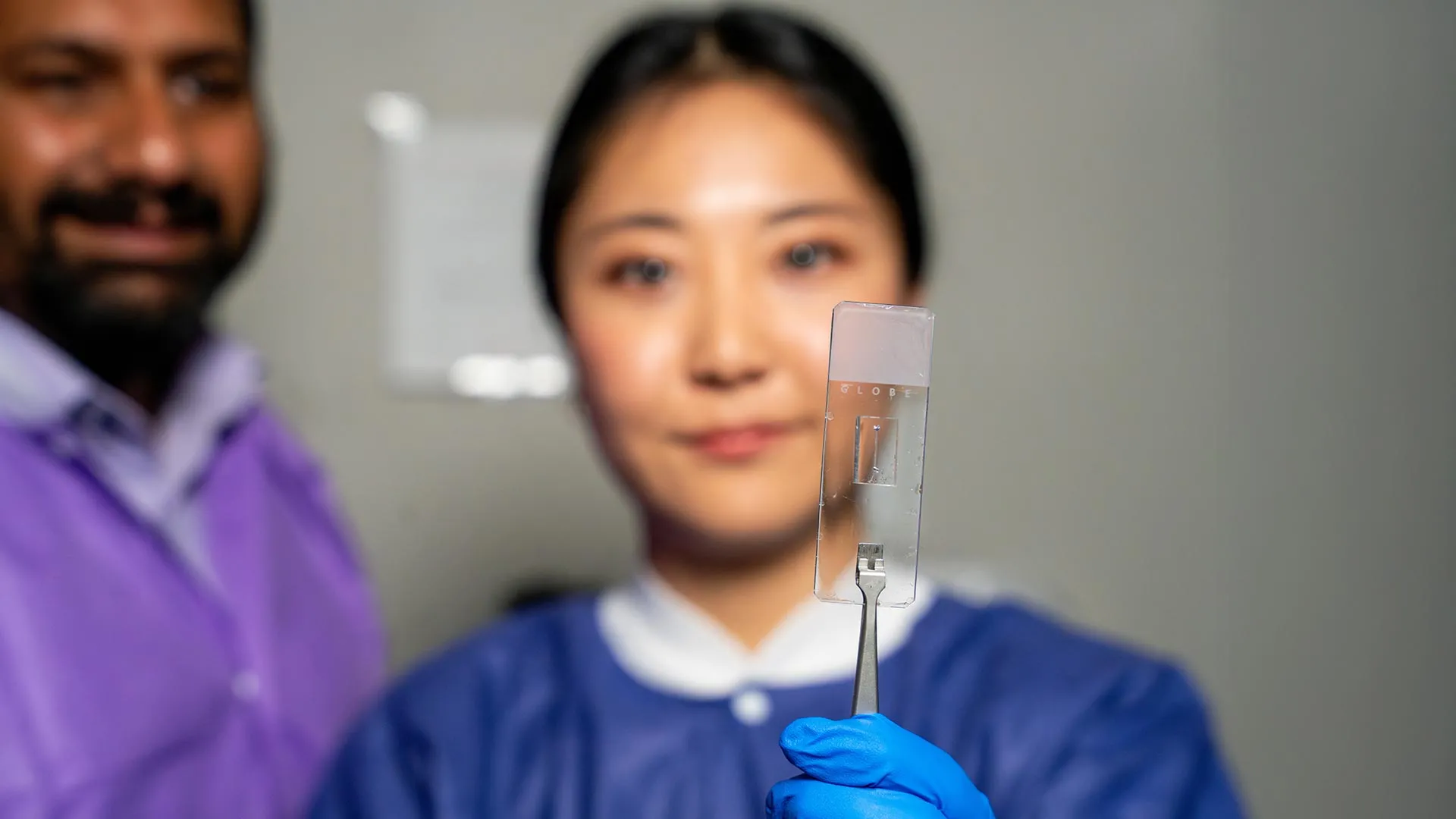
Today, a breakthrough from the Department of Biomedical Engineering at Texas A&M University is changing that narrative. By pioneering a customizable "vessel-chip" system, researchers are moving beyond the limitations of simplistic models, creating a high-fidelity platform that promises to revolutionize drug testing and our fundamental understanding of cardiovascular health.
The Limitation of Simplicity: Why Geometry Matters
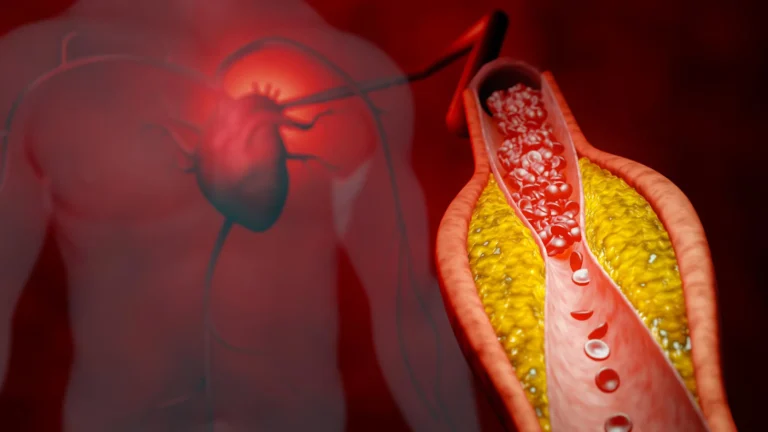
In the landscape of vascular biology, the physical shape of a vessel dictates its function. When a vessel branches or narrows, it creates complex patterns of "shear stress"—the friction force exerted by blood flow against the vessel wall. These specific mechanical environments are the breeding grounds for atherosclerosis, blood clots, and arterial damage.
For years, laboratory-grown models treated vessels as uniform, straight pipes. While these models provided a baseline for data, they missed the most critical variables: the structural irregularities where disease occurs. "There are branched vessels, or aneurysms that have sudden expansion, and then stenosis that restricts the vessel," explains Jennifer Lee, a master’s student in biomedical engineering who spearheaded the new design. "All these different types of vessels cause the blood flow pattern to be significantly changed, and the inside of the blood vessel is affected by the level of shear stress caused by these flow patterns. That’s what we wanted to model."
Chronology of an Innovation
The journey to the vessel-chip began years ago in the Bioinspired Translational Microsystems Laboratory, led by Dr. Abhishek Jain, an associate professor and the Barbara and Ralph Cox ’53 faculty fellow.
- The Foundation: The lab’s initial foray into microfluidics involved the development of a straight vessel-chip, pioneered by former graduate student Dr. Tanmay Mathur. This proof-of-concept established that living cells could be cultured within a micro-scale environment to simulate blood flow.
- The Evolution: Building on Mathur’s groundwork, Jennifer Lee joined the lab as an undergraduate honors student. Her task was to evolve the static, straight-line design into a dynamic, customizable platform capable of mimicking the diverse morphologies of the human circulatory system.
- The Validation: Through years of iterative testing, Lee refined the fabrication process, ensuring the chips could withstand the biological and mechanical rigors of long-term flow studies.
- The Recognition: This work has culminated in a high-profile publication in Lab on a Chip, where Lee’s research has been selected for the cover of the journal’s May 2025 issue.
Advancing the "Living" Chip Architecture
The term "vessel-chip" refers to microfluidic devices that function as miniature, organ-on-a-chip replicas of human physiology. Unlike animal models, which are often costly, ethically complex, and physiologically distinct from humans, these chips use human cells to provide a more accurate representation of how a drug or a disease might behave in a patient.
The current iteration of Lee’s device is lined with endothelial cells—the critical layer that interfaces directly with blood. By controlling the geometry of the chip’s micro-channels, researchers can now induce specific, localized shear stress profiles. This allows for the study of how cells "sense" the physical architecture of their environment.
"We can now start learning about vascular disease in ways we’ve never been able to before," Dr. Jain notes. "Not only can you make these structures complex, you can put actual cellular and tissue material inside them and make them living. These are the sites where vascular diseases tend to develop, so understanding them is critical."
From Student Project to Scientific Milestone
The success of the vessel-chip is as much a testament to the pedagogy at Texas A&M as it is to the engineering itself. Jennifer Lee’s trajectory from a novice undergraduate to a published researcher serves as a blueprint for the university’s fast-track Master of Science program.
"Jennifer demonstrated perseverance, curiosity, and creativity and started taking up research projects very quickly," Dr. Jain says. "Our fast-track program enables students like Jennifer to take on high-impact, high-risk research and not just do a science project, but take it all the way to its outcome and get it published."
For Lee, the experience provided more than just a line on a resume. It fostered a professional environment where technical skills—such as microfabrication and cell culture—were balanced with the soft skills of collaboration and project management. "It’s such a good environment to interact with not only peers but also graduate students and postdoctoral researchers," Lee reflects. "You’re able to learn teamwork and communication, work ethic, and just trying different things out."
Implications for Future Medicine
The development of this technology is not merely an academic exercise; it has profound implications for the pharmaceutical and clinical sectors.
Drug Discovery and Personalized Medicine
The ability to customize vessel-chips to individual patient profiles opens the door to truly personalized medicine. Researchers could theoretically use a patient’s own cells to create a "disease-on-a-chip," testing how different medications impact their specific vascular structure before ever administering a dose to the patient. This would drastically reduce the time and cost of drug discovery, while also minimizing the adverse reactions that often plague clinical trials.
The "Fourth Dimension" of Microfluidics
The research team is already looking toward the future. The current model, while groundbreaking, is just the beginning. The next phase of development aims to incorporate multiple cell types—such as smooth muscle cells and immune cells—into the chip architecture.
Dr. Jain refers to this expansion as the "fourth dimensionality" of organs-on-a-chip. "We are progressing and creating what we call the fourth dimensionality… where we not only focus on the cells and the flow, but this interaction of cells and flow in more complex architectural states," he explains. By modeling the crosstalk between different cell layers, researchers can better simulate the progression of chronic diseases, providing a holistic view of vascular health.
Broad Support and Cross-Institutional Impact
The magnitude of this project is underscored by the impressive array of organizations supporting it. The research has been backed by a coalition of national and federal entities, including:
- The U.S. Army Medical Research Program
- NASA
- The Biomedical Advanced Research and Development Authority (BARDA)
- The National Institutes of Health (NIH)
- The U.S. Food and Drug Administration (FDA)
- The National Science Foundation (NSF)
- The Texas A&M University Office of Innovation Translational Investment Funds
The diversity of these backers reflects the broad utility of the vessel-chip. From NASA’s interest in how microgravity affects vascular health to the FDA’s search for non-animal alternatives to drug safety testing, the Texas A&M platform is positioned at the nexus of modern biomedical strategy.
Conclusion: A New Era for Vascular Science
As the scientific community moves away from the reliance on simplistic, uniform models, the work of Jennifer Lee and Dr. Abhishek Jain provides a clear path forward. By acknowledging the structural complexity of the human body and recreating it within the controlled, precise environment of a microfluidic chip, they are not only improving the accuracy of cardiovascular research—they are fundamentally changing how we treat it.
As the May 2025 issue of Lab on a Chip hits the desks of researchers worldwide, the vessel-chip will stand as a landmark achievement: a tiny device with the potential to solve some of the most complex challenges in human health. Through the marriage of high-level engineering and a commitment to student-led innovation, Texas A&M is ensuring that the future of medicine is as dynamic and complex as the blood vessels it seeks to heal.