











13 April, 2026
As the global medical community turns its focus toward specialized respiratory care, the European Respiratory Society (ERS) is preparing to host a landmark event. With the abstract submission deadline fast approaching on 30 April (23:59 CEST), the call for scientific contributions to the first-ever ERS Alpha-1 Antitrypsin Conference has intensified.
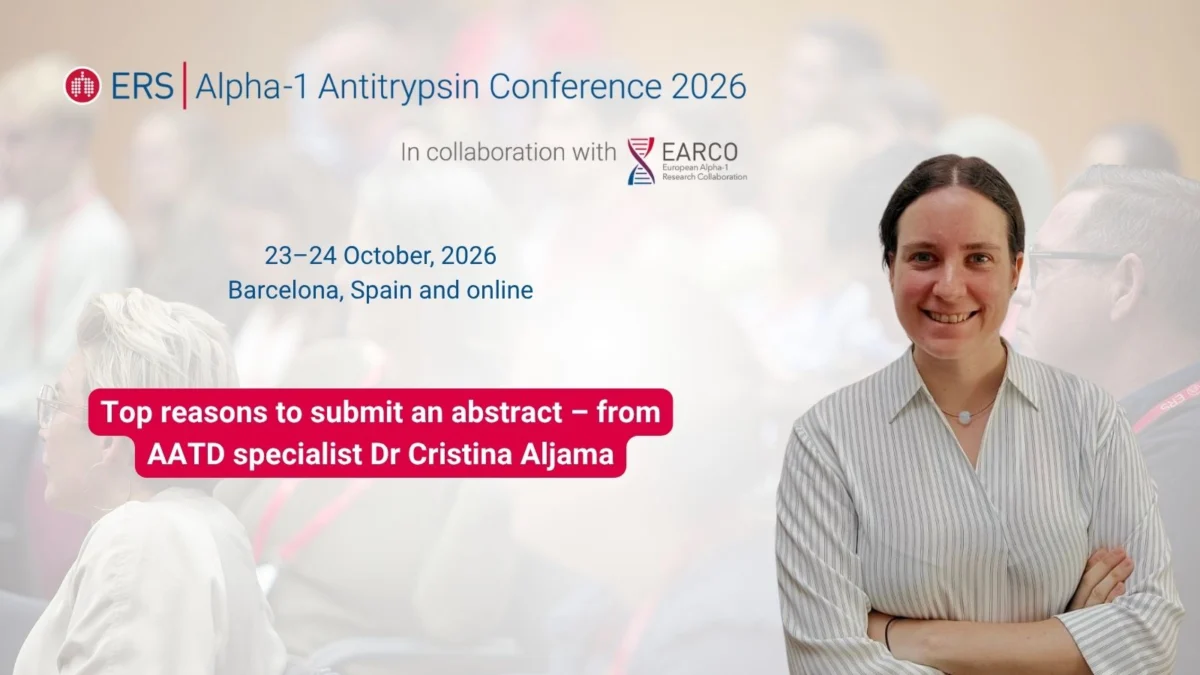
This inaugural event is not merely another entry on the medical calendar; it represents a pivotal shift in how the international community approaches Alpha-1 Antitrypsin Deficiency (AATD). To shed light on the importance of this milestone, we sat down with Dr. Cristina Aljama, a distinguished AATD specialist and pneumology expert at the Vall d’Hebron University and Research Centre in Barcelona, to discuss why participation is essential for the future of the field.
The Landscape of AATD: A Call for Innovation
Alpha-1 Antitrypsin Deficiency remains a complex, often underdiagnosed, and highly impactful genetic condition. Despite advancements in therapeutic understanding, significant gaps remain in diagnostic protocols, long-term management, and the overarching scientific consensus on best practices.
The ERS Alpha-1 Antitrypsin Conference has been designed to address these systemic hurdles. By creating a dedicated, singular space for the AATD community—ranging from bench-side researchers to clinical practitioners—the ERS aims to consolidate the disparate threads of current research into a cohesive strategy for improved patient outcomes.
Chronology: The Road to the Inaugural Conference
The decision to launch a standalone conference for AATD reflects a broader trend in respiratory medicine: the move toward hyper-specialization in rare diseases.
- Early Planning Phase: Following years of integration within broader ERS congresses, the ERS leadership identified a specific need for a dedicated, high-intensity environment to discuss the nuances of AATD.
- The Announcement: Dr. Marc Miravitlles, ERS President-Elect and Conference Chair, formally introduced the event as a "dedicated platform for the professional AATD community," emphasizing the necessity of focused dialogue.
- The Call for Abstracts: Opening in early 2026, the submission portal invited clinicians and scientists to share their latest findings, pilot studies, and clinical observations.
- The Impending Deadline: With the cutoff set for 30 April, the scientific community is now in the final stages of curating the work that will define the conference’s agenda.
- The Event: Scheduled to serve as the premier forum for AATD, the conference will feature a blend of oral and poster presentations, creating a multi-layered intellectual experience for attendees.
Expert Perspectives: Why Your Data Matters
Dr. Cristina Aljama has been a vocal advocate for the submission of original data. According to Dr. Aljama, the value of this conference lies in its ability to bridge the gap between abstract research and bedside application.
1. Shaping Scientific Dialogue
"Submitting an abstract to the ERS Alpha-1 Antitrypsin Conference offers a unique opportunity to contribute to a highly specialized field," Dr. Aljama notes. She argues that the rarity of the condition makes every piece of verified data vital. By presenting original findings, professionals do more than just share information; they help set the trajectory for future research priorities and clinical guidelines.
2. Facilitating International Collaboration
The power of the ERS network lies in its global reach. Dr. Aljama emphasizes that the conference serves as a catalyst for cross-border cooperation. "Presenting at this conference represents a valuable platform to exchange knowledge within a dedicated international network. It enables direct interaction with leading experts and fosters meaningful scientific discussion that simply cannot be replicated in a virtual or generalized setting."
3. Impacting Clinical Practice
For many patients living with AATD, the translation of research into clinical practice is a matter of daily quality of life. Dr. Aljama believes this conference is uniquely positioned to accelerate that transition. "As the conference addresses a clear unmet need in respiratory medicine, contributions have a heightened potential to influence clinical practice. Being part of the programme means actively participating in advancing understanding and care in AATD. Each contribution can help bridge existing gaps in diagnosis and treatment."
Supporting Data: The Value of Visibility
The structure of the conference is deliberately diverse to accommodate different types of scientific communication. With a mix of traditional oral sessions and interactive poster presentations, the ERS ensures that both breakthrough discoveries and nuanced clinical case studies receive appropriate attention.
For early-career professionals, this visibility is a critical career milestone. Dr. Aljama highlights the professional development aspect of the event: "For early-career professionals, presenting offers critical visibility and the chance to build a professional network in a supportive and expert environment. It encourages scientific development, confidence, and recognition within a niche field. Moreover, it can open doors to future collaborations and career opportunities."
Implications: Building the Future of AATD Care
The implications of this conference extend well beyond the lecture halls. By gathering the most prominent minds in the field, the ERS is effectively creating a blueprint for the next decade of AATD care.
Bridging the Diagnostic Gap
One of the most persistent issues in AATD is the diagnostic delay. Through the collaborative environment of the conference, experts are expected to debate new screening methodologies and the potential for population-based initiatives. The research presented in April will likely form the backbone of future recommendations on how to identify patients earlier and more effectively.
Elevating Treatment Standards
As new therapies and management strategies emerge, the conference provides a venue for rigorous peer review. When a researcher presents their findings at the ERS conference, they are subjecting their work to the scrutiny of the world’s most qualified peers. This process ensures that only the most robust and promising approaches are advanced toward clinical adoption.
Final Call to Action
As the clock ticks toward the 30 April deadline, the message from the ERS leadership and experts like Dr. Aljama is clear: the success of this inaugural event rests on the participation of the community.
"I strongly encourage colleagues to submit their work and be part of this important initiative," Dr. Aljama concludes. "Every contribution adds value to our collective effort to improve patient outcomes; this is a unique chance to help shape the future of AATD care."
The opportunity to influence the trajectory of respiratory medicine is significant. Whether you are an established researcher with longitudinal data or an early-career professional with a compelling clinical case, your voice is a necessary component of this emerging scientific narrative.
Key Information for Prospective Presenters:
- Submission Deadline: 30 April, 2026, 23:59 CEST.
- Focus Areas: Clinical research, patient management, diagnostic innovation, and fundamental science related to AATD.
- Outcome: Selected abstracts will be showcased through oral or poster presentations, providing authors with significant visibility among international peers.
For those ready to contribute to this historic gathering, the ERS provides comprehensive resources to guide the submission process.
The future of Alpha-1 Antitrypsin Deficiency care is being written today. Ensure your research is part of the conversation.