











Main Facts: The Illusion of Productive Procrastination
In the landscape of personal health, we are often guilty of what psychologists call "productive procrastination." It is the act of investing time, energy, and money into the peripherals of a goal—buying new gear, researching the "perfect" diet, or optimizing our kitchen storage—to avoid the uncomfortable, unglamorous, and difficult work of fundamental lifestyle change.
The recent case of a high-achieving legal professional named Anna serves as a poignant archetype for this phenomenon. Despite being a sharp, critical thinker who prides herself on cutting through corporate red tape, Anna found herself paralyzed by a goal to lose 15 pounds. Her solution? Investing in a new set of BPA-free Tupperware. When questioned, she cited concerns about microplastics and hormonal interference. Yet, in the same breath, she admitted to chronic sleep deprivation, a reliance on takeout, and a lack of gym consistency.
This behavior is not stupidity; it is a defensive mechanism. We prioritize the "easy win" of a purchase or a niche research project because it provides a fleeting sense of control, shielding us from the reality that our habits—or lack thereof—are the primary drivers of our health outcomes.
Chronology: The Anatomy of a Failed Resolution
The cycle of stalled progress usually follows a predictable, recurring pattern:
- The Trigger: A realization of dissatisfaction (e.g., "I need to lose 15 pounds") meets a moment of peak motivation.
- The Over-Correction: We immediately design an unsustainable, complex plan—often involving expensive supplements, new equipment, or radical dietary shifts.
- The "Planning" Phase: We spend hours on YouTube, reading articles, or organizing our environment, which feels like work but yields zero biological change.
- The Inevitable Friction: Life happens. A project at work, a sick child, or a stressful week occurs. Because our plan was rigid and ambitious, it snaps under the slightest pressure.
- The Self-Blame Cycle: We conclude that we lack willpower or discipline, leading to a period of abandonment of all goals, before the cycle resets.
Anna’s story is a textbook example of this timeline. By focusing on the containers rather than the contents of her diet or her physical activity, she managed to postpone the "real work" while still feeling like she was "doing something" for her health.
Supporting Data: The 6% Reality
The health and fitness industry is built on the premise that there is a "secret" we haven’t discovered yet. However, the data paints a starkly different picture. According to public health studies, only six percent of the American population consistently adheres to five core foundational behaviors:
- Maintaining a healthy diet (minimally processed).
- Engaging in regular aerobic and resistance exercise.
- Getting seven to eight hours of quality sleep.
- Managing stress effectively.
- Avoiding excessive alcohol or tobacco use.
The implication is staggering: 94 percent of the population is failing to perform the basics. This isn’t because the basics are "unknown"—it is because they are boring, difficult, and require daily commitment. When we look for "cutting-edge" hacks, we are essentially trying to outrun a fundamental truth: there is no shortcut to the biological benefits of movement, nutrition, and rest.
The Science of Ambivalence and Resistance
Why do we fight our own best interests? It comes down to two psychological states: ambivalence and resistance.
Ambivalence is the natural push-and-pull of change. We want the results of weight loss, but we also want the comfort of our current habits. We want to be healthy, but we don’t want to give up the convenience of takeout. Many view this as a moral failing or a sign that they "don’t want it enough," but in reality, it is a signal that the change matters.
Resistance, conversely, is the fear of the discomfort that comes with growth. We may avoid putting down our phones at night because we fear the silence and the intrusive thoughts that come with being left alone with our own minds. By distracting ourselves with "optimizing" our environment (like buying the Tupperware), we effectively sedate the anxiety associated with real behavioral change.
The Three Barriers to Consistent Action
To move forward, we must address the three primary obstacles that prevent us from doing the basics:

1. Ambition Overload
We tend to overestimate our future capacity. We believe that next Monday, we will have more energy, time, and motivation. We build "perfect" plans that fail to account for the reality of a busy life. This leads to an "all-or-nothing" mentality where, if we miss one day, we feel the entire structure has collapsed.
2. The "Industry Secret" Fallacy
We are seduced by the idea that there is a hidden strategy or a proprietary supplement that will bypass the need for hard work. If we can believe that the "secret" is a specific type of plastic container or a trendy electrolyte powder, we don’t have to face the fact that we simply need to eat more vegetables and move more.
3. The Perfectionism Trap
Perfectionism is a form of procrastination. If we believe that we must be "perfect"—meditating at 5:00 AM, eating only organic, and training like an athlete—then we can always justify why we haven’t started yet. "I’ll start when I have the right schedule," we tell ourselves. The reality is that our "worst selves"—the parts of us that want to binge-watch TV and eat junk food—are part of the package. A successful plan accommodates these human moments rather than denying them.
Four Steps to Sustainable Change
If we want to stop buying gear and start building habits, we must shift our methodology.
Step 1: Explore the "Why" Before the "How"
Before purchasing a single item or joining a gym, ask yourself why this goal matters. Use the "5 Whys" technique: If you want to lose weight, ask why. Then ask why that answer matters. Keep digging until you reach a core value. When the goal is tied to your identity rather than a superficial desire, your persistence will increase.
Step 2: Prioritize Effective Actions
We cannot do everything at once. Identify the one or two "keystone habits" that provide the most leverage. Is it 30 minutes of walking? Is it prepping two lunches? Pick one action and treat it as a non-negotiable until it becomes a baseline.
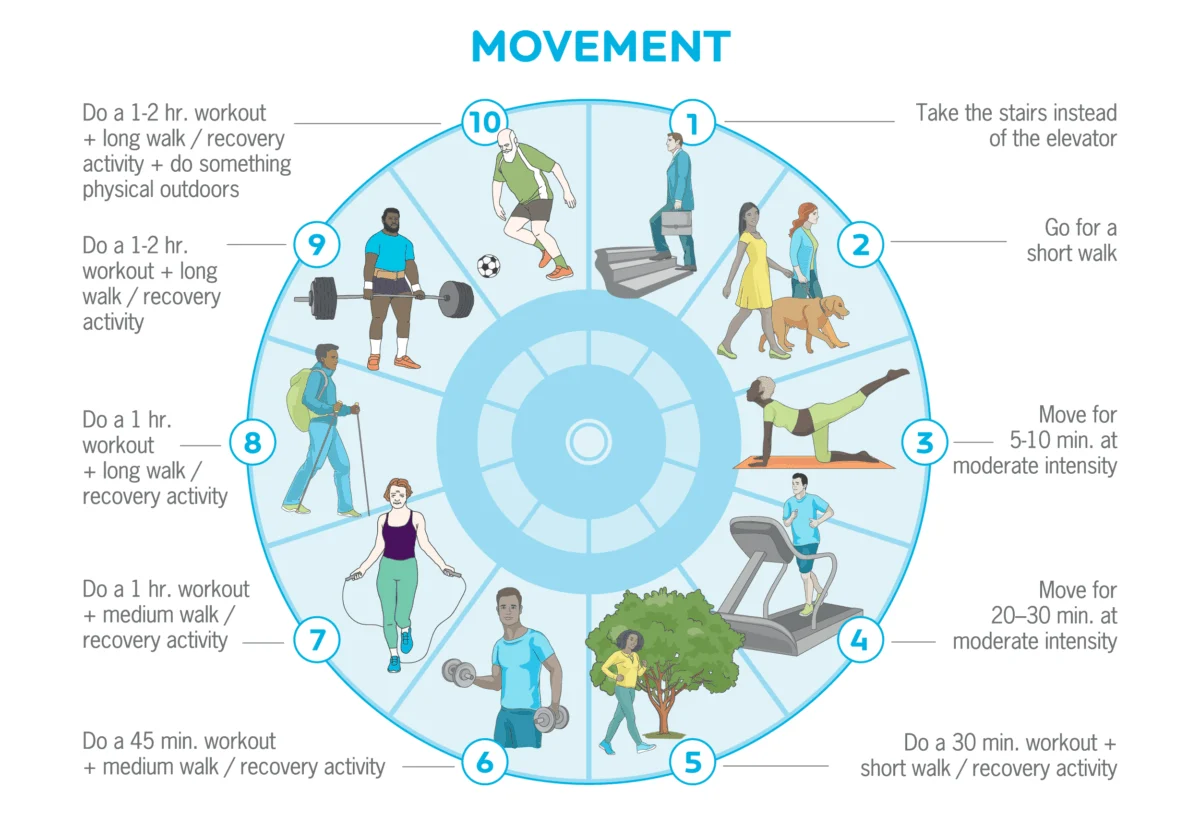
Step 3: Implement the "Dial" Method
Stop using an "on/off" switch for your health. Instead, visualize a dial. On your best days, you might turn the dial to an 8 or 9. On your worst days—when you are sick, overwhelmed, or traveling—you don’t turn it to zero. You turn it to a 1. Doing five minutes of movement is not "failing" to do an hour; it is successfully maintaining the habit during a period of crisis.
Step 4: Design Your Ecosystem
As the Nature Reviews Psychology suggests, access is the greatest predictor of behavior. Don’t rely on willpower; rely on architecture. If you want to eat better, prep the food so it is visible and easy to access. If you want to exercise, set out your clothes the night before. Build an environment where the "good" choice is the "easy" choice.
Implications: Embracing the "C+" Effort
The ultimate lesson for anyone struggling to reach their health goals is to embrace "C+" effort. We live in a culture that worships the "A+" performance, but the marathon of life is won by those who show up for the "C+" days.
When you stop expecting yourself to be perfect, you remove the primary barrier to consistency. You allow yourself to be human, to have bad days, and to exist in a state of messy, imperfect growth. It is far better to be consistently "good enough" than to be occasionally "perfect" and frequently non-existent.
The next time you find yourself browsing for the perfect fitness tracker or the most "optimal" food container, pause. Ask yourself if you are actually moving toward your goal, or if you are simply buying yourself the illusion of progress. Then, put down the credit card, step away from the screen, and go for a walk. It won’t feel "magical," but it will be real—and that is exactly what you need.