











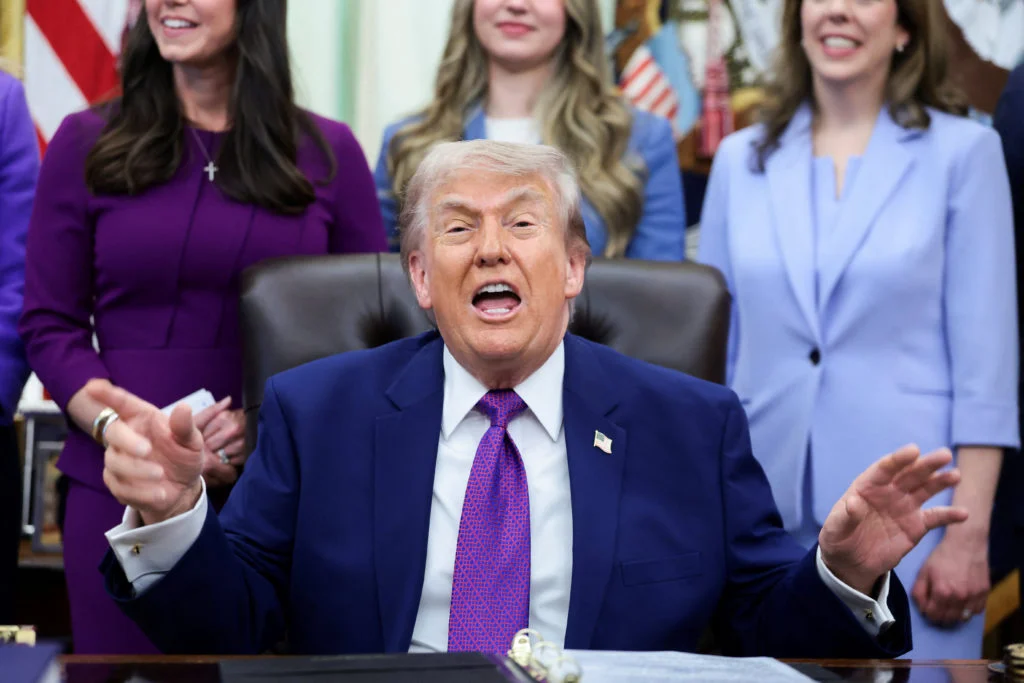
WASHINGTON, D.C. — In a high-stakes display of the competing priorities currently defining his administration, President Donald Trump held an event in the Oval Office on Monday that bridged the gap between domestic family policy and the precarious volatility of international conflict. The President used the platform to announce a significant shift in labor regulations regarding fertility benefits, even as he signaled that the ongoing ceasefire with Iran is nearing a total collapse.
The dual-pronged approach—addressing the long-term economic concerns of American families while managing the immediate specter of war—underscores the complex political landscape the White House is currently navigating.
Main Facts: The New Fertility Benefit Regulation
The centerpiece of Monday’s domestic announcement was a new Labor Department regulation designed to expand access to fertility treatments. The initiative creates a formal "fertility benefit option," allowing employers to offer reproductive health services to their workforce outside the confines of traditional, often restrictive, employer-sponsored health insurance plans.
The administration views this as a vital step in supporting family growth and addressing declining birth rates, a topic that has garnered significant public interest. This move follows an October announcement in which the administration claimed to have secured a deal with major pharmaceutical manufacturers to lower the cost of fertility-related medications—an effort aimed at reducing the high out-of-pocket expenses that currently prevent many Americans from pursuing fertility treatments.
“We are committed to making sure that every American family has the tools and the support they need to thrive,” the President stated during the briefing, though he signaled the brevity of the event by noting that military leadership was waiting in the wings to discuss the deteriorating situation in the Middle East.
Chronology: From Diplomatic Hopes to "Life Support"
The trajectory of the U.S.-Iran conflict has shifted rapidly over the past several months, moving from fragile optimism to a state of near-total impasse.
- October 2025: The Trump administration initiates a series of pharmaceutical price negotiations, aimed at bolstering reproductive health as part of a wider pro-family domestic agenda.
- Early May 2026: Diplomatic channels attempt to solidify a lasting ceasefire between Washington and Tehran.
- Monday, May 11, 2026 (Morning): Iran submits a new proposal to the White House aimed at extending or solidifying the existing ceasefire.
- Monday, May 11, 2026 (Midday): President Trump reviews the proposal and abruptly rejects it, publicly labeling it a "piece of garbage" during an Oval Office press availability.
- Monday, May 11, 2026 (Afternoon): The President pivots to domestic policy, announcing the new fertility benefit regulations while simultaneously admitting the Iran ceasefire is on "life support."
Supporting Data: The Economic and Geopolitical Context
The administration’s policy shifts are occurring against a backdrop of economic strain. The war with Iran has significantly disrupted global energy markets, leading to a spike in fuel prices that has impacted the average American consumer.
The Gas Tax Suspension
In response to these rising costs, President Trump confirmed on Monday that he would suspend the federal gas tax. Currently, the federal levy stands at 18.4 cents per gallon for gasoline and 24.4 cents per gallon for diesel. While the move is intended to provide immediate relief to motorists, the duration of the suspension remains indefinite, with the President stating it would last "until it’s appropriate."
Nuclear Standoff
The breakdown in negotiations centers on the issue of highly enriched uranium. The administration asserts that Iranian negotiators had previously signaled a willingness to allow international inspectors to oversee the removal of this material from the country. However, the latest ceasefire proposal notably omitted this provision.
"They changed their mind because they didn’t put it in the paper," Trump remarked. The U.S. remains firm in its demand for a long-term guarantee that Iran will not acquire nuclear weaponry, a stance that has created an irreconcilable gap between the two nations’ current negotiating positions.
Official Responses and Political Implications
The administration’s dual announcement has drawn mixed reactions, reflecting the broader polarization of the current political environment.
Domestic Policy Reaction
Advocates for reproductive health have generally welcomed the expansion of fertility benefits, noting that the high cost of IVF and related treatments is a barrier to many working-class families. However, critics argue that the administration’s focus on these specific benefits does not compensate for broader concerns regarding healthcare access or the economic impact of rising inflation.
Foreign Policy and Public Sentiment
The geopolitical situation is significantly more volatile. With recent polling indicating that approximately two out of three Americans hold the President accountable for rising gas prices, the suspension of the gas tax is viewed by many political analysts as a defensive measure intended to mitigate political damage during an active conflict.
The rhetoric from the White House regarding the Iran ceasefire has been characterized by many diplomatic observers as "unusually blunt." By describing the Iranian proposal as "unacceptably weak," the President has effectively signaled that a military escalation remains a distinct possibility if diplomatic breakthroughs are not achieved.
"I would call it the weakest right now," the President stated, referencing the status of the ceasefire. "I didn’t even finish reading it."
Implications: The Road Ahead
As the White House looks toward the summer of 2026, the administration faces two distinct, yet interconnected, challenges.
- The Domestic Front: The implementation of the fertility benefit regulation will test the efficacy of the Labor Department’s new framework. If successful, it could serve as a model for future employer-based benefit expansions, potentially shifting the burden of specialized healthcare costs away from general insurance pools.
- The International Front: The collapse of the ceasefire places the U.S. on a precarious path. The President’s insistence that he has the "best plan ever" to address the Iranian nuclear threat suggests that a new phase of pressure—likely involving further sanctions or intensified military posturing—is imminent.
The suspension of the gas tax will also likely lead to debates in Congress regarding the Highway Trust Fund, which is typically fueled by gas tax revenues. Economists warn that while the suspension provides relief at the pump, it may create a budgetary shortfall that the federal government will have to address through other means, potentially adding to the national debt.
Ultimately, the events of May 11 encapsulate the broader strategy of the Trump presidency: a reliance on aggressive executive action and direct, often confrontational, public communication. Whether this approach will successfully stabilize the price of gasoline and secure a nuclear concession from Tehran, or lead to a deeper crisis, remains the central question for the remainder of the year.
As the President turned away from his guests in the Oval Office on Monday to attend to his military advisors, the contrast between the quiet, clinical progress of fertility policy and the thunderous implications of a looming war served as a stark reminder of the immense pressures currently weighing on the Oval Office. The coming weeks will likely determine whether the "life support" status of the Iran ceasefire can be upgraded, or if the region—and the American consumer—are headed for a much more turbulent season.