










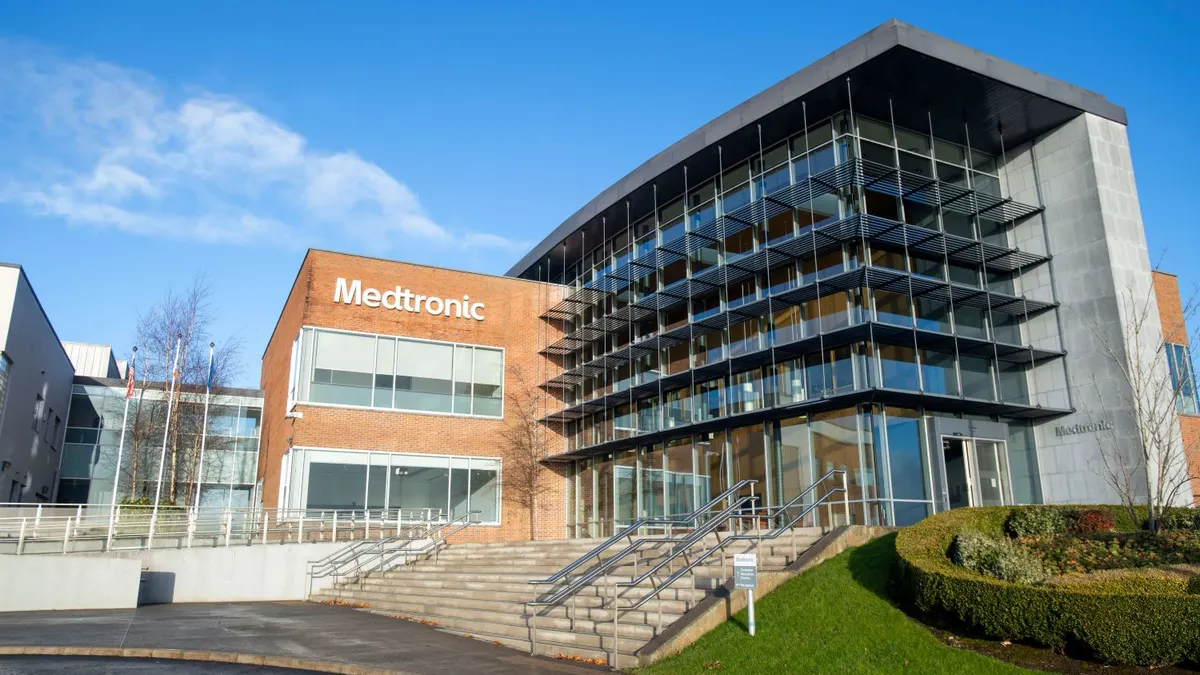
In a move that signals a significant shift in its operational strategy, medical technology titan Medtronic has announced the planned closure of its long-standing facility in Santa Rosa, California. The decision, framed by leadership as a "difficult but strategic" maneuver, is part of a broader, multi-year reorganization designed to streamline the company’s vast cardiovascular portfolio and sharpen its focus on high-growth clinical areas.
Main Facts: A Structural Shift
Medtronic, a global leader in medical technology, has confirmed that it will phase out its operations at the Santa Rosa campus over the next two years. The site, which has served as a critical hub for the company’s vascular-focused research and manufacturing since 1998, will see its functions absorbed into other parts of the organization as Medtronic consolidates its cardiovascular business units.
The closure, which is scheduled for completion in the spring of 2028, is not an isolated event but rather a component of a company-wide initiative to integrate structural heart, coronary, and renal denervation businesses. By centralizing these functions, Medtronic aims to create a more agile, collaborative environment that can respond faster to the evolving demands of cardiac and aortic care providers.
According to company spokesperson Paquette, the decision follows a comprehensive review of global operations. The objective is to position Medtronic for long-term growth by reducing operational redundancy and fostering closer partnerships with vascular and cardiothoracic specialists. While the transition will be significant, the company has emphasized that there will be no impact on product availability or service levels for customers.
Chronology: From Arterial Vascular Engineering to Global Consolidation
The Santa Rosa site holds deep historical significance for Medtronic. The campus became part of the Medtronic family in 1998, following the company’s acquisition of Arterial Vascular Engineering (AVE), a pioneer in stent technology. At the time, the acquisition was hailed as a landmark deal that propelled Medtronic into a dominant position in the coronary stent market.
- 1998: Medtronic acquires Arterial Vascular Engineering, establishing a strong operational footprint in Santa Rosa.
- 1998–2026: For nearly three decades, the Santa Rosa facility served as a nucleus for innovation, housing research, development, and manufacturing teams dedicated to advancing vascular interventions.
- May 2026: Karim Bandali, President of Cardiovascular Surgery, announces the formation of a new cardiovascular surgery business unit on LinkedIn, signaling the start of a major internal restructuring.
- May 2026: Medtronic formally announces the planned closure of the Santa Rosa site.
- Spring 2027: The initial wave of employee departures is scheduled to commence.
- Spring 2028: The Santa Rosa facility is expected to be fully shuttered.
This timeline reflects a broader trend in the medtech industry: the transition from regional specialized hubs to consolidated, global centers of excellence that prioritize efficiency and integrated care delivery models.
Supporting Data: Impact and Workforce Reductions
While Medtronic has maintained a high-level focus on strategic goals, the human impact of the closure remains a point of concern for the local Santa Rosa community. Although the company initially withheld specific figures regarding the total number of staff affected, reports from The Press Democrat suggest that approximately 370 employees will be impacted by the closure.
The scale of the reduction highlights the intensity of the consolidation. For decades, the Santa Rosa site was a primary employer in the region’s specialized medical manufacturing sector. The departure represents a significant loss for the local labor market and underscores the reality of corporate downsizing in the wake of portfolio integration.
From a financial and operational perspective, the consolidation is part of a broader strategy to refine Medtronic’s organizational structure. By creating the new cardiovascular surgery business unit and an interventional cardiology therapies unit, Medtronic is looking to leverage economies of scale. The company believes that by bringing together the structural heart, coronary, and renal denervation teams, they can accelerate the pace of innovation and better address the "entire continuum of cardiovascular care."
Official Responses and Strategic Intent
The messaging from Medtronic leadership has been consistent: the move is not a reflection of the site’s past performance, but a requirement for the company’s future viability.
"The integration is intended to help us strengthen our focus and investment so we can continue to best serve patients across the entire continuum of cardiovascular care," stated the company representative. The emphasis on "strengthened focus" suggests that Medtronic felt its previous operational structure was perhaps too siloed, preventing the cross-pollination of technologies and clinical insights.
Karim Bandali, the newly appointed president of the cardiovascular surgery unit, has been instrumental in communicating this vision. By transitioning from his previous role as president of cardiac surgery, Bandali is tasked with overseeing the integration of disparate teams into a cohesive unit. This new approach aims to break down the barriers between different cardiovascular specialties, allowing for a more holistic approach to patient treatment.
Furthermore, the restructuring is designed to empower "interventional cardiology therapies." By grouping renal denervation—a therapy that has seen significant regulatory and clinical interest—with established structural heart and coronary businesses, Medtronic is signaling a commitment to high-margin, high-impact clinical areas.
Implications: What This Means for the Future of Medtech
The closure of the Santa Rosa site serves as a bellwether for the wider medical technology industry. As healthcare systems globally face increasing pressure to lower costs while improving outcomes, manufacturers are under immense scrutiny to deliver more value for every dollar spent.

1. The Rise of "Integrated Care" Models
Medtronic’s decision reflects a shift away from selling individual products to offering integrated therapeutic solutions. By consolidating its cardiovascular businesses, the company is positioning itself to be a "one-stop shop" for cardiologists and surgeons. This integration allows for better alignment between sales teams, clinical support staff, and research departments, theoretically providing a more seamless experience for hospitals.
2. Efficiency vs. Innovation
A central question following such a large-scale reorganization is whether it will stifle or catalyze innovation. Critics often argue that consolidation leads to a loss of specialized knowledge and the thinning of R&D talent. However, Medtronic argues the opposite: that by removing administrative and operational silos, teams can share data and clinical insights more effectively, leading to faster development cycles.
3. Regional Economic Shifts
For the Santa Rosa community, the closure is a stark reminder of the volatility inherent in the medtech industry. As companies shift their manufacturing and research footprints to optimize global supply chains and leverage different talent pools, regional hubs that were once considered indispensable may find themselves on the chopping block. The transition period between now and 2028 will likely involve significant discussions regarding workforce retraining and economic diversification in the region.
4. The Path Forward for Cardiovascular Care
Medtronic’s move also hints at the future direction of cardiac intervention. By prioritizing the "entire continuum of care," the company is likely preparing for a future where patient data, diagnostic technology, and therapeutic devices are deeply interconnected. The formation of the new business units suggests that Medtronic intends to lead the market in AI-driven diagnostics and minimally invasive interventions, which require a level of cross-functional expertise that the new structure is designed to foster.
Conclusion
The decision to close the Santa Rosa facility is a pivotal moment for Medtronic. It is a calculated trade-off: trading the legacy of a specific, long-standing site for the efficiencies of a modernized, integrated global structure. As the company moves toward the 2028 closure date, the industry will be watching closely to see if this consolidation yields the promised surge in innovation and market growth.
For the 370 employees affected and the broader cardiovascular community, the next two years represent a period of transition. While Medtronic’s focus remains firmly on its long-term strategic evolution, the company’s ability to manage this transition while maintaining its commitment to patient care will be the ultimate test of its new organizational strategy. Through this realignment, Medtronic is not merely closing a door in Santa Rosa; it is attempting to build a more robust, integrated framework to define the next generation of cardiovascular medicine.