











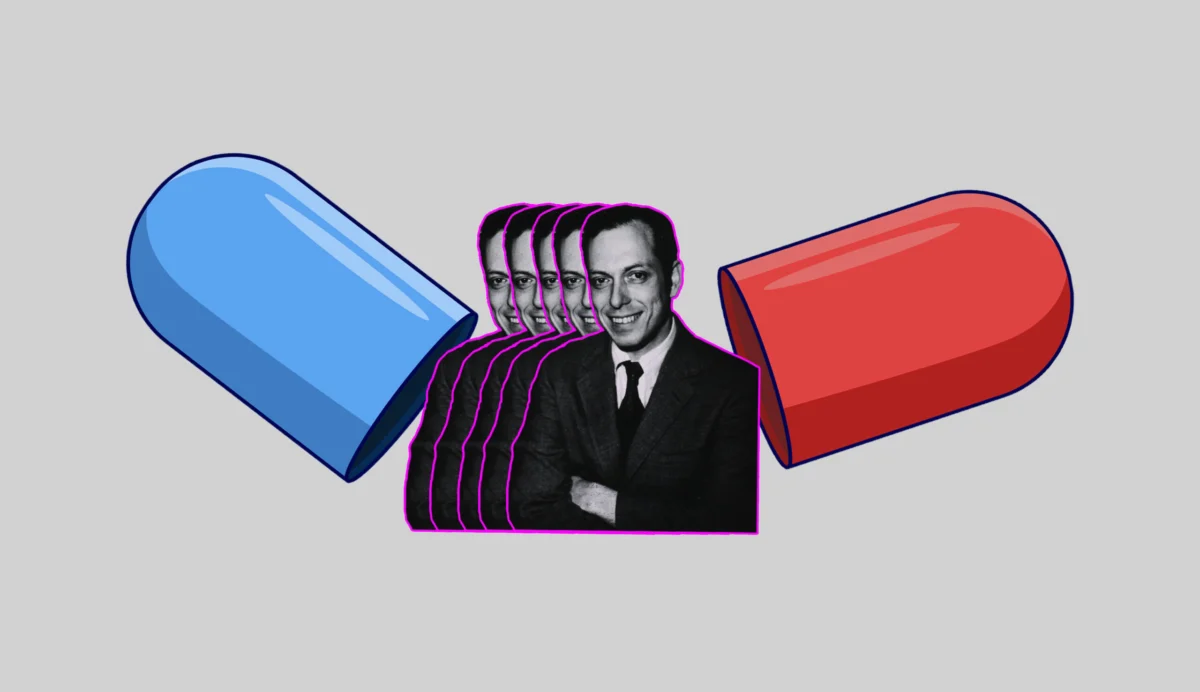
The history of modern psychiatry is often told as a triumphant march from the darkness of asylums and lobotomies toward the light of molecular biology and precision pharmacology. However, the lived experience of those caught in the transition tells a more complex story—one where the "cure" sometimes became as formidable an adversary as the disease itself.
Through the lens of Justin Garson’s forthcoming work, The Madness Pill, we examine the life of John Garson, a Harvard-educated lawyer whose battle with schizophrenia and bipolar disorder mirrored the seismic shift in how Western medicine perceives the human mind. This report explores the transition from the psychoanalytic and social models of the 1970s to the biological "chemical imbalance" paradigm that dominates the field today.
Main Facts: The Personal and Professional Evolution of Madness
In the summer of 1973, John Garson, then a lawyer for the Nixon administration, suffered a total break from reality. His diagnosis was paranoid schizophrenia. At the time, psychiatry was still deeply influenced by the "anti-psychiatry" movement and psychoanalytic theory. Garson’s initial recovery was facilitated not by medication, but by talk therapy—a method that viewed his delusions not as mere biological glitches, but as meaningful, albeit distorted, responses to a dysfunctional environment.
By the mid-1980s, the psychiatric landscape had changed. When Garson’s symptoms returned, the medical establishment no longer sought the "meaning" behind his voices. Instead, he was treated under a new biological mandate: the "Dopamine Hypothesis." This theory, spearheaded by neuroscientist Solomon Snyder, posited that schizophrenia was the result of a chemical surplus in the brain. While the resulting antipsychotic drugs silenced Garson’s delusions, they introduced a suite of neurotoxic side effects—mental fog, motor control loss, and eventually, a fatal inability to swallow.
The core tension of this narrative lies in the "Cure vs. Disease" paradox. While the biological revolution provided a scientific framework for mental illness, it often prioritized "patient compliance" and symptom suppression over the patient’s quality of life and physical longevity.
Chronology: From Nixon’s "Shit List" to the Biological Revolution
1973: The Social Adaptation Model
John Garson’s first psychotic break occurred while he was working under President Richard Nixon. His delusions were inextricably linked to the political climate; he believed his phone was tapped and that the Washington Post was communicating with him through coded baseball articles.
His treatment followed the philosophy of R.D. Laing, a maverick psychiatrist who authored The Divided Self. Laing argued that schizophrenia was a "social adaptation to a dysfunctional society." Under the care of Dr. Thomas Lewis, who agreed to a drug-free regimen, Garson’s sanity was restored through intensive talk therapy. He successfully returned to a high-functioning career at the Labor Department for over a decade.
1985: The Cosmic Turn and the Rise of Pills
As the Cold War waned, Garson’s symptoms returned with a "cosmic" intensity. He began hearing the voices of God and the French actress Catherine Deneuve, urging him toward nuclear disarmament. By this time, the "Copernican Revolution" of psychiatry had occurred. The focus shifted from the "soul" to the "synapse." Garson was re-diagnosed with bipolar disorder and schizoaffective disorder. He was subjected to involuntary hospitalizations at facilities like St. Elizabeths in Washington, D.C., where the primary goal was "patient compliance" through heavy doses of Thorazine, Haldol, and Mellaril.
1990s–2005: Physical Decline and the "Success" of Treatment
Throughout the 1990s, Garson’s voices were silenced, but his body began to fail. He developed severe motor control issues—a condition now recognized as a side effect of traditional antipsychotics. By 2000, he suffered from antipsychotic-induced dysphagia, an inability to regulate his epiglottis. He died on April 1, 2005, at the age of 66, from complications of pneumonia caused by liquids entering his lungs.
Supporting Data: The Science of the "Dopamine Hypothesis"
The pivot point for this historical shift was a 1976 paper published in the American Journal of Psychiatry titled "The Dopamine Hypothesis of Schizophrenia." Its author, Solomon "Sol" Snyder, became the architect of modern biological psychiatry.
The Role of Solomon Snyder
Solomon Snyder was a prodigy at Johns Hopkins University, becoming the youngest full professor in the institution’s history. His contributions to neuroscience are foundational:
- Opiate Receptors: In 1972, Snyder and Candace Pert identified the brain’s opiate receptors, revolutionizing addiction treatment.
- Dopamine Receptors: In 1975, Snyder identified the dopamine receptor, proving that all effective antipsychotics worked by disabling these receptors.
- The Chemical Template: Snyder’s work provided the template for subsequent theories, including the serotonin theory of depression (leading to Prozac) and the lithium theory of bipolar disorder.
The Trade-off of Dopamine Blockage
Snyder’s research confirmed that while blocking dopamine receptors silenced hallucinations, it also crippled the brain’s motor control centers. Dopamine is essential for fluid movement; thus, the "success" of the drugs (silencing voices) was inextricably linked to the "failure" of the body (Parkinsonian tremors and tardive dyskinesia).
Data indicates that by the 1990s, the drugs Garson was taking—specifically the combination of Lithium and Mellaril—were increasingly recognized as neurotoxic. Despite this, they remained the gold standard for "managing" difficult patients in state institutions.
Official Responses and Regulatory Aftermath
The medical and regulatory response to the side effects of these "miracle drugs" was often reactionary rather than proactive.
- FDA Warnings: It was not until April 2005—the same month John Garson died—that the U.S. Food and Drug Administration (FDA) forced manufacturers of newer "atypical" antipsychotics to list dysphagia (difficulty swallowing) as a side effect.
- Global Market Withdrawal: In June 2005, two months after Garson’s death, the drug Mellaril was pulled from the global market. The primary reason cited was not the motor control issues that plagued Garson, but the drug’s tendency to cause fatal heart arrhythmias.
- The Shift to Atypicals: The 1990s saw the resurgence of Clozapine and the introduction of "atypical" antipsychotics. These were marketed as having fewer movement-related side effects, though they introduced new risks, such as massive weight gain and metabolic syndrome.
Psychiatric institutions during Garson’s era prioritized "compliance" over "recovery." As Garson’s doctors noted, his treatment was considered a "success" because he was no longer disruptive, despite the fact that he required a wheelchair and a thickened-paste diet to survive.
Implications: Re-evaluating the Biological Monopoly
The story of John Garson raises profound questions about the direction of 21st-century mental health care.
The Loss of Meaning
When psychiatry became a branch of "hard" medicine, it largely abandoned the attempt to understand the content of madness. In the 1970s, Garson’s delusions were seen as a response to trauma and political stress. In the 1980s, they were seen as "noise" created by a chemical imbalance. While the biological model removed the "blame" from parents and patients, it also stripped the patient of their narrative, replacing a life story with a chemical formula.
The Ethics of the "Cure"
The fundamental tenet of medicine, Primum non nocere (First, do no harm), was arguably violated in the quest for psychiatric stability. Garson’s case suggests that for many patients, the pharmaceutical intervention was a trade-off: the loss of cognitive and physical agency in exchange for social invisibility.
The Legacy of Solomon Snyder
Solomon Snyder remains one of the most influential scientists in history, with a "d-index" that ranks him at the pinnacle of neuroscience. His work turned psychiatry into a respectable, science-based discipline and birthed a multi-billion-dollar pharmaceutical industry. However, as Justin Garson argues, this "medical vision" has become so deeply embedded in our collective consciousness that we have lost the ability to see outside of it.
Conclusion
As we move further into the era of genomics and neuro-imaging, the story of the "Madness Pill" serves as a cautionary tale. It suggests that a truly "respectable" psychiatry must balance the biological reality of the brain with the psychological reality of the human experience. For John Garson, the silencing of the voices came at the cost of his life—a reminder that in the search for a cure, the human being must remain more than a collection of receptors.