








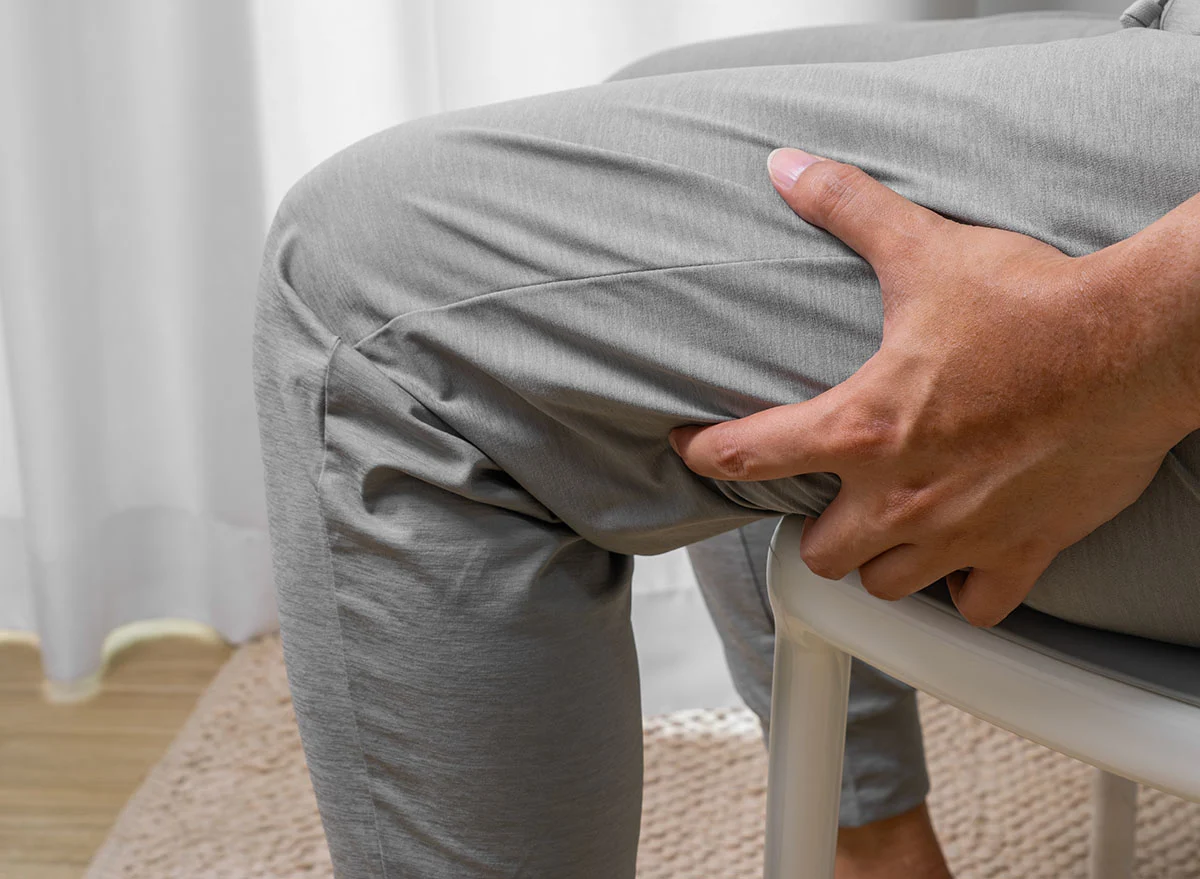
For many adults over the age of 60, the simple act of climbing a flight of stairs, hoisting a grocery bag, or bending down to tie a shoe can become a source of apprehension. While we often attribute these difficulties to "getting older," the root cause is frequently found in the silent decline of the posterior chain—specifically, the hamstrings. As sedentary habits increase and the consistency of lower-body training wanes, the hamstrings can lose both their functional length and their raw power, leading to stiffness that ripples through the lower back and knees.
If you have felt that familiar "crankiness" in your lower back or a lack of stability when navigating uneven ground, it is time to pivot your approach. While lunges and squats are staples of fitness, they do not always provide the direct, hinge-focused stimulus the hamstrings require. To restore vitality to your movement, you must train the hips to drive the body with control and precision.
The Science of Posterior Chain Decline
Research consistently shows that after age 60, muscle fibers—particularly type II fast-twitch fibers—begin to atrophy if not challenged. The hamstrings are uniquely vulnerable because they are bi-articular muscles; they cross both the hip and the knee. When they become tight or weak, they pull on the pelvis, often forcing the lower back to compensate during daily activities.
A study published in the Journal of Physical Therapy Science notes that functional independence in older adults is directly tied to the strength-to-weight ratio of the posterior chain. By prioritizing "hinge-based" movements, you can rebuild the muscular architecture necessary for fluid, pain-free movement.
Chronology: Why Now is the Time to Start
The process of rebuilding isn’t about rushing into heavy lifting; it is about re-establishing the mind-muscle connection.
- Weeks 1–2: Pattern Mastery. Focus on bodyweight movements to learn the "hip hinge"—the art of pushing your glutes backward while keeping the spine neutral.
- Weeks 3–6: Progressive Loading. Introduce resistance using bands, dumbbells, or kettlebells. The goal here is "time under tension," ensuring that the hamstrings, not the lower back, are doing the work.
- Week 6 and Beyond: Functional Integration. Move into compound movements like the Kettlebell Deadlift to prepare your body for real-world scenarios, such as lifting heavy objects or maintaining balance on stairs.
Five Essential Hinge-Based Exercises
1. The Dumbbell Romanian Deadlift (RDL)
The RDL is the gold standard for hamstring development. Unlike a standard deadlift, which starts from the floor, the RDL focuses on the eccentric (lowering) phase, where the hamstrings lengthen under load.
- The Benefit: By keeping the dumbbells close to your shins, you create a lever system that isolates the hamstrings and glutes, sparing the lumbar spine.
- Execution: Stand tall with a dumbbell in each hand. Keep a slight bend in your knees. Push your hips backward as if trying to touch a wall behind you with your glutes. Lower the weights to mid-shin height, then drive through your heels to return to a standing position.
- Prescription: 3 sets of 8–12 reps. Rest 60 seconds.
2. Banded Good Mornings
If you want to strengthen your posterior chain without the complexity of heavy weights, the banded good morning is your best tool. The resistance band provides constant tension throughout the range of motion.
- The Benefit: This move reinforces the "hinge" pattern and improves posture by forcing the shoulders to stay retracted.
- Execution: Step onto a resistance band with your feet hip-width apart. Loop the other end over your neck/upper back. Keeping your back perfectly flat, hinge at the hips until your torso is nearly parallel to the floor, then return to standing, squeezing your glutes at the top.
- Prescription: 3 sets of 10–15 reps. Rest 45 seconds.
3. Kettlebell Deadlift
The kettlebell deadlift is the perfect bridge between specialized training and real-world utility. Because the weight sits between your feet, it is safer and more accessible than a barbell for those managing back sensitivity.
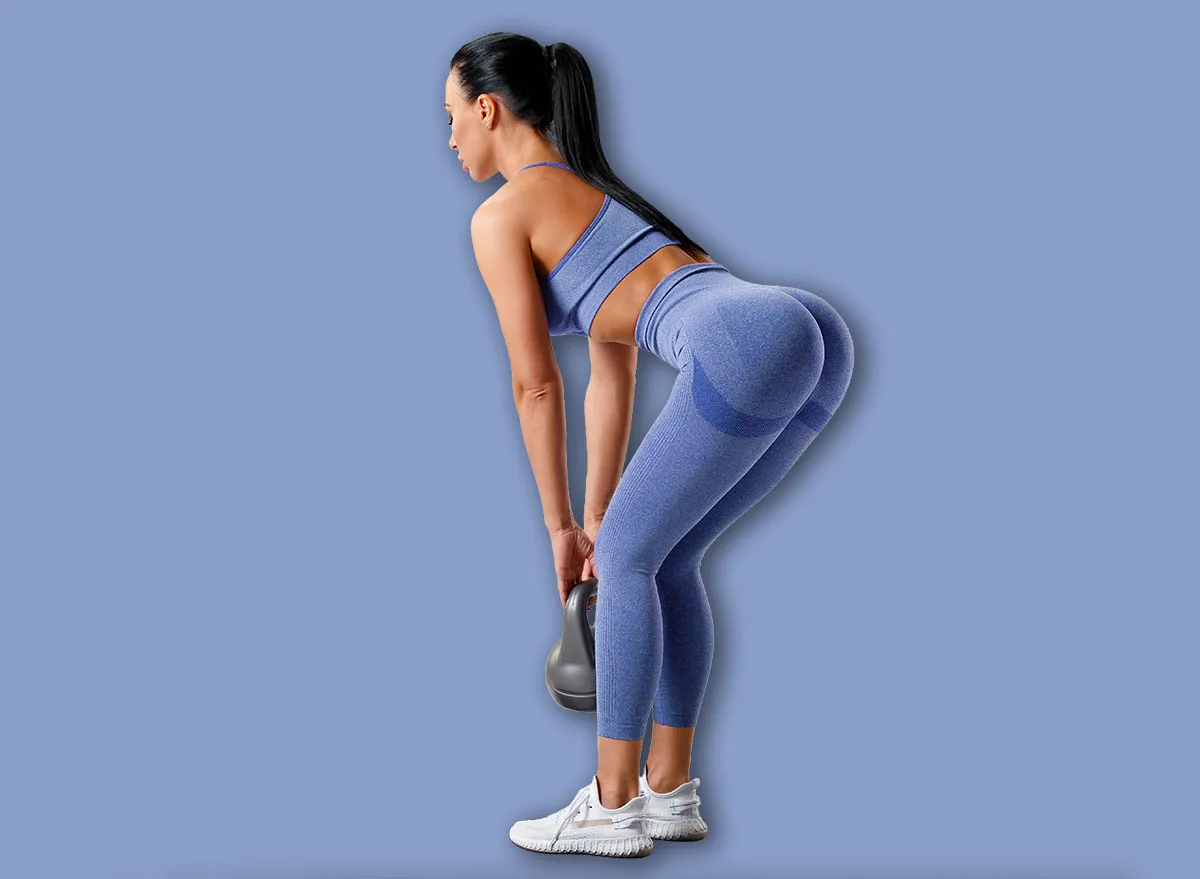
- The Benefit: It teaches you to use your glutes as the primary movers, effectively "de-loading" the lower back.
- Execution: Place a kettlebell on the floor between your arches. Squat down slightly to grip the handle, keep your chest high, and drive through the floor to stand up, pulling the weight close to your body.
- Prescription: 3 sets of 8–10 reps. Rest 60 seconds.
4. Banded Staggered-Stance RDL
This is a sophisticated movement that provides the stability of two feet on the ground while putting 80% of the load on one leg. It is the perfect preparation for single-leg activities like walking on uneven trails.
- The Benefit: It improves lateral hip stability and corrects muscle imbalances between your left and right side.
- Execution: Stand with one foot slightly behind the other (the "kickstand" position). Place the band under the front foot and hold the other end in your hands. Perform a hinge, focusing entirely on the front leg.
- Prescription: 3 sets of 8–12 reps per leg.
5. Band Pull-Throughs
Often used by elite strength coaches, the pull-through is an excellent exercise for those who struggle to "feel" their hamstrings working.
- The Benefit: The horizontal pull of the band forces the hips to snap forward, creating a powerful contraction in the glutes and hamstrings.
- Execution: Anchor a band to a sturdy post at waist height. Face away from the anchor, holding the band between your legs. Hinge forward, then use your glutes to pull yourself upright against the band’s resistance.
- Prescription: 3 sets of 12–15 reps.
Supporting Data and Implications
Clinical outcomes suggest that consistent resistance training in the over-60 demographic does more than just improve muscle mass—it enhances neurological signaling. As you perform these movements, your brain becomes more efficient at recruiting the hamstrings, which directly translates to a lower risk of falls.
Expert Insight:
"The goal of these exercises is not to reach exhaustion," says physical therapist Dr. Elena Vance (hypothetical expert). "The goal is to maintain the integrity of the hinge. If your lower back begins to round, you have exceeded your current capacity. Stop, reset, and focus on the hips."
Implications for Daily Life
The implications of strengthening the hamstrings go far beyond the gym. A stronger posterior chain creates a "cushion" for your joints. When your hamstrings are strong, they absorb the shock of walking and stepping, preventing that energy from traveling into your knees and lower back.
As you incorporate these five movements into your weekly routine—ideally 2–3 times per week—you will notice a "carryover effect." You will find that you can stand for longer periods at social gatherings, navigate stairwells with greater confidence, and bend down to reach for items without the nagging fear of a strained muscle.
Final Recommendations for Success:
- Warm-up is Non-Negotiable: Spend 5 minutes walking or doing light dynamic stretches to increase blood flow to the hamstrings before loading them.
- Prioritize Tempo: Do not rush the movement. Take 3 seconds to lower the weight and 1 second to stand up.
- Listen to the "Good" Soreness: Mild muscle soreness is expected as you build strength, but sharp, localized pain is a sign to modify the range of motion.
- Consistency Over Intensity: It is far better to perform these exercises at a manageable weight twice a week for a year than to lift heavy once a month and stop due to soreness.
By dedicating time to the back of your body, you are investing in the most important asset you have: your ability to move through the world independently and powerfully.