










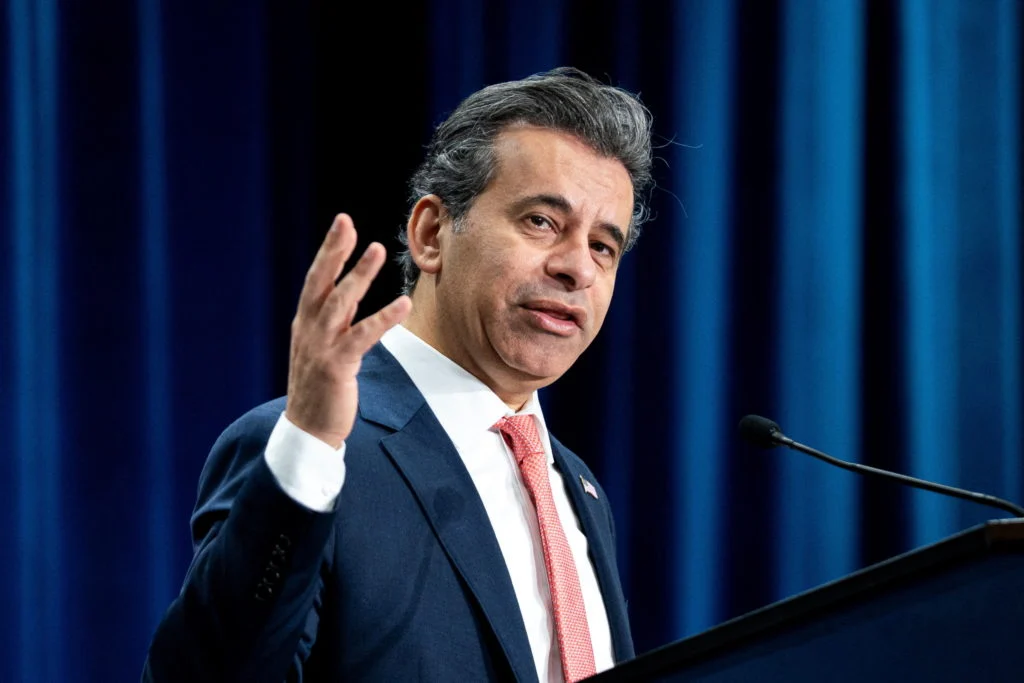
WASHINGTON — Dr. Marty Makary, the physician and health researcher whose rapid ascent from Fox News pundit to the helm of the Food and Drug Administration (FDA) promised a revolution in federal health regulation, is stepping down. His resignation, confirmed by White House officials, marks the conclusion of a turbulent 13-month tenure characterized by internal administrative collapse, aggressive deregulation efforts, and a profound breakdown in the agency’s relationship with the scientific community.
Makary’s departure comes at a moment of significant instability for the Trump administration’s public health apparatus. Following a series of high-profile clashes with health industry titans, anti-abortion activists, and his own internal staff, the Commissioner found himself increasingly isolated. His exit, while sudden, follows months of mounting pressure from key Republican constituencies who felt the agency had failed to deliver on its promises of efficiency and ideological realignment.
A Chronology of Conflict: From Pandemic Critic to Agency Head
Dr. Makary’s appointment was initially viewed by the White House as a strategic win. A Johns Hopkins surgeon and a frequent media critic of pandemic-era public health measures, Makary was tapped to dismantle what the administration described as the "bureaucratic bloat" of the FDA.
- The Early Days: Upon taking office, Makary moved quickly to fulfill campaign pledges. He initiated several aggressive programs aimed at streamlining drug approvals, integrating artificial intelligence (AI) into the review process, and reducing the administrative burden on pharmaceutical firms.
- The Mid-Year Turbulence: By the six-month mark, the agency’s internal culture had begun to fracture. The mass exodus of senior career scientists—many of whom had decades of experience—left the agency’s regulatory framework hollowed out. Leaks regarding low morale and institutional dysfunction became a weekly occurrence in the national press.
- The Prasad Factor: The appointment of Dr. Vinay Prasad as deputy further inflamed tensions. Prasad’s confrontational approach to vaccine safety and his abrupt, highly publicized departures from the agency created a perception of administrative chaos that even the White House found difficult to defend.
- The Final Quarter: In the months leading up to his resignation, Makary faced a pincer movement of criticism. Anti-abortion groups grew increasingly vocal about his handling of mifepristone, while vaping industry lobbyists expressed outrage that their products remained stalled in the FDA’s review pipeline.
The Administrative Vacuum: A Revolving Door of Leadership
The most damning indictment of Makary’s leadership was the state of the FDA’s Center for Drug Evaluation and Research (CDER). During his tenure, the center saw six different directors in a single year—a rate of turnover unprecedented in the history of the modern FDA.
The instability began with the appointment of Dr. George Tidmarsh, whose tenure was cut short by allegations of a personal vendetta against a former business partner. Following Tidmarsh’s forced resignation, the post was briefly held by Dr. Rick Pazdur, a veteran oncology expert. Pazdur’s departure after only three weeks, reportedly due to fundamental disagreements with Makary over drug review standards, signaled to the broader medical community that the agency’s scientific integrity was being compromised by personal ideology.
The loss of institutional knowledge has left the FDA’s current drug review process in a state of paralysis. Industry analysts note that pharmaceutical companies prize predictability above speed; under Makary, the lack of consistent leadership made it nearly impossible for firms to navigate the regulatory landscape, leading to the rejection of therapies that had previously been greenlit by lower-level staff.
Supporting Data: Deregulation vs. Scientific Integrity
Makary’s primary defense for his aggressive tactics was the need for "national interest" in drug development. He introduced over a dozen initiatives intended to accelerate the delivery of medicines to market, including:
- AI-Integrated Reviews: A pilot program designed to automate portions of clinical data analysis.
- Study Requirement Waivers: A policy that allowed for the bypassing of certain post-market study requirements to reduce industry costs.
- Expedited Review Pathways: A controversial system that prioritized medicines deemed vital to U.S. economic and national security interests.
However, data from the FDA’s own internal reports—leaked by concerned staff—suggest that these shortcuts came at a cost. The agency’s scientific review boards noted a 40% increase in requests for additional data after initial rejections, as companies struggled to meet the shifting criteria imposed by Makary’s leadership. Furthermore, the decision to restrict eligibility for COVID-19 vaccines in early 2025, which required a White House-forced reversal after Moderna threatened legal action, highlighted the disconnect between political directives and empirical health data.
Political Implications and Interest Group Pressure
The resignation of Dr. Makary is not merely a personnel change; it reflects the deep friction between the Trump administration’s desire for a "leaner" FDA and the practical realities of regulating a multi-billion-dollar global industry.
The Abortion Pill Controversy
For anti-abortion activists, Makary was a disappointment. Despite his conservative credentials, he resisted calls for an immediate, total restriction on mifepristone. His decision to conduct an "internal review" rather than a sweeping ban was viewed by activists as a stalling tactic, fueling accusations that he was "going native" within the bureaucracy.
The Vaping Industry Lobby
Conversely, the vaping industry—a constituency the White House considered pivotal to its election-year coalition—accused Makary of hypocrisy. They argued that while he touted deregulation, he effectively blocked the approval of flavored e-cigarettes, which the industry maintains are vital to their market survival. This dual frustration from the right created a political environment where Makary had no remaining defenders in the West Wing.
Looking Forward: The Fate of Fledgling Initiatives
As Makary exits, the agency is left in a state of deep uncertainty. Most of his signature initiatives, including the controversial expedited review pathways, were never codified through the formal federal rulemaking process. Legal experts suggest that these programs are effectively "dead on arrival" for the incoming leadership, as they lack the regulatory foundation required to survive a transition.
Congressional Democrats have already signaled their intent to investigate the legality of the actions taken during the Makary era. Senatorial committees are reportedly preparing to subpoena documents regarding the "national interest" drug reviews to determine if political influence was leveraged to bypass safety standards for favored pharmaceutical entities.
For the scientific community, the focus now shifts to the search for a successor. The challenge will be immense: the new Commissioner must restore the confidence of a demoralized staff, re-establish the FDA’s reputation for scientific rigor, and navigate the competing demands of an administration that remains ideologically opposed to the traditional regulatory framework.
The tenure of Dr. Marty Makary will likely be remembered as a cautionary tale in the annals of federal governance—a reminder that while the FDA is a political entity, its efficacy is ultimately tethered to the perceived integrity of its scientific processes. As the agency begins the long process of reconstruction, the legacy of this past year will serve as the primary hurdle for whoever next assumes the mantle of Commissioner.