Introduction
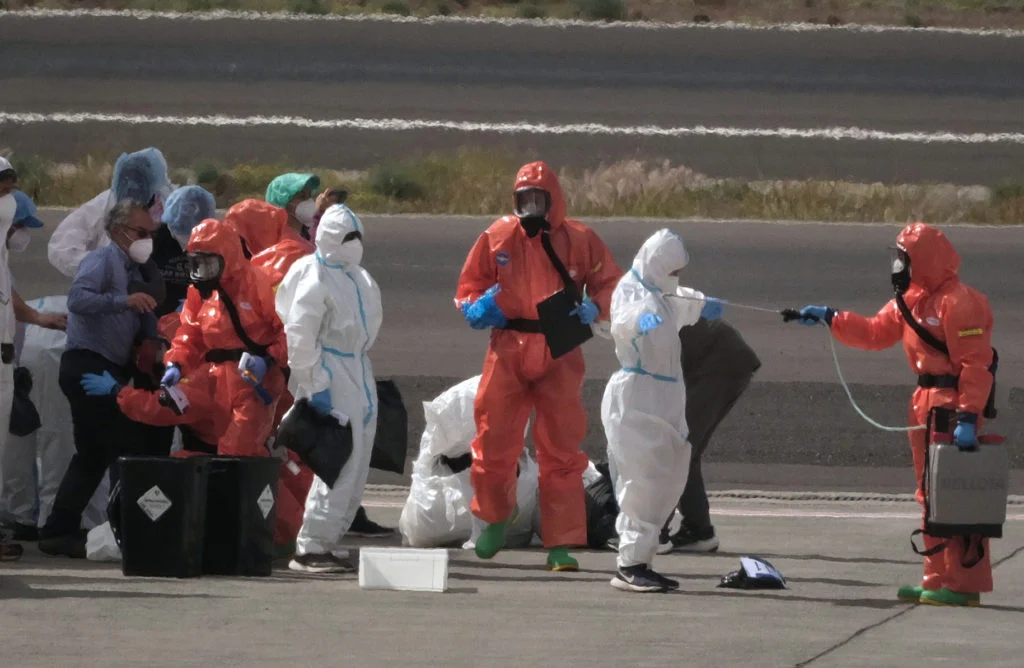
The global health community is currently grappling with a high-stakes containment operation following a severe outbreak of hantavirus aboard a cruise ship currently docked in Spain’s Canary Islands. The incident, which has already resulted in three confirmed fatalities, has triggered an international emergency response, prompting the U.S. government to relocate 16 American passengers to a specialized high-containment unit in Omaha, Nebraska. As health officials work to trace the movements of all passengers who disembarked prior to the quarantine, experts are questioning the adequacy of the international response and the systemic preparedness of global health infrastructures.
The Human Toll and the Current Situation
The outbreak has reached a critical juncture. Health authorities have confirmed that at least one American and one French national aboard the vessel have tested positive for the Andes strain of the hantavirus. Furthermore, another U.S. passenger is currently exhibiting symptoms consistent with the viral infection.
The virus, known for its rapid progression in severe cases, has already claimed the lives of three individuals: a Dutch couple and a German national. The severity of the illness and its potential for human-to-human transmission—a characteristic that differentiates this specific strain from more common iterations of hantavirus—have necessitated an aggressive containment strategy.
Sixteen Americans have been transported to the University of Nebraska Medical Center (UNMC), a world-class facility equipped with a specialized biocontainment unit. Two additional passengers are currently being monitored at Emory University Hospital in Atlanta. These facilities are designed to provide the highest level of care should the condition of any patient deteriorate.
Chronology of the Outbreak
The crisis began when the cruise ship, now acting as an epicenter for the transmission, reported a spike in unexplained illnesses among its passengers.
- Initial Detection: As reports of respiratory distress emerged, the ship was diverted to the Canary Islands, where local authorities initiated an immediate evacuation of all passengers and crew.
- International Mobilization: The U.S. Department of Health and Human Services (HHS) and the Centers for Disease Control and Prevention (CDC) were activated to manage the repatriation and quarantine of American citizens.
- The Nebraska Transfer: Following a rigorous medical assessment, 16 individuals were flown to Omaha to undergo a mandatory observation period.
- Ongoing Monitoring: Currently, six U.S. states are tracking residents who were connected to the ship but returned to their homes prior to the full-scale lockdown, marking a complex race against the virus’s lengthy incubation period.
The Science of the Andes Strain
The hantavirus currently being studied is the Andes strain. Unlike traditional hantaviruses, which are often contracted through contact with rodent droppings, the Andes strain has demonstrated a concerning capacity for human-to-human transmission.
Dr. Ashish Jha, former White House COVID-19 response coordinator and current lead at Harvard’s Belfer Center for Science and International Affairs, emphasizes that the scientific community is still in the process of understanding the full scope of this virus. "This is not a virus we know a ton about," Dr. Jha noted. "While it has been around, the Andes strain outbreaks have been sporadic. We are learning in real-time."
The Challenge of the Incubation Period
One of the most significant challenges facing medical professionals is the virus’s extended incubation period, which can last up to eight weeks. This long window of latency complicates contact tracing, as individuals may appear perfectly healthy while harboring the infection. Experts warn that the current strategy of releasing passengers back into the community—even if they appear asymptomatic—could pose a significant public health risk. Dr. Jha has advocated for a strict quarantine period of six to eight weeks for every individual who was in proximity to the infected ship, regardless of their current health status.
Official Responses and Administrative Hurdles
The U.S. government’s response to the crisis has been met with both cooperation and criticism. Adm. Brian Christine, representing the U.S. Department of Health and Human Services, outlined the administration’s efforts, including the activation of the CDC’s Emergency Operations Center and the deployment of medical teams to assess passengers.
However, the speed of the response has become a point of contention. Dr. Jha expressed concern regarding the timing and clarity of the official communications. "They have been slow off their feet," Jha remarked during a recent briefing. "The engagement with the global community—specifically the World Health Organization—has been far less than what we would see under normal circumstances."
The criticism points to a deeper concern regarding the current state of U.S. public health preparedness. Last year, the federal government moved to eliminate a specialized unit within the CDC tasked with monitoring and responding to outbreaks on cruise ships. Dr. Jha, while noting that the cruise industry does not need to be dismantled, argued that the reduction of such specialized infrastructure is "poorly timed" and leaves the country vulnerable to "floating incubators" of disease.
Clinical Realities: Treatment and Prevention
Perhaps the most daunting aspect of the current outbreak is the lack of a vaccine. Medical professionals are currently limited to "supportive care." This includes:
- Oxygen Therapy: Assisting patients who are struggling with the respiratory distress that often characterizes advanced hantavirus cases.
- Fluid Management: Stabilizing blood pressure and organ function.
- Complication Mitigation: Managing the secondary effects of the infection as the body fights the virus.
Because there is no specific antiviral treatment for hantavirus, the quality of supportive care is the primary determinant of survival. This is why the transfer to elite facilities like the UNMC is viewed as a vital, albeit reactive, life-saving measure.
Implications for Global Public Health
This crisis serves as a stark reminder of the interconnected nature of global travel and the ease with which localized outbreaks can transcend borders. The incident has reignited debates over:
- Public Health Funding: The necessity of maintaining specialized units within government health agencies that can pivot quickly during an emergency.
- International Collaboration: The importance of maintaining strong ties with global health bodies like the WHO, even during periods of diplomatic tension.
- Cruise Industry Oversight: Whether the current regulatory framework for cruise ship hygiene and emergency response is sufficient for the modern era of frequent, high-density international travel.
Looking Ahead
As the 16 Americans remain under close observation in Nebraska, the world waits to see if the containment measures will prove effective in curbing the spread. While health officials maintain that the overall risk to the general public remains low, the potential for human-to-human transmission of the Andes strain makes this an anomaly that cannot be ignored.
The coming weeks will be critical. If the virus remains contained within the cohort of ship passengers, the event may be remembered as a localized tragedy. However, if the virus breaches the current containment perimeter, it could serve as a grim catalyst for a total overhaul of how the United States—and the world—prepares for future infectious disease events.
For now, the priority remains clear: rigorous monitoring, early intervention, and the long-term pursuit of vaccines and therapies for viral threats that remain outside the current medical toolkit. As Dr. Jha concluded, "It just takes one person getting sick and spreading it to a whole bunch of other people for this to become a much bigger problem. I’d like to keep it that way."