






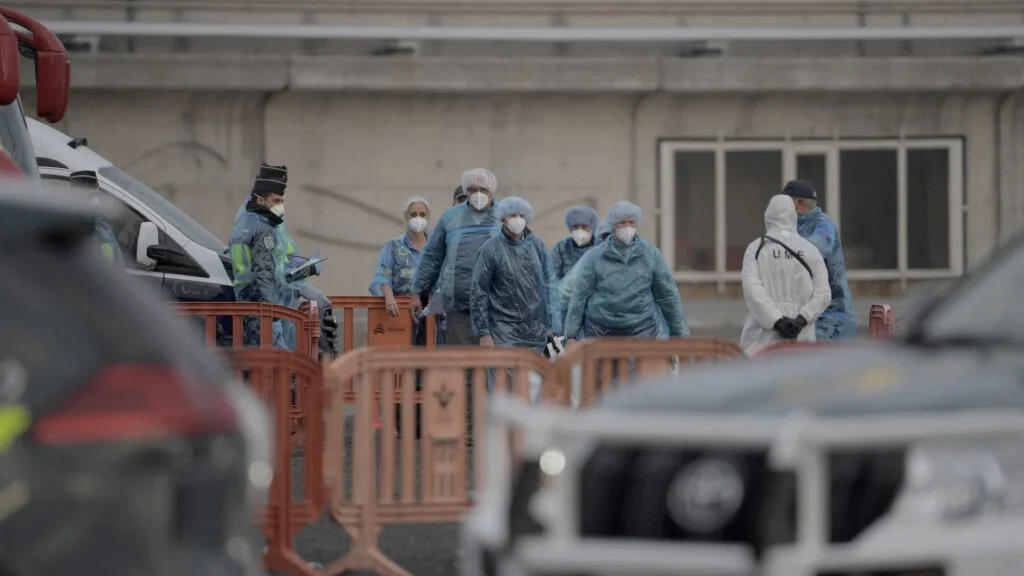
The isolation ward of a high-containment hospital is a place where the world shrinks to the size of a glass pane, a smartphone screen, and the rhythmic, muffled breathing of medical staff encased in pressurized protective suits. In 2014, I spent 19 days in such a facility while being treated for Ebola. As the news cycle churned relentlessly outside, my entire reality was compressed into that singular, antiseptic room.
Today, more than a dozen Americans are living a version of that same isolating reality. They are currently sequestered in a Nebraska quarantine facility, passengers of the MV Hondius, a cruise ship that has become the epicenter of a concerning, if contained, outbreak of Andes hantavirus. While the plight of these passengers has captured the public’s attention, the biological reality is less apocalyptic than the headlines suggest: the virus does not transmit efficiently between humans, and, much like Ebola, it often proves too lethal to its hosts to facilitate a widespread pandemic.
However, beneath the surface of this localized crisis lies a far more unsettling narrative. This episode serves as a high-stakes stress test for the American public health apparatus, illuminating with surgical precision exactly where our defenses remain resilient—and where they have been dangerously hollowed out.
The Architecture of Preparedness: A Success Story
To understand the current crisis, one must first recognize the rare success story that exists in the shadows of our political discourse. The Nebraska biocontainment unit currently housing the MV Hondius passengers is a Level 1 Regional Emerging Special Pathogen Treatment Center (RESPTC). It represents the pinnacle of a tiered national network—the National Special Pathogen System of Care (NSPS)—designed specifically for moments of crisis.
This network is a triumph of long-term planning, having survived three presidential administrations and the shifting winds of partisan politics. It was forged in the fires of the 2014 Ebola epidemic and sustained during periods of relative calm. Coordinating this complex web is the National Emerging Special Pathogen Training and Education Center (NETEC), which maintains rigorous clinical standards and ensures that hospitals across the country, from high-tier treatment centers to Level 3 assessment facilities, remain in a state of constant, ready alert.
This system is working exactly as it was designed to. It is a testament to the idea that public health infrastructure is not a luxury to be toggled on and off, but a foundational pillar of national security that must be maintained even when the public is not afraid.
Chronology of a Global Response
The speed with which the MV Hondius outbreak was identified highlights the efficacy of global collaboration, even as U.S. domestic capacity wanes. When samples were taken from the ship, they were analyzed by the South African National Institute for Communicable Diseases. Utilizing next-generation metagenomic sequencing, they identified the Andes hantavirus within 24 hours—a remarkable feat considering the virus is not endemic to South Africa.
This diagnostic prowess was not a coincidence; it was the fruit of decades of U.S. investment through the CDC’s Global Disease Detection program and PEPFAR, which helped fortify genomic surveillance infrastructure abroad.
Furthermore, the World Health Organization (WHO) has proven its indispensability. As the MV Hondius docked in the Canary Islands to evacuate passengers, the WHO acted as the logistical backbone, coordinating communications between half a dozen nations. This unglamorous, behind-the-scenes work is the difference between a controlled medical transfer and a chaotic contagion event. It serves as a stark reminder of why the WHO remains a cornerstone of global biosecurity.
The Hollowed-Out Infrastructure
Despite these bright spots, the current outbreak has revealed the severe degradation of the U.S. preparedness landscape over the past year. Normally, American public health agencies would be two steps ahead of such an event. Instead, we find ourselves operating as if we are two weeks behind.
The systematic dismantling of our surveillance programs has been particularly damaging. Programs once supported by the U.S. Agency for International Development (USAID)—which were instrumental in identifying disease threats before they reached our borders—have been gutted. In 2023, a CDC-trained community health worker in Tanzania successfully contained an outbreak of Marburg, a deadly filovirus, before it could spark a larger crisis. That is the return on investment for global health programs: outbreaks stopped at the source, preventing them from ever boarding a plane or cruise ship destined for American shores.
Research, too, has faced significant setbacks. The federal government recently curtailed hundreds of millions of dollars in research funding for mRNA vaccine platforms. This is a critical blow, as mRNA technology represents our most agile defense against novel, rapidly mutating pathogens. Symbolically and substantively, the decision by the National Institutes of Health (NIH) to cut a grant supporting one of the few American labs studying Andes hantavirus was a profound error. While that specific cut may not have altered the trajectory of the MV Hondius outbreak, it signaled a retreat from essential scientific preparedness.
Administrative Stagnation and the CDC
Perhaps most concerning is the state of the Centers for Disease Control and Prevention (CDC). The agency has been significantly hollowed out, with as much as a quarter of its staff having departed over the last year. The Epidemic Intelligence Service—our legendary “disease detectives”—has been paralyzed by bureaucratic uncertainty, unsure if their roles would be maintained or eliminated.
Leadership vacuums have become the norm. The CDC has lacked a permanent director for 15 of the last 17 months. Currently, the acting director, Jay Bhattacharya, is attempting to simultaneously lead the NIH—a workload that is fundamentally incompatible with the demands of managing a novel hantavirus cluster.
This lack of stable leadership has manifested in confusing public communications. The CDC delayed its Health Alert Network notice to clinicians until late last week, a critical lag that left providers in the dark about what to look for. Even the terminology used by the Department of Health and Human Services (HHS)—describing a PCR test result as “mildly positive”—suggests either a fundamental misunderstanding of clinical science or a breakdown in clear, authoritative communication.
The Bureaucratic Chokehold: CDC and WHO
Perhaps the most alarming development is the new requirement for CDC staff to seek formal approval to collaborate with the WHO. While administration officials have publicly downplayed this, staff on the ground report a slow, bureaucratic process that has stifled the rapid exchange of epidemiological data.
It is logically inconsistent for the United States to rely on the WHO for global health security while simultaneously placing a bureaucratic wall between its own experts and the organization it helped build. This operational friction has left the U.S. on the back foot, struggling to contribute to a response that we would normally be leading.
A Path Forward: Restoring Our Defenses
Returning to a posture of strength does not require a total upheaval of current policies; it requires a return to basic, clear-eyed operational competence.
- Restore Operational Independence: The CDC must be empowered to coordinate directly with the WHO. Engagement with international health bodies should be a basic function of disease response, not a subject of political negotiation.
- Rebuild the Office of Pandemic Preparedness and Response Policy (OPPR): This office was created to be a central hub for readiness. It is currently empty. Appointing a director and providing the necessary resources is essential to ensure that when the next threat arrives, there is a clear chain of command.
- Invest in Countermeasure Pipelines: The decision to terminate mRNA development contracts must be reversed. We need a robust pipeline for novel pathogens, particularly for those like hantavirus that currently lack vaccines or specific treatments.
- Reframe Global Partnerships: We must rebuild our bilateral health deals on terms that respect the sovereignty and data privacy of our partners in Africa and beyond. If we cannot work alongside the nations where these viruses emerge, we are essentially choosing to be blind to the next pandemic.
Lessons from the Past, Warnings for the Future
It is difficult to view this situation without the shadow of Covid-19, which also arrived on American shores via a cruise ship six years ago. The exhaustion and cynicism following that pandemic have, in many ways, fueled the current trend toward dismantling our public health infrastructure.
However, the lesson of Covid was never that public health is ineffective; it was that public health is incredibly difficult and requires constant maintenance. The passengers in the Nebraska biocontainment unit are, whether they realize it or not, the beneficiaries of decisions made a decade ago to invest in a system that wasn’t considered “urgent” at the time.
If this virus were more transmissible, those sustained commitments would be the only thing standing between the United States and a catastrophe. As the MV Hondius fades from the news cycle, the gaps in our defenses will remain. We have learned this lesson once before. We should not be forced to learn it again at a higher price.
Craig Spencer is a public health professor and emergency medicine physician at Brown University.