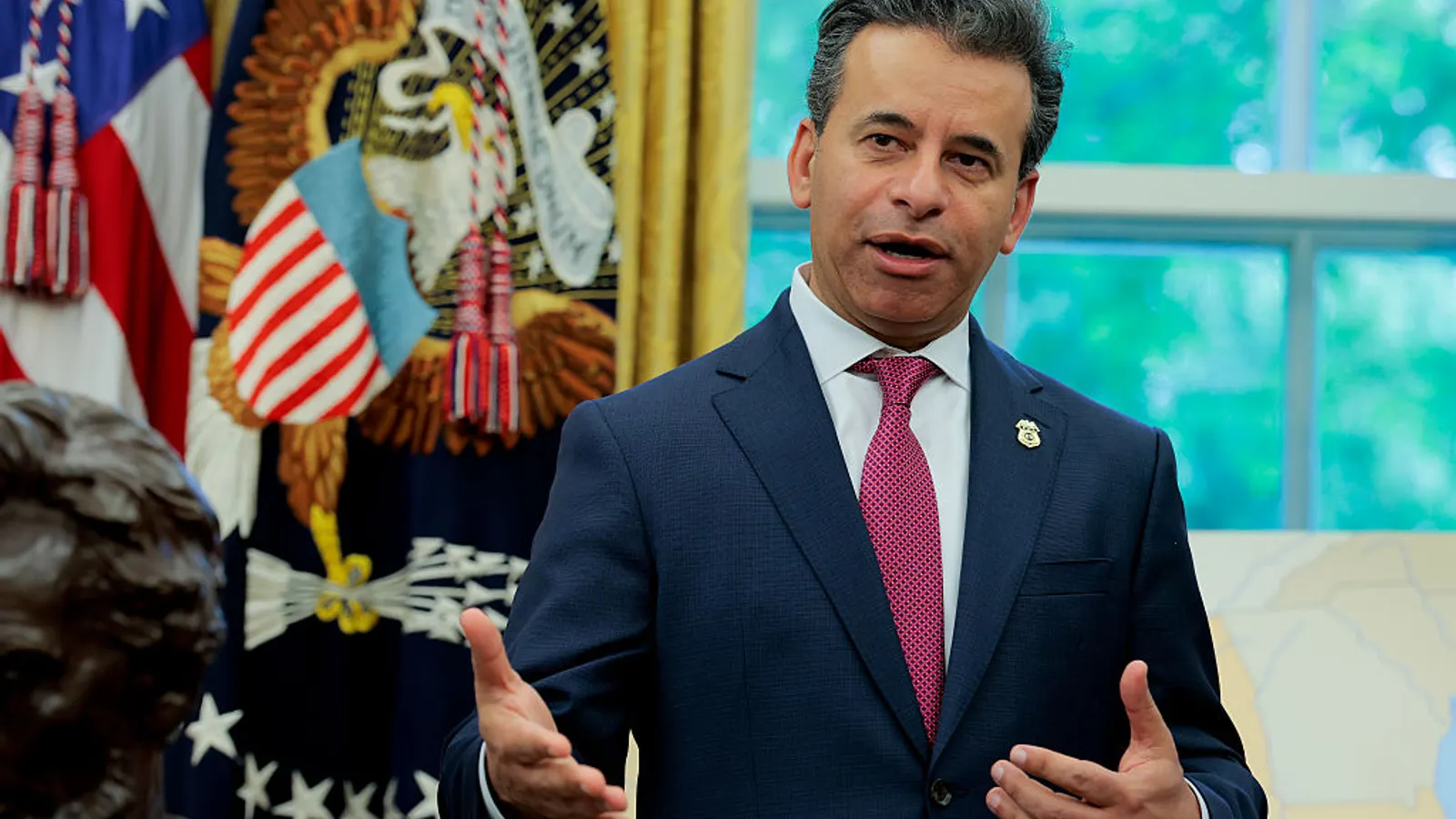
The sudden resignation of Marty Makary as Commissioner of the Food and Drug Administration (FDA) has thrust the agency into a period of profound uncertainty, leaving industry stakeholders, investors, and public health officials grappling with a growing leadership vacuum. With three of the agency’s most critical regulatory positions now occupied by "acting" appointees, the biotech sector is bracing for a potential paradigm shift that could fundamentally alter how new medicines are approved, evaluated, and brought to market.
The Current Landscape: A Regulatory Vacuum
The departure of Makary—a tenure characterized by bold, if polarizing, attempts to modernize the FDA—has left more than just a vacancy at the top. Under federal law, "acting" leadership roles are subject to a strict 210-day time limit. With Kyle Diamantas stepping in as the interim chief, the FDA finds itself in a state of administrative limbo.
This temporal constraint on leadership creates a ticking clock. As the White House and Department of Health and Human Services (HHS) Secretary Robert F. Kennedy Jr. scramble to identify permanent replacements, the agency faces the prospect of further high-level turnover. For an industry that relies on long-term regulatory stability to justify multi-billion-dollar R&D investments, this volatility is deeply unsettling.
Industry veterans are sounding the alarm. Jeremy Levin, board chair of Ovid Therapeutics, recently warned that the next phase of the agency’s evolution will be a definitive test of American scientific leadership. "The next steps will determine whether the FDA restores scientific depth, institutional credibility, and global confidence—or whether America surrenders its preeminence in biotechnology to competing nations that understand scientific institutions are strategic national assets," Levin wrote in a recent assessment.
A Legacy of "Mixed Bags": The Makary Era
To understand the current apprehension, one must evaluate the complex legacy of Marty Makary. His tenure was a study in contrasts: an aggressive push toward deregulation and efficiency that simultaneously alienated portions of the scientific community and triggered internal upheaval.
Regulatory Innovation
Makary’s supporters point to several initiatives aimed at slashing the bureaucratic red tape that often stalls life-saving innovation:
- The National Priority Review Voucher Program: By prioritizing certain drug evaluations, this program effectively compressed timelines from months to mere weeks, accelerating patient access to critical therapies.
- The "Plausible Mechanism" Pathway: This initiative provided a regulatory framework for "bespoke" therapies—often targeting rare diseases—that previously lacked a clear path through the agency’s stringent approval requirements.
- AI Integration: Makary advocated for the use of artificial intelligence in regulatory reviews, aiming to streamline data analysis and reduce the administrative burden on agency reviewers.
- The Single Pivotal Trial Standard: In an effort to expedite drug development, Makary pushed for approving drugs based on one pivotal trial rather than the traditional two-trial standard, a move designed to lower the barriers for entry for small-molecule and genetic medicines.
The Friction Points
However, these innovations were accompanied by significant friction. Critics argue that Makary’s tenure was marred by erratic policy shifts and an apparent shift toward politically motivated decision-making. Investors in genetic medicine, in particular, were frustrated by a perceived "tough stance" on rare disease treatments—a strategy often orchestrated in conjunction with his top deputy, Vinay Prasad.
Furthermore, the agency saw an exodus of institutional knowledge. The departure of seasoned experts such as Peter Marks, Richard Pazdur, Rachael Anatol, and Jacqueline Corrigan-Curay represented a significant loss of "institutional memory." These officials had long served as the bedrock of the FDA’s drug review offices, providing a level of consistency that many feel has been eroded.
Chronology of Institutional Turmoil
The recent instability is not an isolated event but rather the culmination of a year marked by strategic shifts and internal pushback.
- Early-to-Mid 2025: Makary introduces the "Plausible Mechanism" pathway and begins advocating for shorter, more frequent interactions between drugmakers and the FDA.
- Late 2025: Tensions mount as the FDA, under Makary’s direction, implements higher evidentiary standards for new vaccines. This move is met with resistance from major pharmaceutical manufacturers, some of whom publicly signal a reduction in future vaccine research investments.
- Early 2026: A series of high-profile "flip-flops" on regulatory guidance, particularly concerning gene therapies, creates confusion in the markets. Stock prices for companies in the genetic medicine sector experience significant volatility.
- Mid-2026: The resignation of key senior officials in the Office of New Drugs and the Office of Vaccines Research signals internal discontent.
- Current Date: Marty Makary resigns, and Kyle Diamantas is appointed as the acting commissioner, triggering the 210-day federal clock for permanent replacement.
Economic Implications: The Market’s Perspective
Despite the internal turbulence, financial analysts note that Makary’s presence provided a baseline of "nominal stability" that kept the sector afloat. RBC Capital Markets analyst Brian Abrahams observed that Makary’s initiatives provided a "constructive tone" and a "favorable backdrop" for the biotech industry.
Interestingly, index funds tied to the biotech sector have reached levels not seen since the pandemic-era peak, suggesting that investors were willing to tolerate administrative chaos so long as the regulatory environment remained generally permissive. However, the current transition has introduced a new variable: the fear that the successor will be "more directly responsive to political pressure."
Stifel analyst Paul Matteis highlights that the "range of outcomes" for the biotech industry is now exceptionally wide. "The situation could end up being good for biotech, but we are entering a phase where the agency’s independence is the primary question," Matteis noted. There is a palpable concern that the next leader might prioritize political agendas—such as stance on vaping or vaccine skepticism—over the empirical, data-driven approach that has defined the FDA for decades.
The Path Forward: Challenges and Opportunities
As the administration searches for a permanent nominee, the biotech industry is watching Congress closely. Many stakeholders hope that the legislative branch will act as a check on the executive, potentially filtering out "outside-the-box" candidates who might lack the scientific rigor necessary to lead such a complex regulatory body.
Potential Scenarios for the Next Nominee:
- The "Stabilizer": A candidate with deep agency roots, focused on rebuilding staff morale, restoring institutional memory, and providing a predictable, transparent regulatory environment.
- The "Disruptor": A candidate aligned with the current administration’s desire to "shake up" the agency, potentially continuing the trend of rapid, non-traditional approvals, which could lead to further conflict with global regulators like the EMA.
- The "Politician": A candidate selected primarily for their political alignment with the White House, potentially leading to increased partisan influence in scientific decisions.
The consensus among industry experts is that the FDA must urgently re-establish its credibility. Whether that is achieved through a return to traditional, evidence-heavy review processes or through a refined version of the "Makary-style" efficiency remains to be seen.
Conclusion
The resignation of Marty Makary has left the FDA at a critical juncture. For the biotechnology sector, the next few months will be decisive. The agency is not merely choosing a new commissioner; it is defining its identity for the coming decade. As the clock ticks on the current "acting" leadership, the global biotech community remains in a state of watchful waiting, hoping for a leader who can balance the need for rapid innovation with the unwavering commitment to scientific integrity that remains the hallmark of the American regulatory system.
The stakes could not be higher. As Jeremy Levin noted, the FDA is not just a regulatory body; it is a strategic national asset. The ability of the United States to maintain its lead in the global biotechnology race depends entirely on the stability, expertise, and independence of the agency tasked with overseeing it. For now, the industry must navigate the uncertainty, hoping that the next chapter of the FDA’s history prioritizes science over political expediency.