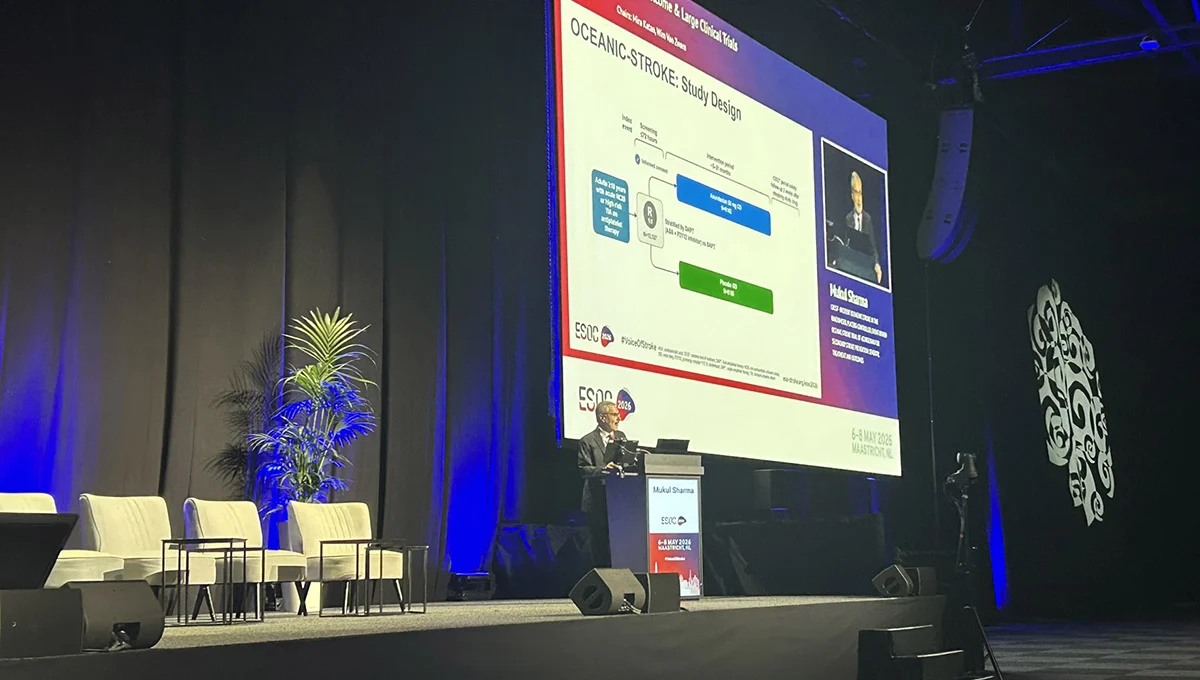
MAASTRICHT, the Netherlands — For over half a century, the medical community has relied heavily on aspirin and standard antiplatelet therapies as the frontline defense against secondary ischemic stroke. However, a landmark shift may be on the horizon. Emerging data from the pivotal OCEANIC-STROKE trial, presented at the European Stroke Organisation Conference (ESOC) 2026, suggest that asundexian—an investigational factor XIa (FXIa) inhibitor—not only prevents recurrent strokes more effectively than placebo but also fundamentally alters the severity of those events that do occur.
The latest findings provide a comprehensive picture of a drug that experts are calling a potential game-changer in neurology, offering the long-sought-after "holy grail" of stroke prevention: a potent antithrombotic that does not carry the punitive risk of increased hemorrhage.
Main Facts: A New Frontier in Antithrombotic Therapy
The OCEANIC-STROKE trial, a massive undertaking involving 12,327 patients, was designed to test the efficacy of asundexian in patients who had already suffered an acute noncardioembolic ischemic stroke or a high-risk transient ischemic attack (TIA). Participants in the trial were already stabilized on standard-of-care antiplatelet therapy (either dual or single), making the bar for incremental benefit exceptionally high.
The primary takeaway from the study is clear: asundexian significantly reduces the rate of ischemic stroke compared to a placebo. More importantly, when breakthroughs do occur, the clinical profile of the stroke is shifted toward the milder end of the spectrum. For clinicians, this means the difference between a patient regaining functional independence and one suffering from permanent, disabling neurological impairment.
The trial’s data indicated that patients on asundexian experienced a 26% relative reduction in the incidence of ischemic stroke. Even more compelling is the reduction in disabling or fatal strokes, which occurred at a rate of 2.1% in the asundexian arm versus 3.0% in the placebo group (cause-specific hazard ratio [csHR] 0.69).
Chronology of Clinical Development
The path to these results has been defined by a rigorous, multi-year evaluation process.
- Initial Conception: The trial was initiated to address the limitations of existing anticoagulants and antiplatelet agents, which often strike a delicate, and frequently unsuccessful, balance between preventing clotting and risking intracranial or systemic bleeding.
- The 2026 Primary Data Release: Earlier this year, the initial analysis of the 12,327-patient cohort confirmed that asundexian outperformed placebo in preventing primary endpoints, setting the stage for deeper sub-analyses.
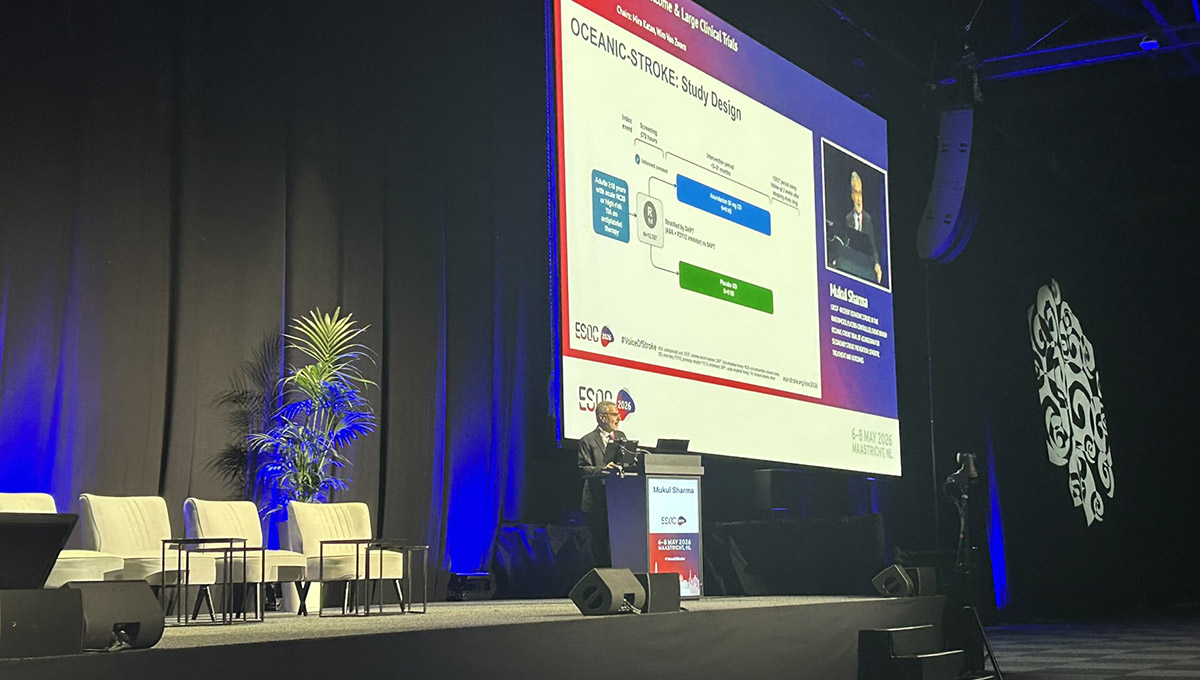
- The ESOC 2026 Presentation: At the recent European Stroke Organisation Conference, lead investigators, including Dr. Mukul Sharma of the Population Health Research Institute at McMaster University, unveiled the secondary analyses. These findings moved beyond simple "event counts" to analyze the qualitative nature of the strokes themselves, focusing on NIHSS (National Institutes of Health Stroke Scale) scores, the need for surgical intervention, and long-term net clinical benefit.
- The Ongoing Evaluation: The research continues to monitor the "tail" of the study data, confirming that the protective effect of asundexian is durable and does not wane over the course of treatment, providing a consistent shield for patients in the high-risk post-stroke period.
Supporting Data: The Science of Milder Strokes
The most striking evidence presented at ESOC 2026 lies in the shift in stroke severity. Dr. Sharma’s presentation highlighted that asundexian-treated patients were statistically less likely to present with an NIHSS score of 8 or higher, which is the clinical benchmark for a severe stroke.
Severity Metrics and Interventional Needs
The data demonstrate a distinct "downward shift" in clinical outcomes:
- NIHSS Score Distribution: Patients on asundexian were significantly more likely to experience "mild" (NIHSS ≤ 3) or "moderate" (NIHSS 4-7) strokes compared to the placebo group.
- Intervention Rates: A critical secondary finding was the reduction in the need for high-acuity interventions. Patients on asundexian were less likely to require intravenous (IV) thrombolysis or mechanical thrombectomy (10.4% vs 15.8%).
- Large-Vessel Occlusion (LVO): The lower rate of endovascular therapy (0.4% in the asundexian arm vs 0.7% in the placebo arm) strongly suggests that asundexian may reduce the occurrence of large-vessel occlusions, the most dangerous and disabling type of ischemic event.
Safety and Hemorrhage
Perhaps the most significant clinical hurdle for any new antithrombotic is the safety profile. In the OCEANIC-STROKE trial, there were no significant differences between the asundexian and placebo arms regarding symptomatic intracranial hemorrhage (0.7% vs 0.6%) or hemorrhagic stroke (0.2% vs 0.3%). This lack of increased bleeding, coupled with the reduction in ischemic events, provides the "net clinical benefit" that has eluded previous pharmacological attempts in this space.
Official Responses and Clinical Interpretation
The medical community has greeted the results with cautious optimism, noting that the consistency of the data is rare in large-scale stroke trials.
Dr. Mukul Sharma, summarizing the findings, remarked, "Asundexian switches stroke severity to the milder end of the scale." He emphasized that the trial’s design—looking at the time-course of the benefit—reveals that the drug’s protective effect is not a "flash in the pan" but a sustained advantage.
Experts in the field have noted that for 50 years, the medical establishment has been limited to aspirin for secondary prevention. The transition to factor XIa inhibition represents a biological paradigm shift. By targeting the intrinsic coagulation pathway rather than the common pathway or platelet aggregation, asundexian effectively "taps the brakes" on the clotting cascade without "cutting the wires" of the body’s natural wound-healing process. This explains why the risk of hemorrhage remains low—a sharp contrast to traditional anticoagulants like warfarin or even newer direct oral anticoagulants (DOACs) used in other indications.
Implications for Future Practice
The implications of the OCEANIC-STROKE trial are profound and likely to influence clinical guidelines in the coming years.
1. A Shift in Standard of Care
If these results hold in broader real-world applications, asundexian could become the new standard of care for patients recovering from noncardioembolic ischemic stroke. By providing a medication that is safer than traditional options and more effective at preventing severe outcomes, clinicians can provide better peace of mind to patients and their families.
2. Economic and Social Impact
Beyond the clinical metrics, the societal burden of stroke is immense. By reducing the severity of strokes, the medical system may see a significant decrease in the long-term disability care costs associated with severe stroke recovery. A stroke that is "mild" instead of "severe" is often the difference between a patient returning to work and a patient requiring institutionalized long-term care.
3. The Future of FXIa Inhibition
Asundexian is the vanguard of a new class of drugs. The success seen in this trial will likely accelerate research into other indications for FXIa inhibitors, including atrial fibrillation and other thrombotic disorders where bleeding risks have historically limited treatment options.
4. Patient-Centered Outcomes
Ultimately, the trial proves that the measure of a successful stroke drug is not just the prevention of the event, but the preservation of the patient’s quality of life. The fact that asundexian-treated patients required fewer emergency mechanical interventions is a testament to the drug’s ability to keep vessels open and brains functional.
Conclusion
As the data from the OCEANIC-STROKE trial continues to be disseminated, the medical community is forced to reconsider the limits of current secondary prevention. Asundexian appears to have met the dual requirements of efficacy and safety, promising a future where a recurrent stroke—if it happens at all—is a manageable medical hurdle rather than a life-altering tragedy. While further longitudinal data will be necessary to confirm these trends, the current evidence marks one of the most significant advancements in stroke neurology in the modern era.