






At the 2026 American Association for Cancer Research (AACR) Annual Meeting, the global oncology community turned its attention to a foundational pillar of modern medicine. The Cancer Research Institute (CRI) and the AACR jointly bestowed the prestigious AACR-CRI Lloyd J. Old Award in Cancer Immunology upon Kenneth M. Murphy, MD, PhD.
This honor, which recognizes scientists whose groundbreaking work has fundamentally shifted our understanding of the immune system’s battle against malignancy, serves as a testament to Dr. Murphy’s decades of rigorous inquiry. His work, particularly in defining the architecture and function of dendritic cells (DCs), has provided the map upon which contemporary cancer immunotherapies are navigated.
The Architect of Immune Response: Who is Kenneth M. Murphy?
Dr. Kenneth M. Murphy’s career is a masterclass in the value of "basic science"—research driven by fundamental questions about biological mechanisms rather than immediate clinical applications. A professor at the Washington University School of Medicine in St. Louis and an investigator at the Howard Hughes Medical Institute, Dr. Murphy has dedicated his life to understanding the regulatory networks of the immune system.
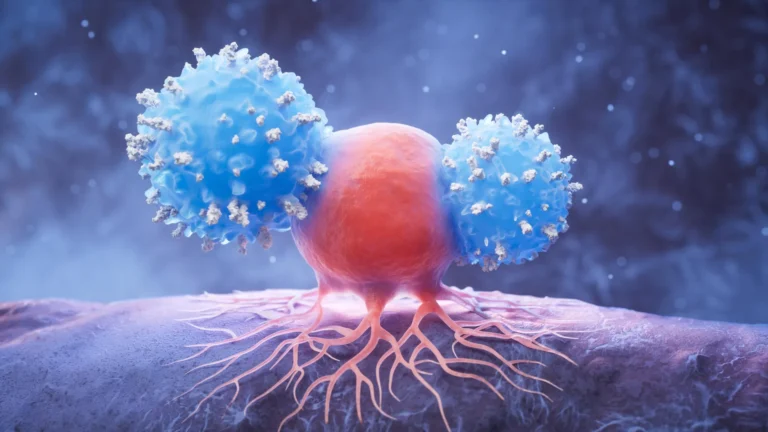
His primary focus has been the dendritic cell, the "general" of the immune system’s infantry. For years, the scientific community struggled to parse the heterogeneity of these cells. Dr. Murphy’s identification of the cDC1 subset—specifically their unique, non-redundant role in cross-presenting antigens to CD8+ T cells—provided a critical missing piece of the puzzle. This discovery explained why certain tumors evade detection and why, conversely, some patients respond to checkpoint inhibitors while others remain refractory.
A New Dialogue: The Fireside Conversation
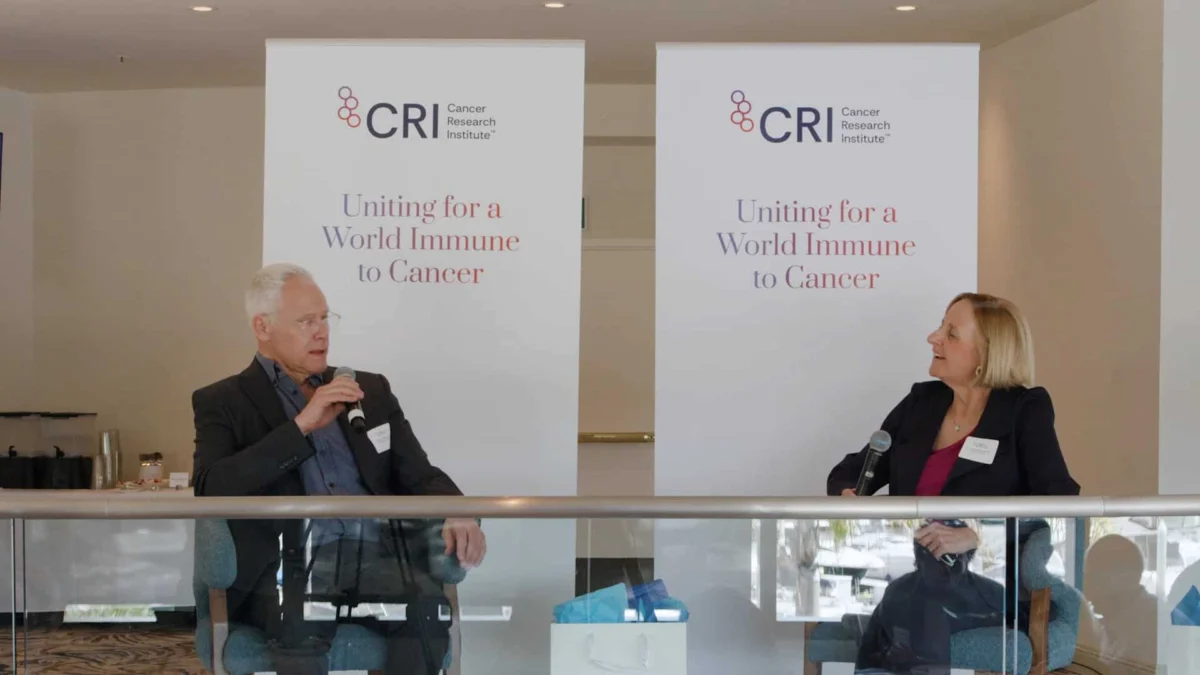
To mark this year’s award, the CRI deviated from the traditional lecture format, opting instead for a "fireside chat" between Dr. Murphy and the 2025 award recipient, Dr. Crystal Mackall. This conversation offered an intimate, unfiltered look at the philosophy of discovery.
The discussion, which can be viewed in the video below, moved beyond academic jargon to address the human side of scientific pursuit: the failures, the nonlinear paths of innovation, and the evolving role of technology in the lab.
(Video: AACR-CRI Fireside Chat with Dr. Kenneth M. Murphy and Dr. Crystal Mackall)
Chronology of Discovery: From Basic Biology to Clinical Reality
The evolution of Dr. Murphy’s work reflects the broader history of immunology—a field that transitioned from descriptive observations in the mid-20th century to the precise, molecular manipulation of cells we see today.
The Foundation (1990s–2000s)
Early in his career, Dr. Murphy sought to understand the lineage commitment of T-helper cells. His lab was instrumental in defining the transcription factors that govern immune responses. This early work was not focused on cancer; it was focused on the "how" and "why" of the immune system’s decision-making process.
The Dendritic Cell Revolution (2010s)
As the field of cancer immunotherapy began to explode with the advent of checkpoint blockade, the focus shifted to the "priming" of the immune system. Dr. Murphy’s lab identified the transcriptional program that defines cDC1s. He proved that these cells are essential for the recruitment and activation of CD8+ T cells—the "killer" cells necessary to eradicate solid tumors.
The Translation Era (2020s–Present)
Today, Dr. Murphy’s research is directly informing the design of next-generation cancer vaccines. By understanding that mRNA and cDNA platforms must specifically engage cDC1s to be effective, researchers are now refining their delivery systems to ensure that antigens reach the correct immune orchestrators, rather than simply flooding the body with potential targets.
Supporting Data: Why Dendritic Cells Matter
The impact of Dr. Murphy’s work is underscored by the current limitations of clinical oncology. Despite the success of immune checkpoint inhibitors (ICI), a significant percentage of patients do not respond to these therapies.
Data presented during the AACR session highlighted that:
- The cDC1 Necessity: In tumors lacking cDC1 presence, T-cell infiltration is often sparse, rendering checkpoint inhibitors ineffective.
- The "Stem-like" T-cell Transition: Dr. Murphy noted that the durability of a patient’s response depends on the conversion of stem-like T cells into effector cells. His research suggests that dendritic cells are the key controllers of this transition.
- Vaccine Efficacy: Clinical trials for cancer vaccines have historically been inconsistent. Dr. Murphy’s work suggests that previous failures were often due to a lack of understanding regarding which dendritic cell subsets were being targeted, a "mismatch" that new precision platforms aim to correct.
Official Responses and Peer Perspectives
During the award ceremony, leaders in the field echoed the sentiment that Dr. Murphy’s work is indispensable. Dr. Crystal Mackall, a pioneer in CAR-T cell therapy, noted that while her own work focuses on the "weaponization" of T cells, she relies entirely on the basic biological framework established by scientists like Dr. Murphy.
"Science is rarely a straight line," Dr. Mackall remarked during the panel. "We spend our careers building bridges, but Kenneth has been busy building the bedrock that all of our bridges rest upon. Without his work on the basic biology of dendritic cells, we wouldn’t have the context to understand why our T-cell therapies work in some patients and fail in others."
Implications for the Future of Cancer Research
The discourse at the 2026 AACR meeting highlighted two major, interconnected shifts in the research landscape: the influence of artificial intelligence and the struggle for the "next big question."
The AI Paradox
Dr. Murphy and Dr. Mackall engaged in a nuanced debate regarding the role of AI. While acknowledging that AI is an "unparalleled tool" for analyzing massive datasets—such as single-cell RNA sequencing and spatial transcriptomics—Dr. Murphy warned against over-reliance. "AI can tell you the correlation," he noted, "but it cannot tell you the significance. It cannot design the experiment that asks the right question. That remains a human endeavor."
The Challenge of Information Overload
The panel expressed concern that the sheer volume of scientific literature today may paradoxically inhibit innovation. Young scientists are often inundated with data, making it difficult to discern the "signal" from the "noise." Both awardees emphasized the role of mentorship in teaching the next generation not just how to use tools, but how to think critically about biological phenomena.
Conclusion: Following the Biology
If there is a unifying lesson from the 2026 AACR-CRI Lloyd J. Old Award, it is that the most transformative breakthroughs are rarely the result of a rigid, five-year plan. They are the result of curiosity, persistence, and a willingness to follow the biology wherever it leads.
As cancer research moves toward increasingly personalized, complex therapies, the work of Dr. Kenneth M. Murphy stands as a reminder that the path forward is illuminated by the fundamentals. By continuing to probe the intricate dance between dendritic cells and T cells, Dr. Murphy and his peers are not just treating cancer; they are defining the future of human health.
The next great wave of progress will not come from forcing a hypothesis, but from the patient, iterative process of discovery—one question at a time.