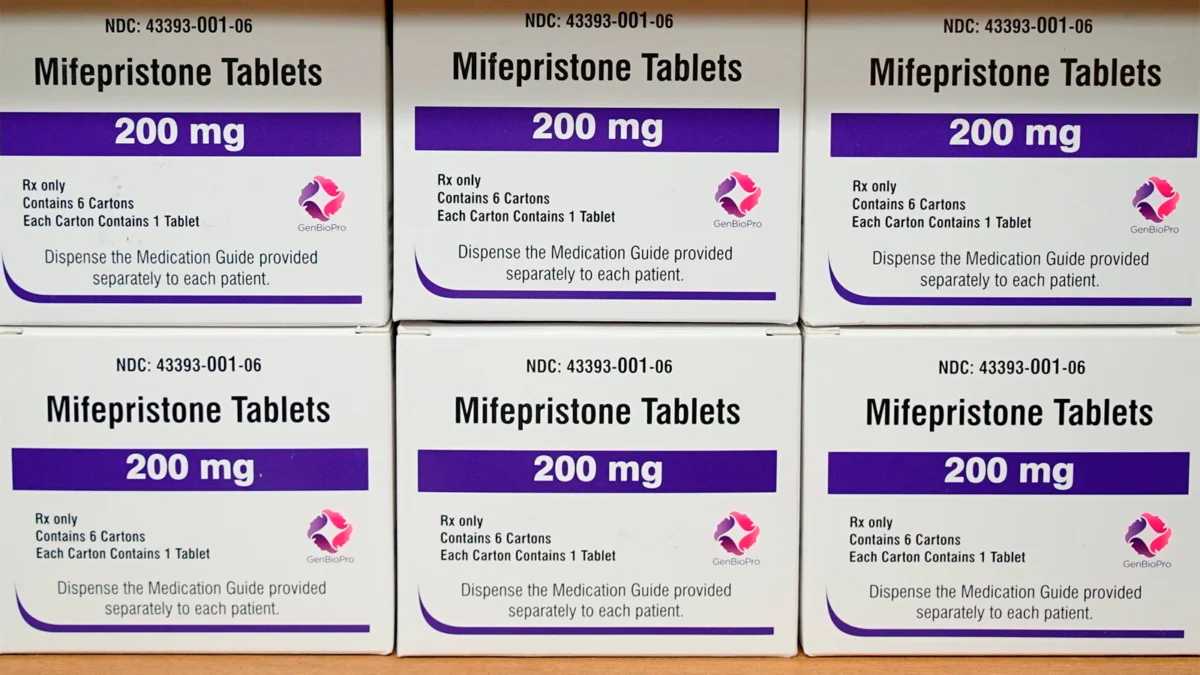
In a significant move that temporarily stabilizes the landscape of reproductive healthcare in the United States, the Supreme Court on Thursday issued an emergency order preserving nationwide access to mifepristone. The ruling effectively halts lower-court restrictions that sought to force patients to undergo in-person doctor visits and cease the distribution of the medication via mail-order pharmacies. While the legal battle continues, this decision ensures that the most common method of abortion in the U.S. remains accessible, at least through the coming year.
The order arrives as a reprieve for reproductive health providers and pharmaceutical manufacturers, who have been bracing for a judicial disruption that could have fundamentally altered the drug approval process. As the litigation winds its way through the federal court system, the nation remains deeply divided, with the legal dispute serving as a lightning rod for broader debates over federal regulatory authority, women’s bodily autonomy, and the shifting political alliances within the Republican Party.
Chronology of a High-Stakes Legal Battle
The current controversy is the latest chapter in a quarter-century-long saga regarding the safety and regulation of mifepristone. First approved by the Food and Drug Administration (FDA) in 2000, the drug has undergone numerous regulatory evolutions. The FDA has consistently maintained that the medication is safe and effective, gradually lifting initial restrictions on who can prescribe it and how it is dispensed.
The timeline of the current legal challenge is as follows:
- 2000: The FDA approves mifepristone for use in medication abortions.
- 2019: The FDA, acting on scientific data, removes the requirement for in-person dispensing, allowing for broader distribution via mail and telehealth.
- 2022: The Supreme Court overturns Roe v. Wade, triggering immediate bans or severe restrictions on abortion in over a dozen states.
- 2023: A wave of litigation begins, initiated by anti-abortion groups and individual states, aiming to roll back the FDA’s modern regulatory framework.
- 2024: The Supreme Court unanimously dismisses a separate lawsuit brought by anti-abortion physicians, ruling they lacked "standing" to challenge the FDA’s drug approval process.
- Late 2024: A new lawsuit, brought by the state of Louisiana, works its way through the 5th U.S. Circuit Court of Appeals, resulting in a ruling that would mandate in-person visits and prohibit mail-order access.
- Current Status: The Supreme Court grants an emergency request to stay the 5th Circuit’s ruling, maintaining the status quo while the case proceeds.
The Intersection of Science and Jurisprudence
At the heart of the litigation is a fundamental disagreement over the role of the FDA. The state of Louisiana, which spearheaded the current lawsuit, argues that the FDA’s loosened restrictions—particularly the allowance of telehealth and mail-order delivery—undermine state-level abortion bans. Furthermore, the state has questioned the drug’s safety, citing potential health risks to patients.
These claims stand in direct opposition to the consensus held by major medical organizations, including the American Medical Association and the American College of Obstetricians and Gynecologists. These bodies point to decades of peer-reviewed research confirming that mifepristone, when used in conjunction with misoprostol, carries a safety profile comparable to other common over-the-counter medications.
The pharmaceutical industry has expressed alarm at the prospect of the judiciary overturning FDA decisions. Industry leaders have warned the Supreme Court that if courts are permitted to second-guess the scientific findings of federal regulators based on political or ideological grievances, it could create an environment of extreme uncertainty for all drug approvals, potentially threatening the development of treatments for cancer, heart disease, and other life-threatening conditions.
Supporting Data: The Prevalence of Medication Abortion
The urgency of this case is underscored by the current reliance on medication abortion within the American healthcare system. According to the most recent data from 2023, medication abortions accounted for nearly two-thirds (approximately 63%) of all abortions performed in the United States.
The accessibility of this method has become even more critical in the post-Dobbs era. In states where surgical abortion clinics have been forced to close or scale back operations, telehealth-based medication abortion has become a lifeline for patients who live in "abortion deserts." The ability to receive care via mail-order pharmacy minimizes the financial and logistical burdens of travel, which disproportionately affect low-income women and those living in rural areas.
Political Turbulence and the FDA Leadership Crisis
The legal battle over mifepristone is inextricably linked to the political pressures mounting on the Trump administration. Anti-abortion organizations, which were instrumental in the push to overturn Roe v. Wade, have become increasingly vocal in their frustration with the current pace of federal regulatory changes.
Earlier this week, the conflict reached a boiling point with the resignation of FDA Commissioner Marty Makary, MD, MPH. Makary, who faced months of intense criticism from conservative allies and anti-abortion activists, was targeted for what they perceived as a "slow pace" in reviewing and potentially restricting access to mifepristone. Organizations such as Susan B. Anthony Pro-Life America had publicly called for his termination, arguing that the administration was failing to fulfill its promises to its conservative base.
The administration’s stance has been characterized by a notable, and often criticized, silence. Despite the federal government’s clear interest in defending the FDA’s regulatory authority, the Trump administration declined to file a written brief advising the Supreme Court on the current emergency appeal. Political analysts interpret this non-action as an implicit nod to the 5th Circuit’s anti-abortion ruling—a calculated maneuver designed to appease the conservative wing of the party while simultaneously acknowledging that public opinion polling continues to show broad support for reproductive rights among the general electorate.
Implications for the Future of Reproductive Rights
The Supreme Court’s decision to stay the lower court’s ruling provides a temporary bridge to stability, but the long-term outlook remains precarious. The ongoing litigation poses several systemic implications:
1. The Erosion of Administrative Deference
If the judiciary continues to empower lower courts to override the scientific determinations of the FDA, the fundamental structure of drug regulation in the U.S. could be permanently altered. This "judicialization" of medical science threatens to make the availability of essential medications dependent on the partisan makeup of federal courts rather than clinical evidence.
2. The Geographic Divide
The conflict has exacerbated the divide between "blue" states, which are actively working to shield providers and patients, and "red" states, which are utilizing the courts to enforce their bans across state lines. The current Supreme Court case effectively forces the federal government to pick a side in this regional struggle, a position the administration has thus far avoided.
3. The Future of Telehealth
Should the courts eventually rule in favor of the restrictions, the implications for the broader telehealth industry would be profound. If a federal court can block the delivery of a specific, FDA-approved medication by mail, it sets a precedent that could be applied to other areas of healthcare, potentially curtailing the reach of digital health platforms in areas ranging from mental health to chronic disease management.
Conclusion
As the Supreme Court prepares for the next phase of this litigation, the nation watches with bated breath. The case represents a collision between the executive branch’s regulatory authority and a judiciary that has shown an increasing willingness to intervene in public health matters. For millions of women, the outcome of this case will not be an abstract debate about administrative law, but a definitive factor in their ability to access essential reproductive healthcare.
While the court has acted to preserve the status quo for now, the shadow of the 5th Circuit’s skepticism toward the FDA lingers. The resignation of Dr. Makary and the administration’s hesitant posture suggest that the battle over mifepristone will remain a central, volatile feature of American politics and law well into the next year. Whether the Supreme Court ultimately chooses to reaffirm the FDA’s scientific autonomy or allow political considerations to dictate medical access remains the most critical, yet unanswered, question in the ongoing fight over abortion rights.