











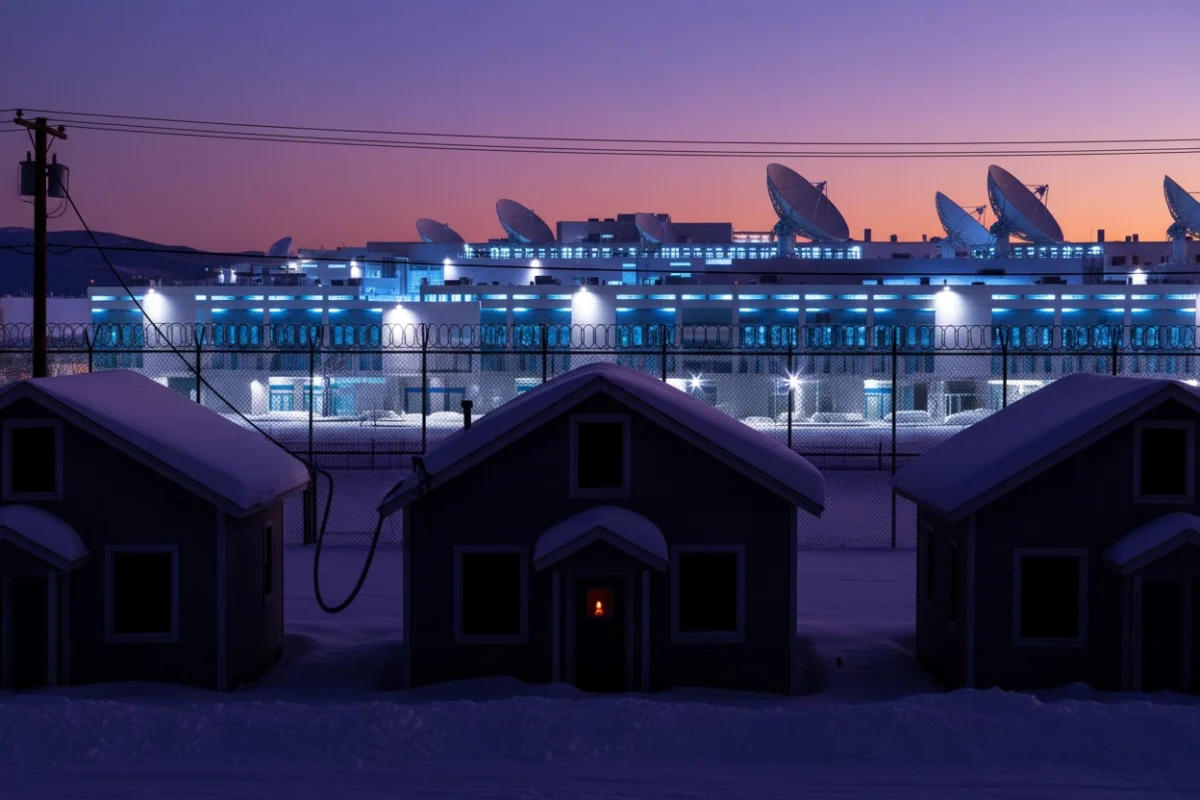
The fundamental social contract—the implicit guarantee that utilities will provide essential services to the public—is facing a profound crisis in the American West. This week, residents in the Lake Tahoe region received notification that their connection to the municipal power grid is slated for termination following the conclusion of the next ski season. For nearly 50,000 Nevadans, this is not merely a logistical hurdle; it is a forced migration from the modern era of domestic stability into a state of involuntary energy independence.
As the global artificial intelligence (AI) arms race accelerates, the appetite for electricity to power massive data centers has begun to collide with the needs of residential communities. In a development that has sent shockwaves through the region, utility providers are increasingly prioritizing high-load industrial clients over retail consumers. The result is a stark, zero-sum struggle for energy sovereignty that threatens to redefine the economic landscape of rural and suburban Nevada.
The Mechanics of Displacement: A Chronology of the Crisis
The situation did not manifest overnight. The current energy crunch is the culmination of years of shifting priorities within the energy sector, regulatory approvals, and the explosive growth of high-density computing infrastructure.
The Build-Up (2020–2023)
The foundation for this crisis was laid during the post-pandemic economic shift. As cloud computing demand surged, Nevada emerged as a prime location for server farms due to favorable tax structures and geographic proximity to West Coast tech hubs. Concurrently, utility companies began approving massive load requests for facilities owned by industry giants.
The Regulatory Shift (2024–2025)
Throughout this period, the Public Utilities Commission of Nevada (PUCN) navigated complex applications for grid expansion. While residents faced rising utility costs—averaging a 30% increase since 2020—the focus of infrastructure investment shifted toward the Tahoe Reno Industrial Center. Regulators argued that these industrial developments would bolster the state’s tax base and technological prestige.
The Notification (2026)
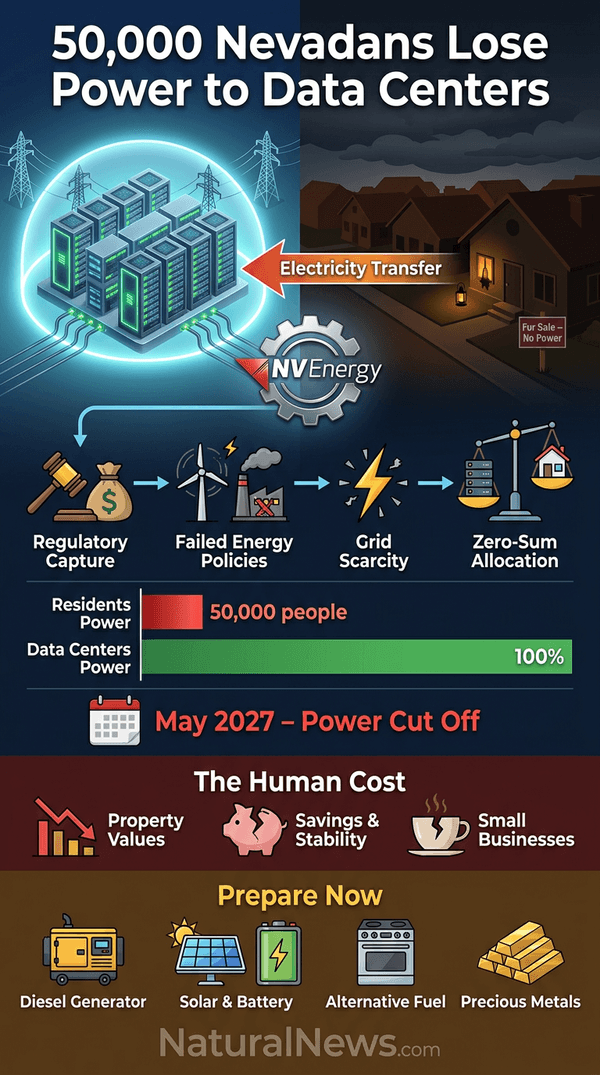
In a move that caught local governments and residents off guard, utility providers issued formal notices regarding the cessation of service for specific residential zones in the Tahoe area. By early 2027, the grid infrastructure currently serving these homes will be reallocated to meet the guaranteed power demands of commercial data centers.
Data Centers vs. Domesticity: Supporting Energy Metrics
The core of the conflict lies in the sheer scale of energy required for modern AI infrastructure. A single large-scale data center can consume as much electricity as a small city. When utilities are faced with finite capacity, the economic incentive to prioritize a singular, high-volume contract with a tech corporation often outweighs the lower-margin, dispersed revenue of residential customers.
The Energy Affordability Gap
Data provided by regional energy analysts indicates a growing divergence between industrial power rates and residential utility costs. Since 2020, while the national average for electricity has climbed, the burden of funding grid modernization has fallen disproportionately on residential ratepayers. Despite these contributions, residential users are the first to be deprioritized when capacity hits a ceiling.
International Comparison
The U.S. energy landscape stands in stark contrast to global competitors. China, for instance, has aggressively expanded its hydropower and nuclear capacity, aiming for a 300 TWh increase by 2033. Conversely, the United States has faced a bottleneck in energy production due to stringent regulatory frameworks and a lack of investment in baseload generation. As demand from AI sectors outstrips the supply, the U.S. grid has become a theater of scarcity.
Official Responses and Regulatory Justification
The response from official bodies has been characterized by a focus on "grid reliability" and "economic growth." NV Energy and regional utility providers have defended the transfer of power by citing the contractual obligations inherent in their industrial service agreements.
"We are managing a constrained resource," a spokesperson for the regional utility oversight committee stated during a recent briefing. "The transition of load is a necessary step to ensure that the critical technological infrastructure of the region remains operational. We are working with affected municipalities to identify alternative energy pathways."
However, local municipal leaders in the Lake Tahoe region have characterized these responses as dismissive. "They are essentially telling families that their lights are less important than an algorithm," said one local official. "There has been no serious plan presented for how 50,000 people are expected to bridge the gap between grid dependency and total self-sufficiency in such a short timeframe."
The Human Cost: A New Economic Reality
The implications for the residents of Lake Tahoe are profound. For many, the home is their primary asset. The loss of grid-provided power threatens to render these properties functionally obsolete in the traditional real estate market.
Asset Devaluation
Real estate experts suggest that residential properties without a reliable connection to the utility grid will experience a sharp decline in market value. The cost of retrofitting a home to be fully off-grid—including solar arrays, high-capacity battery storage (such as lithium-iron-phosphate systems), and backup generators—can exceed $50,000 per household. In a region where winters are characterized by heavy snowfall and limited sunlight, solar dependency is an unreliable solution without a massive investment in secondary storage or fossil-fuel-backed generation.
The "Systemic Abandonment" Argument
Critics argue that this incident is a preview of a broader trend. By weaponizing energy scarcity, institutions are effectively creating a tiered system of citizenship. Those who can afford the capital-intensive infrastructure to "opt-out" of the grid will survive, while the remaining population will be forced to accept a reduced quality of life or abandon their communities entirely.
National Implications: Is Nevada the Canary in the Coal Mine?
The Nevada scenario is increasingly seen as a bellwether for the rest of the nation. Similar pressures are mounting in states like Georgia, where land acquisition via eminent domain has sparked legal battles between farmers and data center developers. In Texas, the strain on the ERCOT grid during extreme weather events has already highlighted the conflict between industrial consumption and residential reliability.
The AI Arms Race and Grid Capacity
The current trajectory suggests that the AI boom is currently incompatible with the aging U.S. electrical infrastructure. Without a significant, rapid investment in base-load energy—such as small modular reactors (SMRs) or large-scale natural gas expansion—the conflict between tech expansion and human habitation will only intensify.
The Role of Decentralization
As public confidence in centralized utility providers wanes, a movement toward "decentralized energy" is gaining traction. The push for individual solar, wind, and micro-grid solutions is no longer a purely environmentalist pursuit; it has become a strategy for domestic security.
Preparing for a Post-Grid World
For citizens living in regions marked by rapid industrial tech expansion, the consensus among energy consultants is that self-reliance is becoming a mandatory safeguard. The following areas are identified as critical for long-term preparedness:
- Energy Redundancy: Moving beyond simple solar setups to include dual-fuel backup generators and high-capacity home battery banks.
- Resource Independence: Establishing reliable, independent water and food sources that do not rely on electrified municipal pumps or refrigeration.
- Financial Decentralization: Diversifying financial assets into holdings that are not tethered to the traditional banking infrastructure, which remains susceptible to the same pressures that are currently destabilizing the energy sector.
Conclusion: A Turning Point for the Social Contract
The situation in Lake Tahoe is more than a local news story; it is a profound indicator of where the modern social contract is headed. When the requirements of machines and the needs of people come into direct conflict, the current power structure has demonstrated a clear preference for the former.
As we look toward 2027, the 50,000 Nevadans facing the dark are the leading edge of a national shift. The future will belong to those who are capable of "lighting their own path"—both figuratively and literally. The transition to a decentralized, self-reliant lifestyle is no longer a radical suggestion; it is the logical response to a system that has begun to view the average citizen as a cost rather than a constituency. The choice to adapt, or to remain dependent, will be the defining challenge of the coming decade.