






Published May 15, 2026
In the vast lexicon of yoga, the term sutra—meaning "thread"—serves as the foundation for the tradition’s most profound teachings. Among these, the Yoga Sutras of Patanjali, compiled in the third century C.E., remain the definitive manual for the practice. Yet, for the modern practitioner accustomed to the rigorous, sweat-drenched flow of contemporary studios, it may come as a surprise that in a text of 195 aphorisms, only three are explicitly dedicated to the art of asana, or posture.
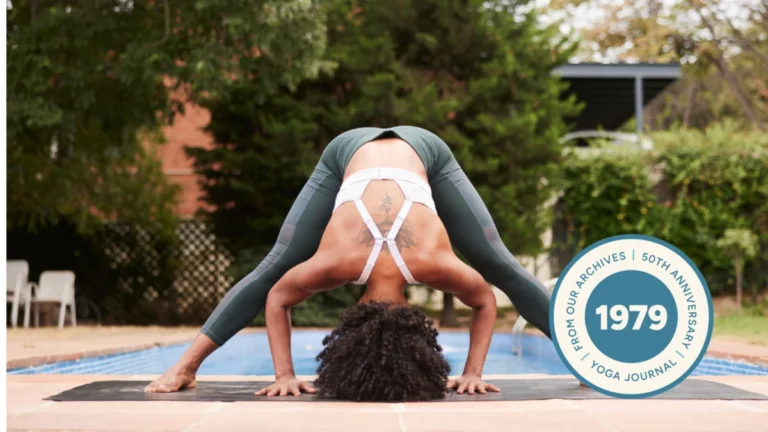
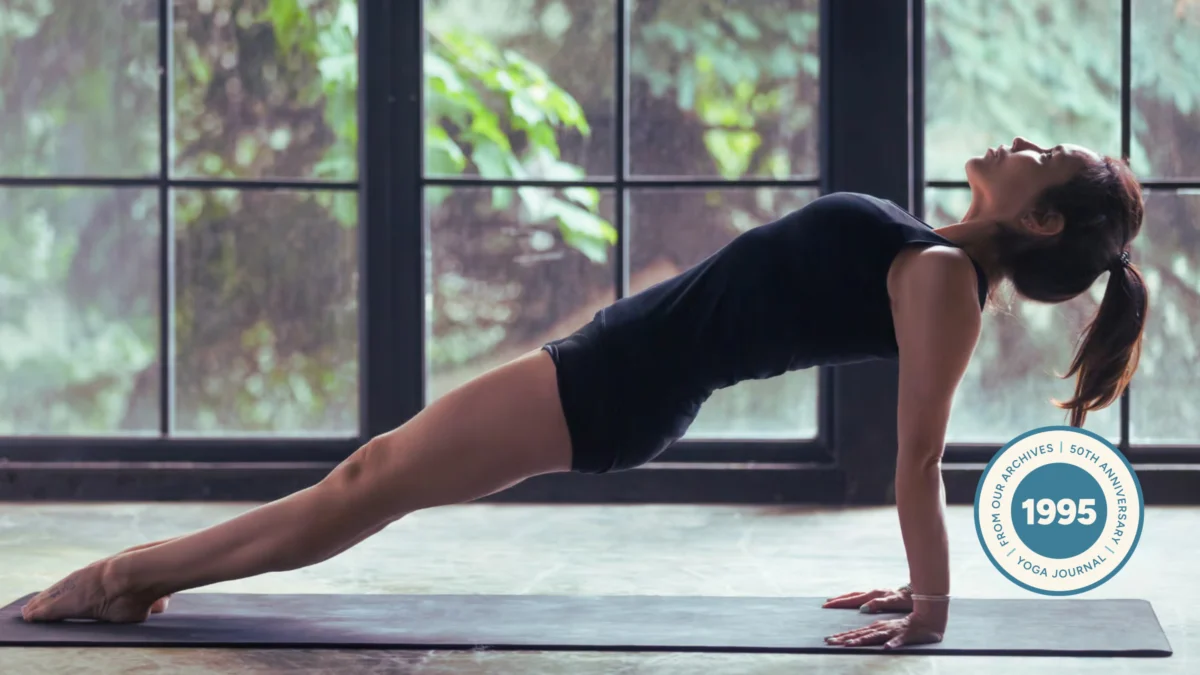
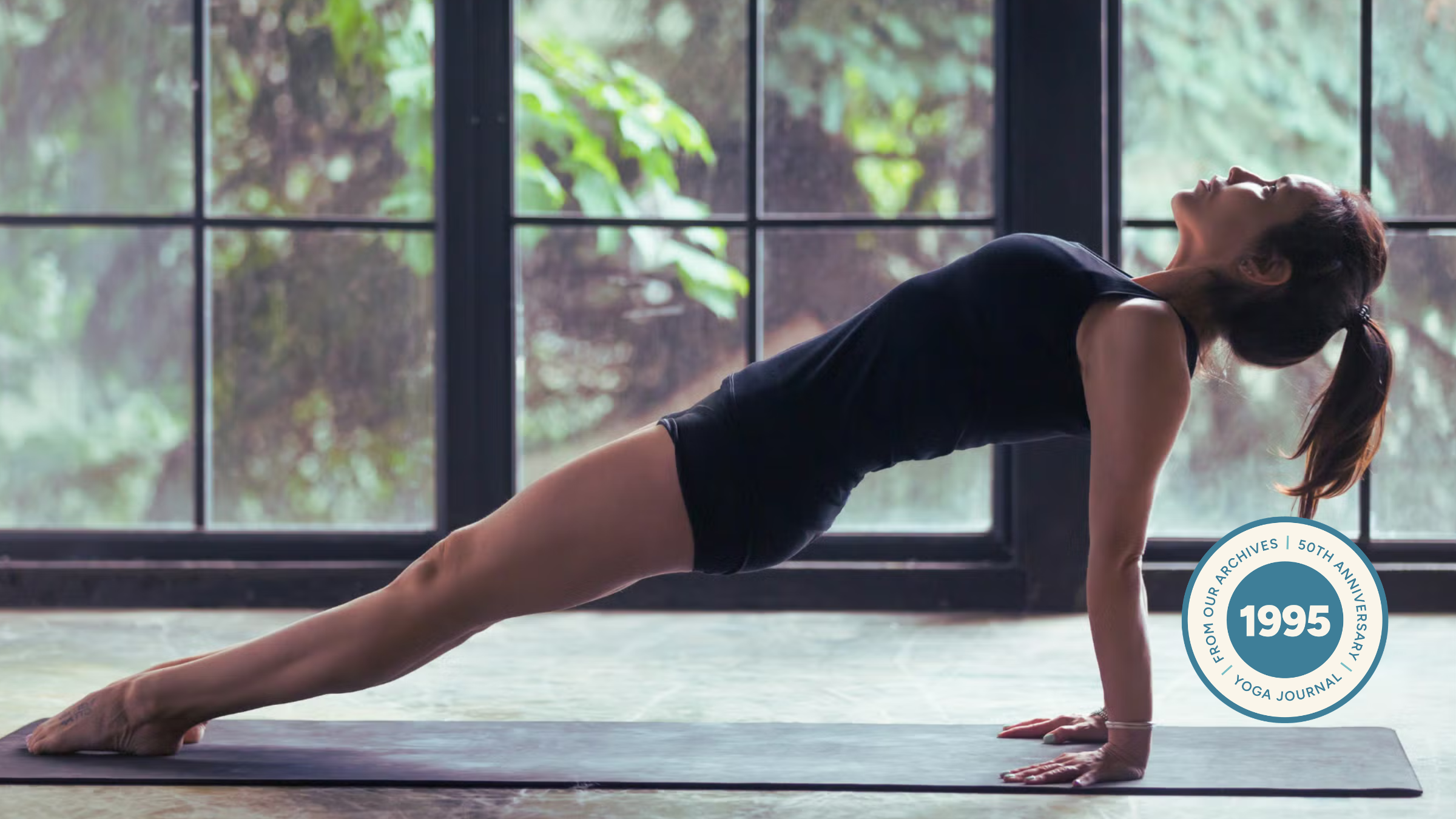
This article, retrieved from the Yoga Journal archives (originally published in July-August 1995), explores the deep philosophical resonance of Purvottanasana (Reverse Plank Pose) and how we can use this specific physical engagement to reconcile the duality of our own existence.
The Philosophy of the "Seat" and the Search for Equanimity
Patanjali’s intent was never to provide a step-by-step manual for complex physical maneuvering. Instead, he offered a conspectus of the "ideal" asana—a benchmark against which all postures are measured. To Patanjali, asana is a preparatory tool for the real work: intensive breathing and meditation. The literal translation of asana is "seat," implying that the ultimate goal of the practice is to train the body to remain steady and comfortable for long durations of stillness.
This comfort is not mere physical ease; it is the "relaxation of tension" that allows the finite body to coincide with ananta, the "infinite." The Sarva Darshana Samagraha states, "Liberation results from knowledge, knowledge from study, and study is only possible in a healthy body." Thus, the body serves as the primary instrument for liberation.
However, the path toward this state is often hindered by the dvandvas—the "pairs of opposites"—such as joy and sorrow, pain and pleasure, or light and dark. While Patanjali famously posited sarvam dukham ("all is suffering"), other schools of yoga argue that life is an outpouring of divine bliss. In this view, the opposites are not conflicts to be escaped, but "dancing partners." Through asana, we are invited to join this dance, integrating the polarities of our experience to make ourselves whole.
The Body as a Mirror of Duality
To understand the body through the lens of yoga, one must first identify the two traditional pairs of opposites that manifest physically.
The Median Plane: Left and Right
The dakshina (right/south) side represents the dynamic feminine power, Shakti. Conversely, the uttara (left/north) side represents her spouse, Shiva, the quiescent witness. In the marriage of yoga, these forces unite along the "median plane"—the plumb line of alignment and poise. B.K.S. Iyengar, one of the most influential figures in modern yoga, frequently emphasized that this median is the "God of all extension." Beginners often label one side "bad" and the other "good," but true practice involves recognizing these sides as complementary facets of the same whole.
The West and the East: Back and Front
The second pair is the front and the back. In Western culture, our reliance on the "front brain" (the neocortex) keeps us focused on the visible, "light" side of our existence—the purva (front/east). Meanwhile, the back—the pashima (back/west)—remains the "shadow" side. It is the tactile, emotional, and often neglected aspect of our consciousness. Purvottanasana—the "intense extension of the east side"—acts as a bridge, forcing us to engage the back body to support the opening of the front.
Chronology of Practice: Building the Reverse Plank
Mastering Purvottanasana requires a systematic approach. The following progression, adapted from traditional Hatha techniques, allows students to safely navigate the intense extension required by the pose.
Phase 1: Awakening the Scapulae
Before attempting a full backbend, one must learn to feel the shoulder blades. Lying on the floor with knees bent, the student should observe the scapulae. By imitating the "good" side’s alignment on the "bad" side, the student begins the process of balancing the physical body. Pressing the scapulae toward the ribs and away from the spine provides the structural integrity necessary for later stages.
Phase 2: Supported Preparation
Using a metal folding chair and a yoga block, practitioners can begin to introduce the sensation of the pose without the full weight of gravity. Sitting on the edge of the chair, with palms turned upward and pinky sides pressing into the frame, encourages the inward rotation of the arms. This protects the joints and creates the foundation for chest expansion.
Phase 3: The Intermediate Plank
By moving to a seated position with the chest bolstered by the chair’s back, the practitioner begins to "burrow" the scapulae into the ribs. This movement is essential; without it, the heart remains closed, and the pose becomes a strain on the neck rather than an expansion of the torso.
Supporting Data: Avoiding the "Warped Plank"
A common error in Purvottanasana is the "warped variation," where the pelvis sinks and the shoulders collapse. The objective is a flat, ramp-like slope from the feet to the head.
- Key Engagement: Soften and widen the top of the buttocks, but engage the hamstrings and the lower buttocks to support the lower spine.
- The Role of Props: If the neck feels strained, use a folded blanket on a chair seat to cradle the head. This allows the practitioner to focus on the extension of the sternum rather than the fear of cervical compression.
- The Hands: Whether pointing fingers toward or away from the feet, the focus remains on the mounds of the index fingers and thumbs to prevent wrist collapse.
Implications for Daily Life
The practice of Purvottanasana extends far beyond the yoga mat. By consciously working the body equally on both sides and learning to trust the "shadow" of the back body, the practitioner develops a greater capacity for emotional and physical resilience.
When we hold the Reverse Plank, we are not merely stretching our muscles; we are "standing Patanjali on his head." We are choosing to embrace the pairs of opposites rather than fleeing from them. We are acknowledging that the "intense extension of the east" requires the firm, grounded support of the "west."
As Sri Aurobindo eloquently observed, the goal is to realize the "soul of good in all things that have the contrary appearance." In this, yoga ceases to be a way out of life and becomes a way of life—a practice of integration that transforms the perversions of our daily conflicts into a higher, divine truth.
Summary of Key Principles
- Sutra (Thread): A concise rule or aphorism designed to weave together the fabric of yogic practice.
- Asana (Seat): A state of "steady and comfortable" posture intended to prepare the body for meditation.
- Dvandvas: The pairs of opposites (joy/sorrow, light/dark) that serve as the "dancing partners" of our creative tension.
- The Median Plane: The alignment of the right and left sides of the body, functioning as the "plumb line" of human poise.
- Purvottanasana: The "intense extension of the east side," a symmetrical posture that requires the back body to support the front.
By integrating these principles, the practitioner moves closer to the ultimate goal of yoga: not to achieve a perfect shape, but to achieve a state of being where the body and mind exist in seamless harmony. As the 1995 archive reminds us, the dance is already happening—the only question is whether we are willing to join it.