











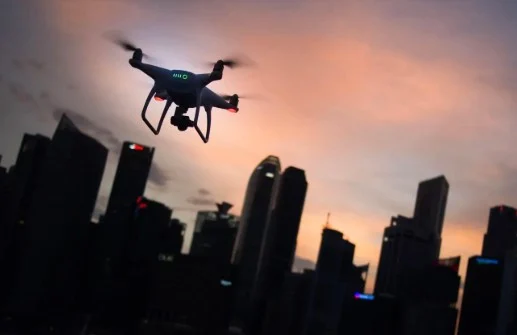
The conflict in Ukraine has transcended the traditional boundaries of the battlefield, descending into a harrowing new chapter defined by relentless aerial saturation. In a span of less than 48 hours, the war has reached deep into the heart of both nations, blurring the lines between military infrastructure and civilian life. The latest surge in hostilities, characterized by an unprecedented volume of drone and missile strikes, has left residential neighborhoods in both Ryazan and Kyiv in ruins, marking a chilling escalation in a conflict that shows no signs of abating.
A Chronology of Escalation: From Border Skirmishes to Urban Terror
The current cycle of violence began with a significant expansion of Ukraine’s long-range drone campaign. On the night of May 14, 2026, the Russian city of Ryazan, situated approximately 130 miles southeast of Moscow, became the target of a massive, multi-wave aerial assault.
According to regional Governor Pavel Malkov, 99 kamikaze drones were deployed against the area. The strike reached beyond military objectives, tearing into the "Tricolor" residential complex—a prominent group of three 25-story buildings adorned in the Russian national colors. The impact was catastrophic; residents were caught in their sleep as drones shattered the facade of the buildings. By the time emergency responders reached the site, four civilians, including one child, were confirmed dead.
The Kremlin’s response was immediate and overwhelming. Characterizing the attack as a deliberate act of terrorism, Russian forces initiated a retaliatory barrage of staggering proportions. Within hours, 675 attack drones and 56 missiles were launched against Kyiv and surrounding regions. The assault hit six districts of the capital and struck critical infrastructure as far as the Odesa ports. The human cost in Kyiv was equally devastating: 10 civilians killed, including a young girl, and 45 others wounded.
This sequence of events marks a departure from the localized fighting that defined the early years of the war. We are no longer witnessing a conflict of territorial lines, but a war of attrition waged through the sky, where the primary targets are increasingly the spaces where families reside.
Supporting Data: The Arithmetic of Attrition
The sheer scale of the weaponry involved in these latest strikes highlights a transformation in modern warfare, where cost-effective, mass-produced drones have replaced surgical precision as the preferred tool of engagement.
Military analysts have noted that the sheer volume of ordinance launched during this 48-hour window is unprecedented. Ukrainian President Volodymyr Zelensky reported that Russia had deployed more than 1,560 drones since the preceding Wednesday alone. This represents a strategic shift toward "saturation warfare," a tactic designed to overwhelm air defense systems by flooding the airspace with cheap, explosive-laden drones.
The damage is not limited to the human toll. In Ryazan, the Investigative Committee of Russia confirmed that while "industrial sites" were struck, the damage to the Tricolor complex was a centerpiece of the assault. Similarly, in Kyiv, the destruction of a nine-story residential building, which resulted in the loss of seven lives from a single site, underscores the indiscriminate nature of these weapons.
This follows a broader pattern observed earlier in the month, when Ukrainian forces launched 117 drones in a single operation, reportedly damaging up to 20 Russian warplanes, including nuclear-capable bombers. While Moscow has officially denied the severity of these losses, satellite imagery and independent analysts suggest that the Ukrainian drone program is evolving into a significant strategic threat capable of reaching deep into the Russian interior.
Official Responses and the Propaganda War
As the smoke clears, the rhetoric from both sides remains as volatile as the conflict itself.
The Kremlin’s Stance
Russian officials have framed the strike on Ryazan as an act of international terrorism, utilizing the event to justify the intensity of their subsequent retaliatory strikes. The Russian Defense Ministry claimed that its massive missile and drone response hit "all designated facilities," though they offered little clarity on what those facilities were. By designating the Ukrainian drone program as a terrorist entity, Moscow aims to consolidate domestic support and frame the conflict as an existential struggle against external aggression.
Kyiv’s Perspective
Conversely, the Ukrainian administration views these long-range strikes as a legitimate, necessary response to the ongoing bombardment of their own cities. President Zelensky, in his evening address to the nation, highlighted the human cost of the Russian retaliation, emphasizing the loss of civilian life in Kyiv and the destruction of the city’s infrastructure. Kyiv maintains that their strikes on Russian soil are aimed exclusively at military bases, airfields, and industrial sites, arguing that any civilian impact is an unfortunate consequence of Russian air defense systems intercepting drones over populated areas.
The International Perspective
The United States and its NATO allies remain in a precarious position. While Western nations continue to provide material and logistical support to Ukraine, there is a visible hesitation to endorse the increasingly aggressive drone strikes on Russian territory. The U.S. continues to provide weapons but has yet to offer a clear path toward diplomatic reconciliation, leaving the international community to watch from the sidelines as the cycle of violence deepens.
Implications: A War Without Boundaries
The tragedy in Ryazan and the devastation in Kyiv point to a grim reality: the war has entered a phase where the "fog of war" is no longer just a tactical challenge, but a humanitarian crisis.
The Collapse of Diplomatic Channels
Peace talks have effectively stalled, with Russia outright rejecting Ukraine’s demands for an unconditional ceasefire. While small-scale successes—such as the recent prisoner exchange involving wounded soldiers and young conscripts—provide a glimmer of hope, they are overshadowed by the lack of high-level diplomatic engagement. As long as both sides believe they can achieve their objectives through superior force, the incentive to negotiate remains minimal.
The Human Toll
The most profound impact of this new phase is the psychological toll on the civilian population. As Tetiana Lytvyn, a Ukrainian woman waiting for news of missing relatives, poignantly noted, "The war might end, but for those of us with family still missing, the war will never be over until they come home." This sentiment is echoed by families in Ryazan and across Russia, who are increasingly finding themselves in the line of fire.
The reality is that these strikes are not achieving decisive military victories. Instead, they are hardening public resolve, creating deeper hatred, and ensuring that any future peace will be built on a foundation of generational trauma.
A Future Defined by Drone Warfare
As the conflict persists, the reliance on drone technology will likely increase. Drones are cheap, difficult to track, and capable of psychological terror. The precedent set by this week’s events suggests that cities, regardless of their distance from the frontlines, will remain potential targets.
The international community is now faced with a fundamental question: Can this conflict be contained, or are we witnessing the permanent integration of residential terror into the mechanics of modern war? Without a concerted effort toward de-escalation, the skies over Eastern Europe will continue to be filled with the hum of kamikaze drones, and the death tolls will continue to rise, leaving behind nothing but broken homes and shattered lives.
The cycle of violence is self-perpetuating, and as the drones continue to fly, the hope for a return to normalcy fades further into the horizon, replaced by the relentless, grinding reality of a war that has no front—only victims.