










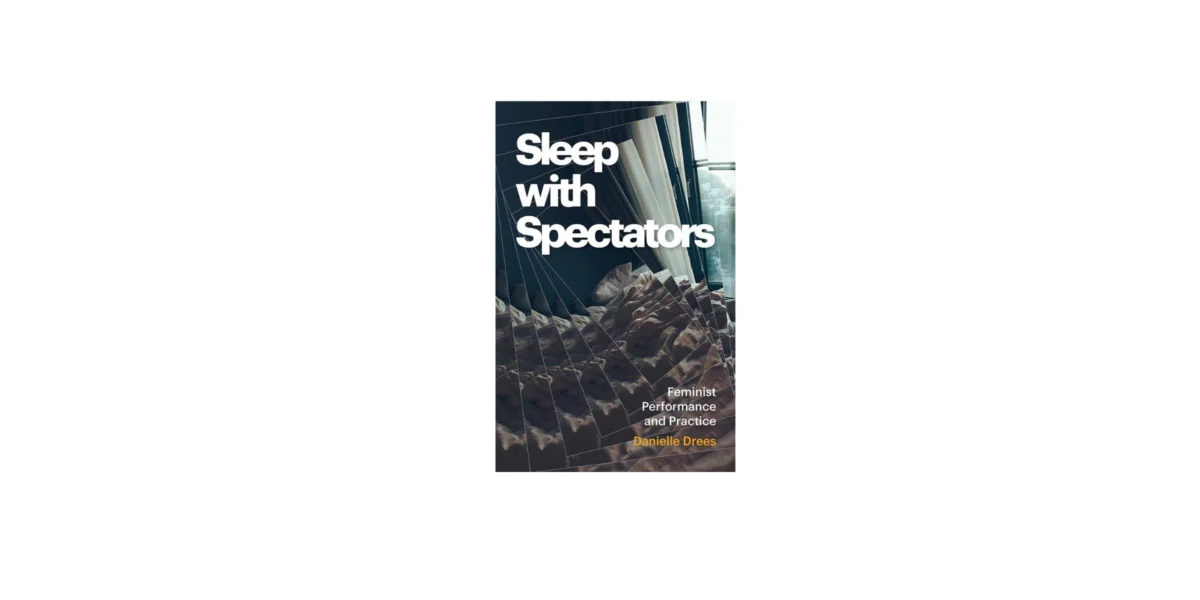
In a world increasingly defined by the "hustle culture" of the 24-hour economy, the act of closing one’s eyes has become an increasingly political battleground. A forthcoming scholarly intervention, Sleep with Spectators: Feminist Performance and Practice, written by Danielle Drees and published by the University of Minnesota Press, argues that the biological necessity of rest is not merely a private affair but a site of profound feminist resistance. Set for release on September 8, 2026, the book posits that sleep and its antithesis, sleeplessness, serve as essential lenses through which to examine the inequities of modern life.
By analyzing the intersection of performance art, theatrical history, and social theory, Drees challenges readers to view the restorative power of sleep as a radical tool for imagining a more equitable, interdependent future.
The Intersection of Rest and Resistance: Core Themes
At the heart of Drees’ inquiry is a central provocation: What happens to our understanding of gender, power, and labor when we stop viewing sleep as a "waste of time" and start viewing it as a site of political agency?
The book serves as a counter-history of feminism, moving away from traditional activist frameworks and toward the restorative practices of rest. Drees suggests that in a capitalist society that demands constant productivity, the ability to rest—or the systemic inability to do so—is deeply stratified along lines of class, race, and disability. Sleep with Spectators moves beyond the biological, positioning sleep as a conscious performance that can critique the exhaustion wrought by confronting systemic inequality.
A Chronology of the "Performance of Rest"
Drees draws upon a diverse archival range, weaving together disparate threads of performance art, avant-garde theater, and opera to illustrate how sleep has been utilized as a dramaturgical device.
The Evolution of the Study
The research trajectory of the book spans decades of theatrical innovation, tracing how playwrights and performance artists have utilized the "unconscious" state of the body to highlight the "conscious" failures of society:
- Mid-to-Late 20th Century Foundations: The book looks back at queer drama, such as María Irene Fornés’ Enter THE NIGHT, which utilized the intimacy of the sleeping space to challenge heteronormative expectations of domesticity.
- The Turn of the Millennium: Drees analyzes Sarah Kane’s seminal free-verse text, 4.48 Psychosis. By examining the exhaustion and psychological fragmentation inherent in the text, the author reveals how sleeplessness serves as a harrowing reflection of a world that offers no respite for the marginalized.
- Contemporary Provocations: The book brings the conversation to the present with Regina José Galindo’s America’s Family Prison. In this piece, Galindo, her partner, and their infant lived for 24 hours in a "family-sized" cell provided by a private prison manufacturer. Drees uses this as a centerpiece to discuss the "policing of rest"—how certain bodies are granted the luxury of safe sleep, while others are incarcerated or subjected to the state-sanctioned surveillance of their most private hours.
Supporting Data: The Interdisciplinary Lens
The intellectual rigor of Sleep with Spectators lies in its interdisciplinary methodology. Drees does not merely critique theater; she filters the performance of sleep through three specific academic prisms:
- Marxist Feminism: By analyzing the commodification of time, Drees argues that the "right to sleep" is a labor issue. When the body is treated as a machine for production, sleep becomes a form of "stolen time" that the laborer must reclaim.
- Trans and Queer Studies: The book investigates how the domestic bedroom—often the site of gendered expectations—can be subverted. Through a queer lens, sleep becomes a way to decouple the home from traditional nuclear-family structures, fostering new forms of interdependence and care.
- Disability Studies: Perhaps most crucially, the book examines the "crip time" of sleep—how chronic pain, mental health struggles, and physical disabilities require a different relationship to the circadian rhythm, one that is frequently pathologized by the medical establishment.
Official Responses and Scholarly Acclaim
The academic community has already begun to recognize the significance of Drees’ work. Jean E. Howard, a distinguished faculty member at Columbia University, lauded the book for its ability to bridge the gap between abstract performance theory and the tangible realities of modern precarity.
"In her brilliant new book, Danielle Drees illuminates the various ways that sleep permeates the world of contemporary theater and performance," Howard stated. "Sleep and sleeplessness, she argues, reveal the stress points of culture, limning fault lines of precarity."
Drees herself is well-positioned to bridge these worlds. As a Marsted Curatorial Fellow at the Wadsworth Atheneum Museum of Art, her background is steeped in both the physical exhibition of art and the critical analysis of performance. Her work has appeared in prestigious journals including Theatre Journal, Performance Research, and TDR: The Drama Review, cementing her status as a leading voice in the intersection of performance studies and feminist inquiry.
Implications: Why Sleep Matters in the Modern Era
The release of Sleep with Spectators arrives at a pivotal moment. With global discussions regarding the "burnout epidemic" reaching a fever pitch, Drees’ work offers a necessary framework for understanding why we are so collectively exhausted.
The Politics of Exhaustion
Drees argues that exhaustion is not an accidental byproduct of modern life; it is a structural feature of our economic system. By denying individuals the time and space to rest, the system maintains control. Therefore, the simple act of choosing to sleep—or performing the act of sleep in a public or artistic space—becomes an act of civil disobedience.
Challenging the Status Quo
The implications for the reader are profound. By reframing sleep as a feminist concern, the book challenges readers to:
- Question the "Hustle": Recognize that the glorification of sleeplessness is often a mechanism for reinforcing class and racial hierarchies.
- Revalue Interdependence: Shift from a culture of hyper-individualism to one that prioritizes communal care and the mutual protection of one another’s rest.
- Recognize the Private as Political: Acknowledge that the most unconscious parts of our daily lives—our dreams, our insomnia, our nighttime rituals—are governed by the same power structures that dictate our waking political lives.
Conclusion: A Call for Rest as Radical Practice
As the publication date of September 8, 2026, approaches, Sleep with Spectators promises to shift the conversation around labor and gender. By moving beyond the binary of "productive" versus "unproductive," Danielle Drees invites us to see the bedroom, the stage, and the gallery as laboratories for a different kind of living.
If, as Drees suggests, sleep is a way to imagine new worlds, then the act of resting is perhaps the most radical thing we can do. In a world that demands we stay awake, watching, and working, this book serves as a vital reminder that our bodies belong to us—and that reclaiming our right to rest is the first step toward reclaiming our collective future.
About the Author
Danielle Drees is a prominent scholar and curator whose work sits at the intersection of performance studies, feminist theory, and visual culture. Currently serving as a Marsted Curatorial Fellow at the Wadsworth Atheneum Museum of Art, her writing has been instrumental in shaping contemporary discourse in journals such as Signs, Frontiers, and the Journal of Dramatic Theory and Criticism. Sleep with Spectators is her latest contribution to the field, offering a fresh, provocative perspective on the politics of the human body at rest.