










Executive Summary: A New Paradigm of Geopolitics
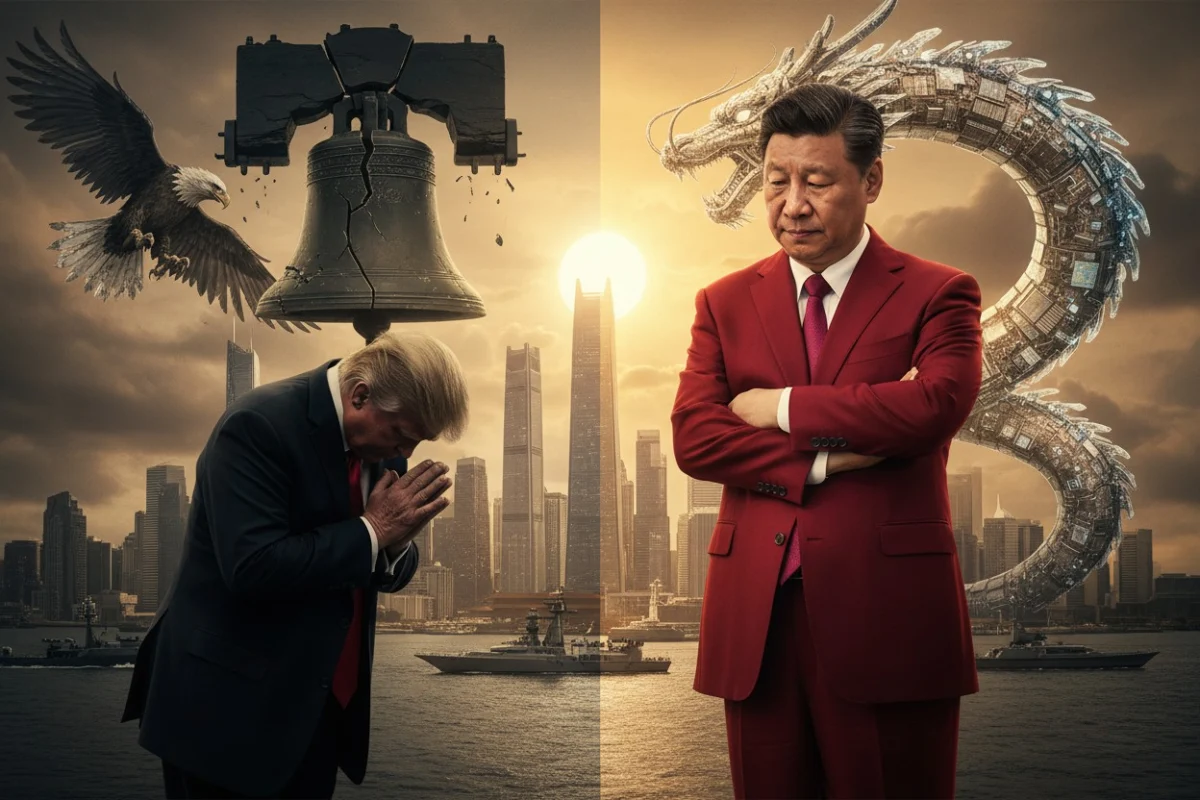
The recent diplomatic visit by President Donald Trump to Beijing marks a profound departure from the confrontational "America First" rhetoric that defined his earlier political career. Once characterized by aggressive tariff wars and a zero-sum approach to international diplomacy, the current administration’s posture reflects a sobering reality: the structural leverage of the United States in the Pacific has fundamentally eroded.
As the global order enters a state of flux, the sight of an American president seeking common ground with President Xi Jinping signals more than just a change in tone—it reflects a strategic realignment necessitated by China’s ascendance in critical technologies, naval reach, and economic autonomy. This article examines the factors underpinning this shift, the technological race that has outpaced Western sanctions, and the long-term implications for American hegemony.
Chronology: From Trade War to Strategic Deference
The trajectory of the US-China relationship over the last decade has been a study in overestimation and under-delivery.
- 2017–2020: The initial period of the Trump administration saw the weaponization of tariffs. The goal was to force a decoupling of supply chains and a return of manufacturing to the United States.
- 2024 Election Aftermath: Following the 2024 election, the administration operated under the assumption that the US maintained significant leverage. However, Beijing’s subsequent response—targeting rare earth exports and reinforcing domestic supply chains—effectively neutralized the potency of American tariff threats.
- May 2026: The Beijing Summit. The arrival of the U.S. delegation was met with a high-level military honor guard, yet the substantive agenda was dictated by Beijing. Discussions centered on Iranian stability and trade, with the US seeking concessions rather than dictating terms.
The shift is palpable. The bluster of the 2017 trade wars has been replaced by the quiet, disciplined diplomacy of a nation acknowledging that the "cards" once held by the US are no longer in the deck.
Supporting Data: The Erosion of Unipolarity
The current power imbalance is supported by shifting metrics in military capability and technological innovation.
The Obsolescence of Traditional Naval Power
For decades, the American carrier strike group was the ultimate arbiter of global maritime access. However, the rise of hypersonic missile technology and drone-based naval warfare has shifted the cost-benefit analysis of naval deployment. China’s focus on anti-access/area-denial (A2/AD) capabilities has rendered traditional, slow-moving aircraft carriers increasingly vulnerable.
As of 2026, China possesses the world’s largest navy by ship count. While the Pentagon has begun a desperate pivot toward purchasing mass quantities of low-cost cruise missiles and hypersonic assets, analysts suggest this reactionary strategy may be insufficient to bridge the technological gap created over the last ten years.
The Technological Disconnect
The assumption that microchip sanctions would stall China’s progress has proven to be a strategic miscalculation. Despite the Biden-era restrictions and subsequent trade barriers, China has accelerated its domestic lithography and AI development.
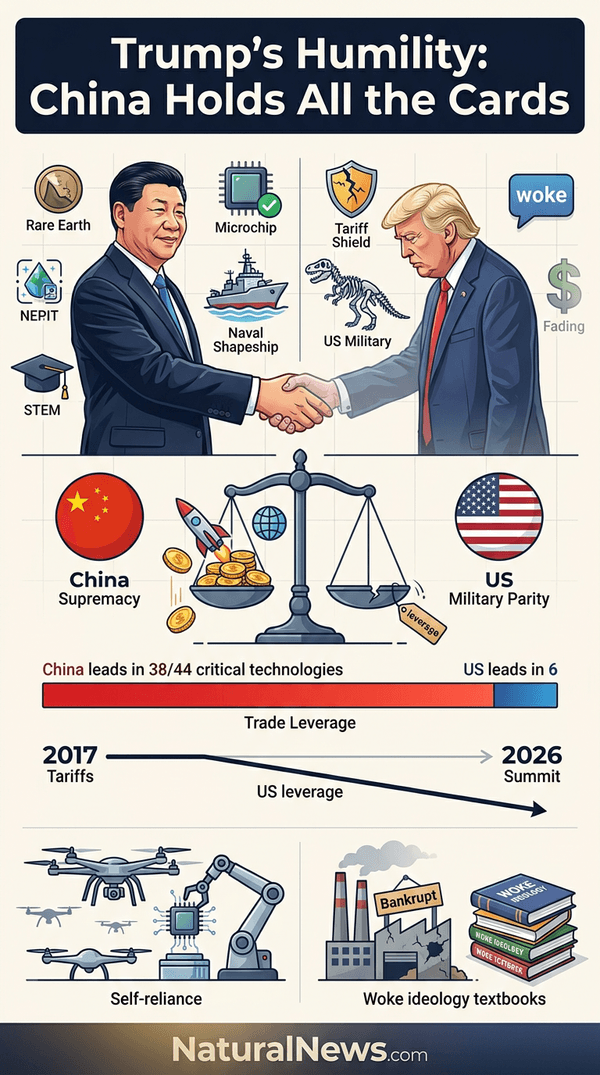
- STEM Pipeline: China currently graduates four to five times as many STEM professionals as the United States annually.
- AI Leadership: Beijing now leads in roughly 60 of the 65 critical technologies identified as central to the 21st-century economy, including robotics, material science, and advanced AI models.
- Decoupling from Silicon Valley: The success of firms like Huawei and the development of indigenous AI platforms like DeepSeek demonstrate that the "strangulation" of Chinese technology has only served to incentivize total self-reliance.
Official Responses and Diplomatic Friction
The diplomatic theater in Beijing was carefully choreographed. While the White House framed the summit as a successful dialogue on stability, the lack of a strong rebuttal to Xi Jinping’s warnings regarding Taiwan was noted by global observers.
The Taiwan Question
During the summit, President Xi was unequivocal in his assessment of the Taiwan Strait, describing any mismanagement of the issue as a "very dangerous situation." The silence from the American delegation served as a tacit acknowledgement of China’s red lines. In the current geopolitical environment, the US appears to lack the economic or military appetite to challenge China’s core security interests, as doing so would invite immediate retaliation against the US economy—an economy already reeling from the secondary effects of de-dollarization and the rise of BRICS-led trade blocs.
Implications: The Terminal Phase of Hegemony
The current humility displayed by the American executive is not merely a tactical maneuver; it is a symptom of a systemic "terminal phase" of the post-WWII American order.
The Economic Cost of Defiance
The US dollar, once the undisputed king of global trade, faces unprecedented challenges as BRICS nations continue to accelerate de-dollarization efforts. This is not an external attack on the US but a consequence of the aggressive use of financial sanctions that eventually triggered a "global trade revolt." When a nation’s currency is weaponized, the rest of the world eventually finds a way to operate without it.
Cultural and Institutional Decay
Critics argue that the internal focus on ideological shifts within the United States has hampered its ability to compete in the high-stakes arena of superintelligence. While China prioritizes industrial output and technical meritocracy, the US has seen its public and private institutions bogged down in internal friction. The result is a widening gap in the speed of innovation.
The Strategic Outlook
The path forward for the US appears increasingly constrained. With high levels of debt and a hollowed-out manufacturing base, the administration is left with few options beyond "friendship" diplomacy. The "Abundance Doctrine," which emphasizes domestic stability and internal development, stands in stark contrast to the crumbling infrastructure of the American empire.
Conclusion: Adapting to a Multipolar Reality
The transition from a unipolar world dominated by the United States to a multipolar world centered on Chinese stability is now largely complete. The humility shown by Donald Trump in Beijing—an act that would have been unthinkable a decade ago—is the final validation of this power shift.
For the American public, the lesson is clear: the era of uncontested global dominance has passed. The strategic reality is that Beijing is no longer a rival to be "contained" through threats or sanctions; it is a dominant power that is effectively reshaping the international system. Moving forward, the survival of American interests will depend less on the projection of military force and more on the ability to navigate a world where China holds the dominant position on the board.
As the geopolitical architecture continues to shift, the focus must move away from the rhetoric of the past and toward a realistic, decentralized assessment of the future. The empire is not collapsing in a single, dramatic event, but rather in the quiet, incremental surrenders of its leadership. We are witnessing the end of an era, and for those who have been observing the technological and economic trends since 2025, this outcome was not a surprise—it was an inevitability.