







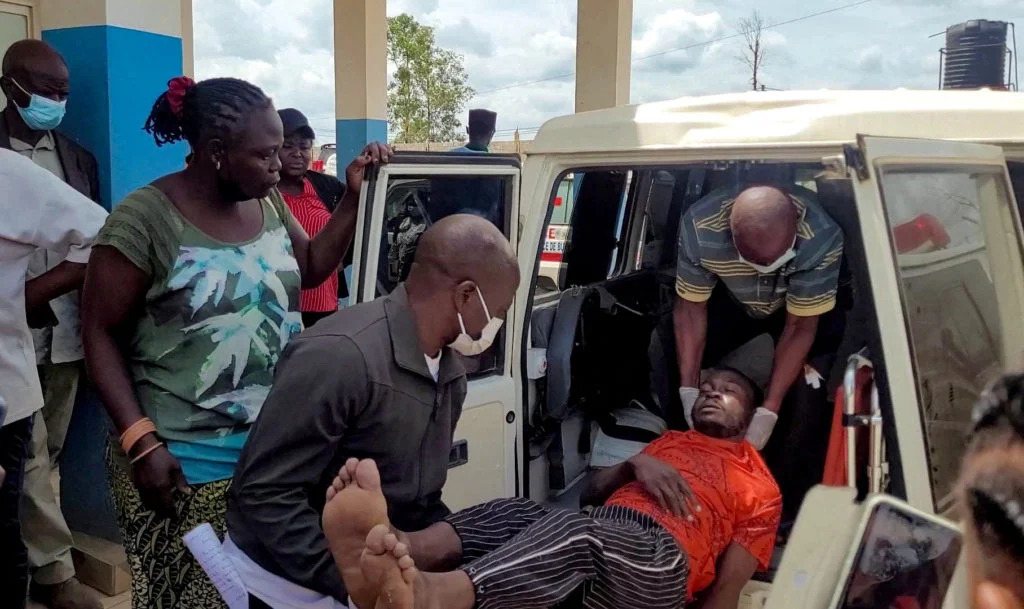
ABUJA, Nigeria — The World Health Organization (WHO) officially declared the current Ebola outbreak in the Democratic Republic of the Congo (DRC) and neighboring Uganda a "Public Health Emergency of International Concern" (PHEIC) on Sunday. The move comes as the death toll continues to climb, with health officials scrambling to contain a rare, highly volatile strain of the virus that has already bypassed initial containment efforts and surfaced in major urban centers.
As of the latest reporting, the WHO and the Africa Centres for Disease Control and Prevention (Africa CDC) have recorded more than 300 suspected cases and 88 confirmed fatalities. While the organization has stopped short of labeling the event a pandemic—emphasizing that it does not currently meet the criteria of a COVID-19-style global lockdown scenario—the declaration serves as a clarion call for immediate international financial and logistical support.
The Nature of the Threat: The Bundibugyo Variant
This outbreak is uniquely dangerous because it is driven by the Bundibugyo virus, a rare and particularly elusive variant of Ebola. Unlike the Zaire ebolavirus, which has been the subject of intensive research and for which effective vaccines and therapeutics have been developed, the Bundibugyo strain lacks any officially approved medical countermeasures.
Since its discovery in 1976, Ebola has ravaged various parts of the African continent, but the Bundibugyo variant has appeared only three times in history. Its first emergence occurred in Uganda in 2007, followed by a second, smaller outbreak in Isiro, Congo, in 2012. Because it appears so infrequently, pharmaceutical investment in a dedicated vaccine has been virtually non-existent, leaving healthcare workers on the front lines to rely on basic supportive care and rigorous infection control measures.
A Timeline of Silent Spread
The crisis has been characterized by a delayed detection period that experts fear has allowed the virus to gain a significant foothold in the region.
- April 24, 2024: The earliest known index case, a 59-year-old male, develops initial symptoms. He passes away in an Ituri hospital three days later. At this point, the nature of his illness remains unrecognized.
- May 5, 2024: The first alert regarding an unusual cluster of deaths reaches health authorities via social media. By the time this signal is processed, the death toll has already reached 50, indicating that the virus had been circulating undetected for nearly two weeks.
- Late May 2024: Confirmation of the Bundibugyo virus is made by laboratory testing, triggering a surge in surveillance efforts.
- June 2024: The virus spreads beyond the rural epicenter of Ituri. A laboratory-confirmed case is identified in Kinshasa, the DRC’s capital city, located over 1,000 kilometers from the original outbreak site. Additionally, cases are confirmed in Uganda, confirming the regional nature of the threat.
- Current Status: The WHO elevates the status of the outbreak to an international emergency, citing "significant uncertainties" regarding the true scale of the epidemic.
Complex Challenges: Conflict, Migration, and Geography
Tracking this outbreak is significantly more difficult than previous health crises due to the volatile landscape of the Eastern Congo. The region is currently plagued by persistent armed conflict involving militant groups, including those aligned with the Islamic State.
Dr. Jean Kaseya, Director-General of the Africa CDC, noted that the community-level transmission—particularly in the Mongwalu region—is occurring in areas where safety is precarious. "The security situation, combined with the constant movement of people due to artisanal mining and regional trade, makes contact tracing nearly impossible," Dr. Kaseya explained.
In many cases, the population is transient, moving frequently between the Congo and Uganda. When individuals fall ill, they often travel long distances before seeking hospital care, as seen in the case of a patient who traveled from the Congo to die in a Kampala hospital. This mobility ensures that the virus is not confined to one province, but rather has the potential to jump across borders rapidly.
Official Responses and the "Missing" Response
The declaration of a PHEIC is intended to trigger a coordinated international response, but the history of such declarations has left many African health officials skeptical. During the 2024 mpox outbreak, experts criticized the global response for failing to deliver critical diagnostic kits, medicines, and vaccines to the continent in a timely manner.
WHO Director-General Tedros Adhanom Ghebreyesus has expressed deep concern regarding the current data gaps. "We have limited understanding of the epidemiological links between known cases," Tedros stated. "The high percentage of positive test results and the clusters of deaths across Ituri suggest a much larger outbreak than what is currently being reported."
The WHO has specifically advised against the closure of international borders, fearing that trade restrictions will hinder the delivery of humanitarian aid. Instead, they are advocating for enhanced screening at transit points and the rapid deployment of mobile laboratories to rural, hard-to-reach areas.
Implications for Global Health Equity
The lack of a vaccine for the Bundibugyo variant has reignited a fierce debate regarding medical sovereignty in Africa. Shanelle Hall, a principal adviser to the Africa CDC, confirmed that while four therapeutics are currently being studied, there is no active development of a vaccine.
The core issue remains the global reliance on pharmaceutical manufacturing hubs located in Western nations. The COVID-19 pandemic revealed the fragility of this supply chain, yet little has changed for rare diseases. Africa continues to account for the vast majority of cases, yet the continent lacks the industrial infrastructure to produce its own vaccines or advanced diagnostic tools.
"If we are serious as a continent, we need to manufacture what we need," Dr. Kaseya stated during a recent press briefing. "We cannot every single day look for others to tell us what they are doing. The current model—where we wait for outside help to develop solutions for our unique disease burden—is failing."
A Call to Action
As the death toll among frontline healthcare workers grows—with at least four doctors and nurses confirmed dead—the urgency of the situation cannot be overstated. Ebola is transmitted through contact with bodily fluids, including blood, vomit, and semen. In communities where traditional burial practices or lack of personal protective equipment (PPE) are common, the risk of explosive transmission remains high.
The WHO’s emergency declaration is more than a administrative label; it is a request for funding, expertise, and political will. The international community must now decide whether to provide the necessary resources to stop the Bundibugyo virus in its tracks or allow it to follow the pattern of previous outbreaks, which cost thousands of lives and devastated regional economies.
For the people living in Ituri, North Kivu, and across the border in Uganda, the stakes are existential. With no vaccine and an uncertain epidemiological path, the next few weeks will be critical. The international community is watching, but for those on the ground, the wait for tangible support is a matter of life and death.