











In the modern pursuit of health, we are often seduced by the allure of the "magic bullet"—the idea that one specific, highly targeted change will act as the master key to our physical well-being. This phenomenon is perhaps best illustrated by the story of Anna, a high-performing legal professional known for her razor-sharp analytical mind. Despite her professional success in dissecting complex arguments, Anna recently found herself caught in a common, yet counterproductive, loop.
"I just bought a new BPA-free Tupperware set," she told a friend, framed as a significant victory in her quest to lose 15 pounds. While the intention was rooted in health, the logic was flawed. She had become fixated on the potential hormonal interference of microplastics, despite admitting that her actual barriers to weight loss were far more foundational: inconsistent gym attendance, an over-reliance on takeout food, and chronic sleep deprivation fueled by late-night doom-scrolling. When prompted to focus on these core behaviors, her response was dismissive: "I’ve tried that a thousand times. If it were that simple, it would have worked already."
Anna’s story is not an outlier; it is a symptom of a pervasive psychological phenomenon where we prioritize niche, "optimized" interventions over the unsexy, essential habits that actually drive health outcomes.
The Anatomy of the "Magic Bullet" Mindset
The human brain is remarkably adept at finding ways to avoid difficult tasks. We often confuse "preparation" or "research" with "progress." Spending hours curating the perfect meal plan, researching the most "optimal" workout split, or buying specialized gear feels like meaningful work. It offers a sense of agency and progress without requiring the uncomfortable, consistent effort of actually lifting weights or prepping vegetables.
This behavior is driven by several psychological traps:
- Ambivalence: The push-pull feeling of wanting the result (weight loss) while simultaneously wanting to maintain current comfort-seeking behaviors (takeout, screen time).
- Ambition Overload: The tendency to commit to sweeping, life-altering changes on Monday, despite failing to account for the actual constraints of a busy, unpredictable life.
- The Complexity Bias: The false belief that because basic advice—eat well, sleep, move—is "common knowledge," it must be ineffective. We assume that if we are struggling, the solution must be hidden behind a "secret" or "cutting-edge" strategy.
Supporting Data: The 6 Percent Reality
The irony of the "it’s too simple to work" argument is starkly contradicted by data. A growing body of research confirms that while the fundamentals of health are well-understood, they are rarely practiced with the consistency required for long-term health.
Recent health studies indicate that only six percent of the American population adheres to five basic health behaviors: regular physical activity (at least 30 minutes of moderate-to-vigorous exercise), a diet composed of at least 80% whole foods, adequate protein intake, seven to eight hours of sleep, and the absence of substance abuse (smoking/excessive alcohol).
If 94% of the population is failing to hit these markers, it stands to reason that the problem is not a lack of "advanced" strategies, but a failure to execute the basics. These foundational habits are not just suggestions; they are the physiological bedrock upon which weight management, athletic performance, and longevity are built.
Chronology of Behavioral Drift
The path toward the "Tupperware Trap" typically follows a predictable trajectory:

- Phase 1: The Frustration Plateau. An individual feels stuck in their current state (e.g., struggling to lose weight).
- Phase 2: The Search for Novelty. Instead of auditing current habits, the individual searches for a "fix" that feels new and exciting—a supplement, a gadget, or a niche dietary theory.
- Phase 3: The Displacement Activity. The individual focuses intensely on this new, low-impact variable, feeling as though they are making progress.
- Phase 4: The Inevitable Stagnation. Because the core issues (sleep, movement, baseline nutrition) remain unaddressed, the desired results never manifest.
- Phase 5: The Cycle Repeats. The individual concludes that the "fix" didn’t work and begins the search for the next, more complex, and equally ineffective solution.
Breaking the Cycle: A Strategic Framework
To move from the trap of perfectionism to the reality of sustainable change, experts suggest a four-step framework designed to align ambition with human biology.
1. Explore the "Why" Before the "How"
Before adopting a new regimen, individuals must conduct a "deep dive" into their motivations. Using techniques like "The 5 Whys"—repeatedly asking why a goal matters until the core value is uncovered—helps sustain motivation during difficult periods. If the goal is rooted in a superficial desire, it will likely crumble; if it is rooted in long-term identity or health, it has a better chance of survival.
2. Prioritize the Most Effective Actions
Change requires focus. Trying to overhaul every aspect of one’s life simultaneously is a recipe for failure. Instead, one should select a single domain—nutrition, movement, or stress management—and choose one "Daily Action" that is highly achievable. By focusing on a specific, manageable skill, the brain is less likely to trigger resistance.
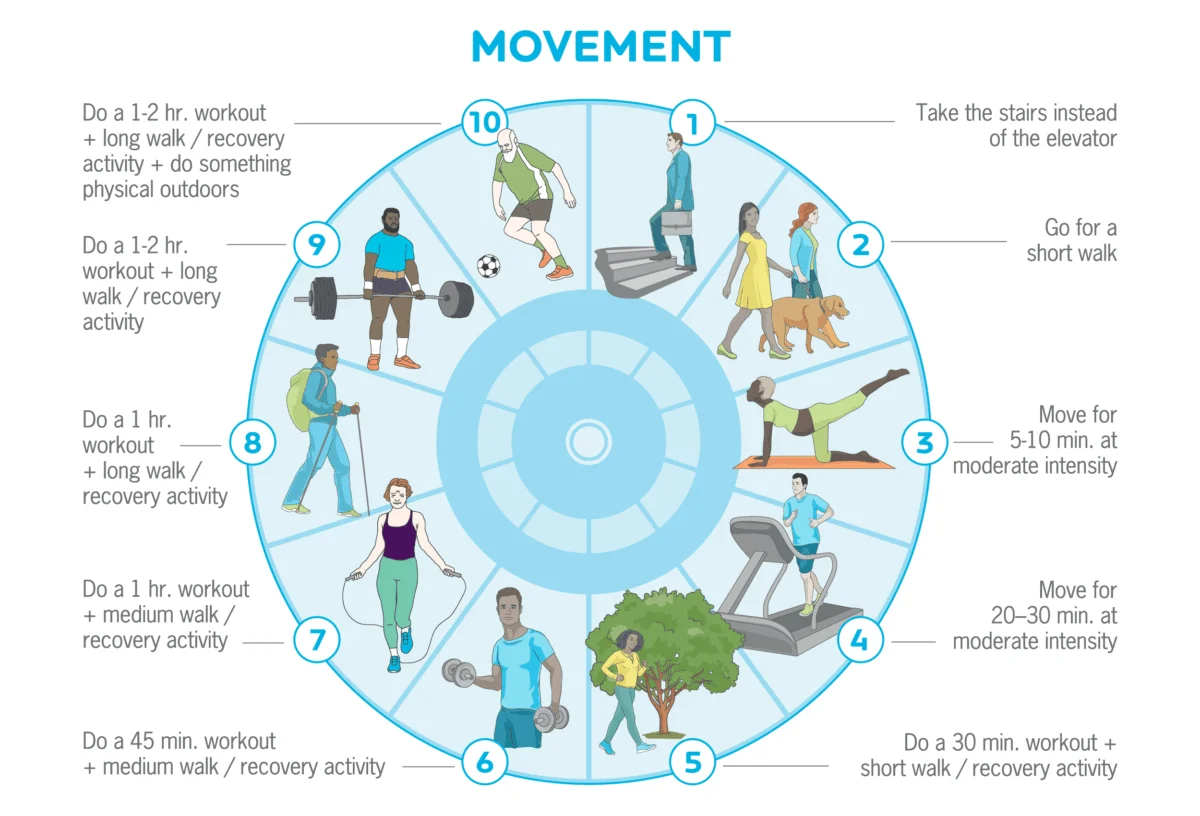
3. Establish a "Floor" and a "Ceiling"
The most effective way to combat the "all-or-nothing" mentality is to visualize health habits as a dial rather than an on/off switch.
- The Floor: What is the absolute minimum you can do on your worst, most exhausted day? (e.g., a 5-minute walk).
- The Ceiling: What can you do on your best, most motivated day? (e.g., a 60-minute full gym session).
By operating within this range, consistency remains intact regardless of external circumstances.
4. Create an Ecosystem for Success
Behavioral science consistently shows that our environment is the primary driver of our choices. "Access" is the number one predictor of behavior. If you want to eat better, simplify the kitchen. If you want to exercise more, remove the friction between you and your gear. Designing an environment where the "right" choice is the "obvious" choice reduces the reliance on willpower, which is a finite and often unreliable resource.
Implications for Personal Development
The "Tupperware Trap" is fundamentally about a fear of the ordinary. We want our health journey to be as complex as our professional lives because we believe that complexity warrants a more significant outcome. However, the data confirms that health is not a puzzle to be solved with a secret key; it is a practice to be maintained through the repetition of mundane, essential tasks.
The implications for the reader are clear: Stop waiting for the "perfect" moment or the "perfect" plan. Accept that "C+" effort, executed consistently, is infinitely superior to "A+" effort that lasts for three days before resulting in a total burn-out.
As research in Nature Reviews Psychology suggests, the individuals who achieve long-term success are not those with the most "optimized" protocols, but those who have successfully integrated the most accessible, foundational habits into their daily environment.
In the end, letting go of the pursuit of the "magic bullet" is not an admission of defeat; it is the first step toward genuine, sustainable health. You don’t need a new set of containers to change your life—you simply need to show up, with all your human messiness, and do the basics. Everything else is just noise.