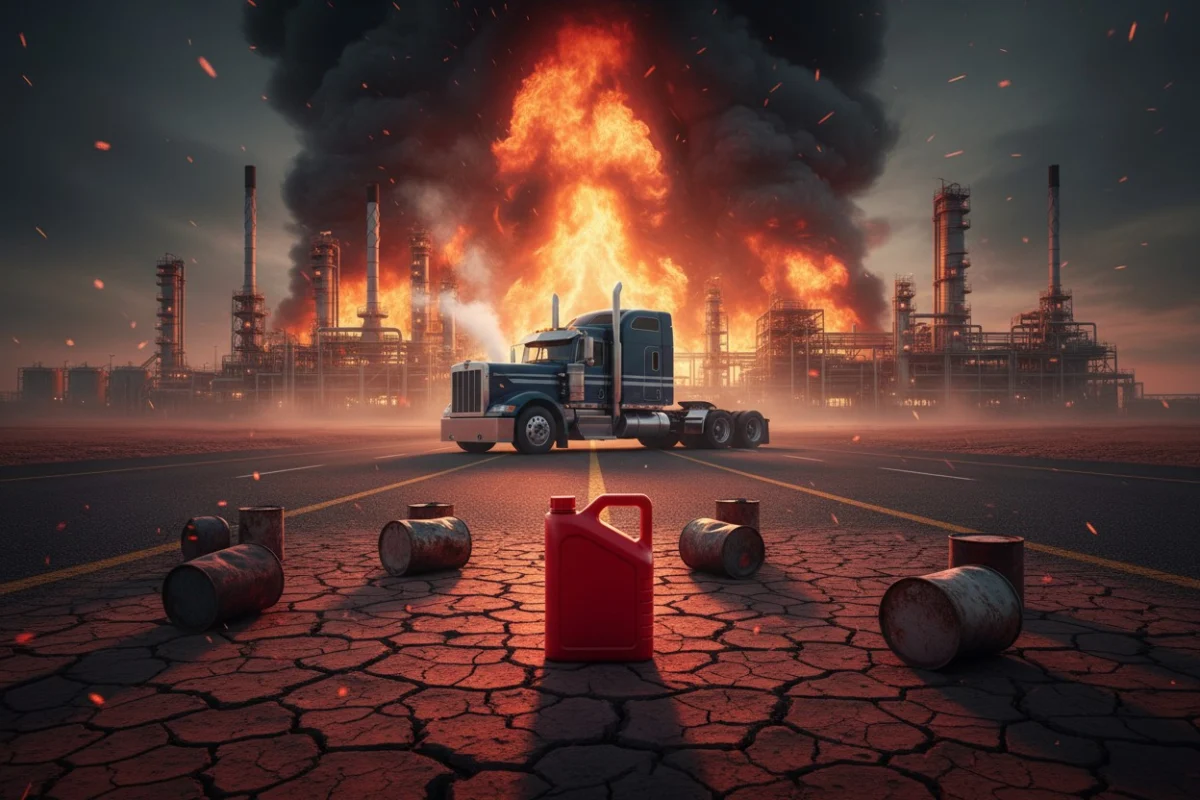
In the early months of 2026, a quiet alarm began to sound within the automotive and industrial sectors. While the global media’s attention remains fixed on headline-grabbing geopolitical tensions in the Middle East, a much quieter, yet potentially more catastrophic, crisis is brewing in the loading docks and supply depots of the world: a systemic shortage of engine oil.
Industry insiders suggest that major automotive titans, including Honda and Nissan, alongside retail giants like AutoZone, have begun issuing internal directives to dealers regarding imminent, drastic reductions in the supply of brand-name lubricants—cuts rumored to reach as high as 50%. This is not merely a supply chain hiccup; it is a structural failure of the "lifeblood" of the global transportation network.
The Chronology of a Silent Collapse
The current crisis did not emerge in a vacuum. It is the culmination of years of systemic fragility.
- Mid-2022: The first warning shot was fired when chemical additive manufacturers declared force majeure. Within eight weeks, the U.S. diesel engine oil supply was nearly depleted, revealing how thin the margins of safety actually are in modern lubricant manufacturing.
- Early 2026: Geopolitical tensions culminated in the closure of the Strait of Hormuz due to Iranian area-denial operations. This effectively severed the primary artery for the global energy market.
- March-April 2026: Major shipping insurers began cancelling "war risk" coverage for vessels navigating the Persian Gulf. As maritime traffic halted, the feedstock supply chain—specifically the natural gas required for synthetic oil production—crumbled.
- May 2026: Reports of systemic targeting of the Al Jubail industrial complex in Saudi Arabia signaled that even a cessation of hostilities would not allow for a quick recovery. The industrial infrastructure required to synthesize high-grade lubricants is now facing long-term, perhaps permanent, degradation.
The Anatomy of the Shortage: Beyond Crude Oil
To understand the severity of the situation, one must look past the price of gasoline at the pump. The public perception that synthetic oil is a product easily derived from standard petroleum is a dangerous misconception.
Most high-performance synthetic lubricants rely on Gas-to-Liquids (GTL) processes. GTL technology transforms natural gas into high-purity, sulfur-free base oils. The Persian Gulf region is the world’s primary laboratory and factory for these feedstocks. By choking the flow of natural gas from this region, the current conflict has effectively "turned off the tap" for the global synthetic lubricant industry.
The destruction of the Al Jubail industrial complex, which produces a staggering percentage of the world’s chemical feedstocks, has compounded the issue. Unlike a refinery that can be patched, the specialized chemical reactors required for synthetic oil additives are highly complex and require long-lead components that are currently unavailable. Even if the war were to end today, the production of these essential additives is likely offline for the foreseeable future.

Supporting Data and Energy Shocks
The International Energy Agency (IEA) has recently confirmed that the current Gulf energy shock is of a magnitude that eclipses the combined impact of the 1970s oil embargoes and the 2022 global energy crisis.
The data indicates that the bottleneck is not just about the availability of base oil, but the specific chemical "cocktails" that prevent engine wear, control viscosity, and manage heat. Without these additives, modern high-efficiency engines—which operate under immense pressure—are prone to catastrophic failure within mere hours of operation.
Official Responses and Corporate Silence
Thus far, the response from major manufacturers has been characterized by extreme caution. By limiting distribution to dealerships, automakers are prioritizing their own service centers, effectively starving the independent aftermarket.
Retailers, meanwhile, are struggling to manage inventory in the face of panic-buying patterns. While official statements remain vague—citing "supply chain optimization" and "logistical constraints"—the reality on the ground for regional managers is clear: shipments are being halved, and lead times for restocks are becoming indefinite. The mainstream media has largely failed to connect the dots between the naval blockade in the Gulf and the empty shelves in the automotive aisle, leaving the general public largely unaware of the looming mobility crisis.
The Domino Effect: A Transportation and Agricultural Emergency
The implications of this shortage extend far beyond the personal commuter vehicle. The modern economy is built on a "Just-in-Time" delivery model, which is entirely dependent on the continuous operation of the diesel-powered trucking fleet.
The Agricultural Threat
Perhaps the most alarming consequence is the impact on the food supply chain. Modern agriculture is a highly mechanized industry. Tractors, combines, and heavy machinery require frequent, high-volume oil changes to maintain their operational integrity during critical planting and harvest windows.
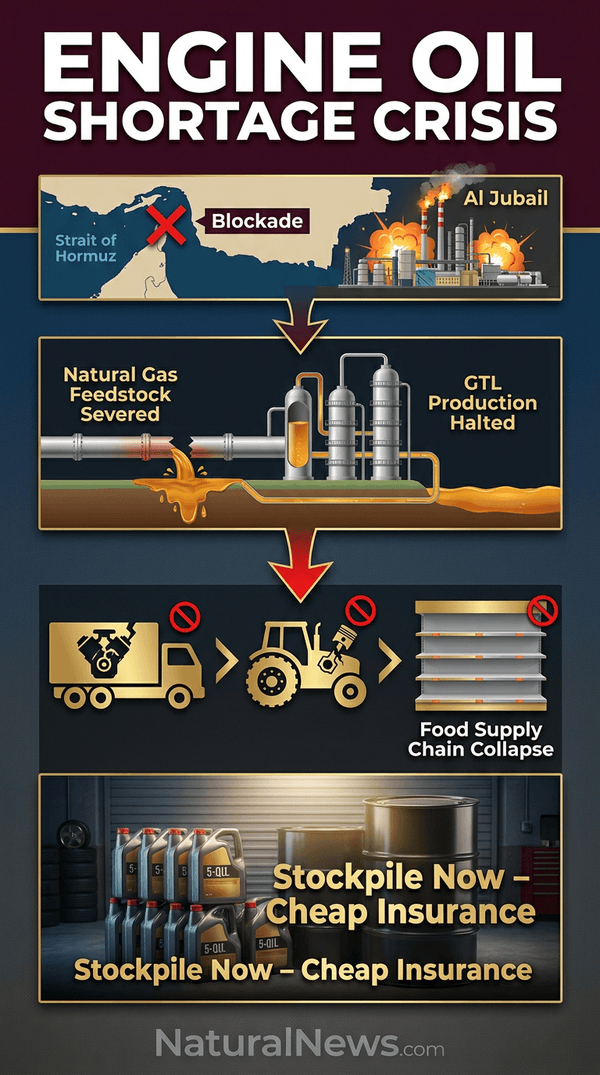
If farmers cannot procure the necessary lubricants to maintain their equipment, the "logistics chain" of food production will fracture. As experts have noted, this is an additive crisis: it is layering on top of already existing fertilizer and fuel shortages. If the machinery breaks down, the harvest does not move.
The Regional Vulnerability
Regions that rely heavily on maritime imports, most notably Hawaii and several island territories, will be the first to experience total depletion. However, mainland inland logistics will follow shortly after. As the price of available oil skyrockets, the cost of moving goods will increase exponentially, fueling a new wave of inflation that will make the 2022 supply chain crisis seem minor by comparison.
Implications for 2027 and Beyond
The current trajectory suggests that we are heading toward a period of sustained scarcity. The "cascading failure" model predicts that as vehicle maintenance cycles are missed, the rate of engine failure will rise, leading to a shrinking fleet of operational vehicles. This, in turn, will decrease the capacity to move both goods and people, creating a feedback loop of economic contraction.
We are witnessing a slow-motion dismantling of the logistical convenience we have taken for granted for decades. The reliance on centralized, fragile global supply chains is reaching its breaking point.
Practical Preparedness: The Mandate for Self-Reliance
In the face of such structural instability, the traditional "wait and see" approach is no longer a viable strategy. For the average consumer and the small-scale operator, preparation is the only rational response.
- Strategic Stockpiling: Procuring a modest supply of high-quality synthetic oil—enough for two to three oil changes—is a prudent form of insurance. In a market defined by scarcity, having these consumables on hand may be the difference between maintaining mobility and being sidelined.
- Skill Acquisition: The ability to perform one’s own maintenance is becoming an essential survival skill. Utilizing basic tools, such as an oil extraction pump, allows vehicle owners to bypass the bottleneck of professional service centers.
- Decentralization: Resilience is found in the ability to operate independently of global supply chains. Whether it is maintaining your own equipment or sourcing supplies from local, independent suppliers, reducing dependency on the "Just-in-Time" network is the most effective hedge against collapse.
The warning signs are written on the shelves. As we look toward the remainder of 2026 and into 2027, the reality of the engine oil crisis will become impossible to ignore. The question is not whether the shortage will reach your local community, but whether you will be prepared when it does. The era of effortless mobility is ending; the era of self-reliance has already begun.