











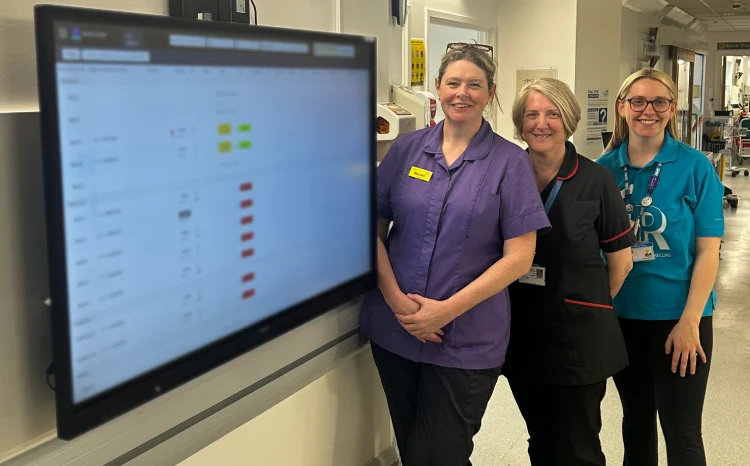
In a landmark moment for digital health in the United Kingdom, North Cumbria Integrated Care NHS Foundation Trust (NCIC) has successfully initiated the first phase of its new Electronic Patient Record (EPR) system. The launch, powered by Alcidion’s Miya Precision platform, represents a significant leap forward in the trust’s mission to modernize care delivery across one of England’s most geographically challenging regions.
The deployment, which went live on the morning of May 12, 2026, marks the beginning of a long-term strategic partnership between the trust and Alcidion. Designed to replace legacy infrastructure with a unified, cloud-hosted, and web-based ecosystem, the new EPR is intended to streamline clinical workflows, bolster real-time decision-making, and provide mobile accessibility for healthcare staff operating in both urban hospitals and remote community settings.
A Chronology of the Transformation: From Tender to Deployment
The journey toward this digital milestone has been characterized by ambition, rigorous planning, and an unexpected administrative hurdle.
- July 2024: NCIC publicly announced Alcidion as the preferred bidder for its EPR contract, signaling a move toward a more modular and integrated digital architecture.
- February 2025: The trust finalized a 10-year contract with Alcidion, solidifying the commitment to the Miya Precision suite.
- Early 2026: NCIC ramped up preparations, with trust leadership confirming that local safety, technical, and governance frameworks were fully aligned for a planned March 3, 2026, go-live.
- April 2026: NHS England intervened, directing the trust to delay the launch. While the trust maintained that it was ready for deployment, the postponement was framed as a wider regulatory pause.
- May 12, 2026: Following the resolution of national-level requirements, NCIC successfully activated the first phase of the system across its wards.
The intervention by NHS England in April served as a tense moment for the trust, which had been vocal about its readiness. By maintaining that there were no significant local safety or technical concerns, the trust demonstrated confidence in its internal digital maturity. The successful May launch serves as a vindication of that confidence, proving that the foundation laid during the pre-go-live phase was robust enough to withstand the scrutiny and delay.
The Technological Backbone: What is Miya Precision?
At the core of the NCIC digital strategy is Miya Precision. Unlike traditional, monolithic EPR systems that can often feel rigid and unresponsive, the Alcidion platform is designed for modularity and interoperability.
For a trust like NCIC, which serves approximately half a million people across the vast, rural expanses of North Cumbria, the "anywhere, anytime" capability of the system is transformative. The platform includes:
- Mobile Accessibility: Through a specialized smartphone app, clinicians can access the full patient record at the bedside, in the corridor, or while traveling between community sites.
- Real-Time Flow Management: The system provides visual dashboards that track patient movement, bed occupancy, and bottlenecks, allowing for proactive rather than reactive management of ward capacity.
- Clinical Decision Support: By centralizing data from disparate sources, the system offers clinicians a "single version of the truth," reducing the risk of errors and duplication of effort.
- Clinical Documentation Tools: Tailored interfaces for different clinical roles—nursing, pharmacy, and medical staff—ensure that data entry is intuitive, reducing the "administrative burden" that often plagues legacy digital systems.
Official Perspectives: Leadership and Partnership
The success of such a massive undertaking is rarely the result of technology alone; it is a testament to the organizational culture of the trust.
Andy Laverick, Chief Information Officer and Director of Digital at NCIC, emphasized that the deployment is merely the beginning of a broader, multi-phase roadmap. "This go-live marks a significant milestone in the trust’s digital transformation journey," Laverick noted. "Delivering a programme of this scale is only possible through strong partnership working and the commitment shown by colleagues across NCIC alongside teams from Alcidion."
Laverick’s focus has already shifted to the "stabilization phase." In the weeks following the go-live, the trust is prioritizing feedback loops—listening to staff on the wards to refine the system’s configuration. This iterative approach is designed to ensure that the transition to Phases 2 and 3 of the program is seamless.
Paul Deffley, UK Managing Director and Chief Medical Officer at Alcidion, echoed this sentiment, highlighting the unique nature of the North Cumbria geography. "North Cumbria serves a half a million people across rural and remote communities," Deffley stated. "Having a platform that brings everything together and puts it in the hands of clinicians wherever they are is going to fundamentally change the way care is coordinated and delivered."
Implications for the NHS: The Shift Toward Modular EPRs
The NCIC-Alcidion partnership is being watched closely by other NHS trusts, particularly those in rural areas. There is a growing consensus within the NHS that the era of the "all-in-one, rigid" EPR is being challenged by more flexible, cloud-based alternatives.
Implications for Staff Retention and Well-being
One of the primary drivers for this project was the reduction of clinician burnout. By automating documentation and providing instant access to records, the trust aims to return "time to care." When clinicians spend less time hunting for paper charts or logging into multiple, siloed legacy systems, the quality of patient interaction increases. The "fantastic feedback" reported by Alcidion from the wards during the first few days of operation suggests that the user interface design is resonating with frontline staff.
Implications for Clinical Governance
The use of real-time analytics allows for unprecedented visibility into clinical governance. Leaders can now identify trends in patient outcomes or safety incidents almost as they happen. This shift from retrospective reporting to real-time oversight is expected to improve the trust’s regulatory standing and patient safety metrics over the coming 12 to 24 months.
The Financial and Strategic Horizon
The 10-year contract length reflects a long-term investment strategy. By opting for a modular EPR, NCIC has positioned itself to adopt new technologies as they emerge without having to perform a "rip and replace" of their entire digital infrastructure. This financial prudence, coupled with the cloud-based nature of the platform, offers a sustainable path for a trust managing a diverse and dispersed patient population.
Looking Ahead: The Road to Phase 2 and 3
With Phase 1 successfully stabilized, the attention at NCIC now turns to the subsequent phases of the EPR roll-out. While specific details of the next phases remain internal, it is expected that they will focus on deeper integration with pharmacy and radiology workflows, as well as the expansion of patient-facing portal features.
The delay earlier this year, while frustrating at the time, appears to have provided a period of "extra preparation" that has contributed to the smooth execution of the current live environment. For the NHS, the North Cumbria experience stands as a case study in resilience. It demonstrates that when clinical leadership, digital teams, and external partners are aligned, even the most complex digital transformations can succeed, even when external pressures arise.
As the trust settles into this new digital reality, the focus remains firmly on the patient. Whether in the emergency department, an inpatient ward, or a community clinic, the staff at North Cumbria are now equipped with a modern, connected, and intelligent platform. For the people of Cumbria, this digital evolution is a promise that their health data—and the care that follows—is more connected than ever before.
In the words of the NCIC team, the successful go-live is a testament to the "incredible commitment" of the staff who have navigated the challenges of a major digital change during a high-pressure period for the health service. As they move forward, the trust’s experience will undoubtedly inform the digital strategies of healthcare organizations across the United Kingdom, serving as a blueprint for the future of connected, patient-centered care.