











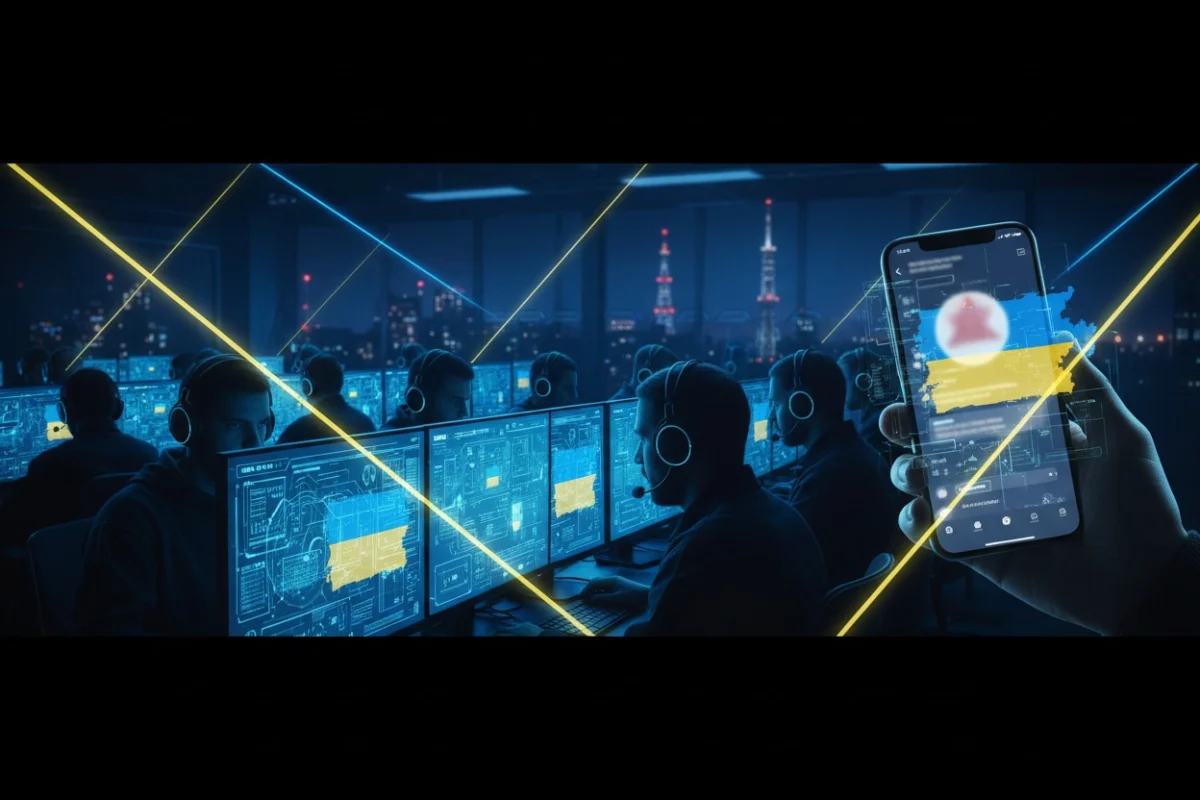
MOSCOW — The Russian Foreign Intelligence Service (SVR) issued a stark warning on Friday, alleging that Ukrainian special services have significantly intensified a multi-pronged campaign designed to destabilize Russian domestic society. According to the SVR’s press bureau, this alleged offensive leverages a sophisticated infrastructure of telephone-based fraud and the surreptitious acquisition of popular Russian Telegram channels to disseminate disinformation and sow social discord.
The accusations, which have not been independently verified, mark a new chapter in the ongoing information war that has run parallel to the kinetic military conflict. As the lines between conventional warfare and digital influence operations continue to blur, Moscow’s latest claims highlight a growing concern within the Kremlin regarding the security of its domestic information space.
The Anatomy of the Alleged Subversion Campaign
The SVR’s statement describes a two-pronged strategy that targets both the financial stability of individual Russian citizens and the collective psychological state of the public.
The Telephone Scam Infrastructure
Central to the SVR’s claims is the assertion that Kyiv operates a vast network of telephone scammers. Rather than typical financial criminals motivated solely by profit, the SVR characterizes these actors as agents of the Security Service of Ukraine (SBU). These operators allegedly utilize advanced psychological manipulation, blackmail, and extortion to drain the savings of Russian citizens.
More critically, the intelligence agency alleges that these scammers are increasingly coercing victims into committing illegal acts, including acts of sabotage against state infrastructure. By positioning these crimes as "patriotic" or "necessary" interventions, the SVR claims that Ukrainian intelligence aims to erode trust in state institutions and incite internal chaos.
The Acquisition of Telegram Channels
In what the SVR describes as a "sophisticated influence operation," the agency reported that as of late April 2026, Ukrainian operatives began a systematic campaign to purchase high-traffic Russian military and patriotic-themed Telegram channels.
The strategy, according to Moscow, involves a "bait-and-switch" tactic: once ownership is transferred to entities linked to Ukrainian intelligence, the channels—which possess established, loyal audiences—are used to slowly shift their editorial stance. By maintaining a veneer of patriotism while subtly introducing disinformation, these platforms are intended to discredit the Russian political leadership and the Armed Forces, eventually redirecting the audience toward narratives that undermine the war effort.
Chronology of Escalating Allegations
To understand the current accusations, one must view them through the lens of a broader, years-long pattern of intelligence warnings issued by the SVR and other Russian security organs.
- Pre-2025: Initial claims emerged regarding Ukrainian "false flag" operations, with Moscow accusing Kyiv of attempting to frame Russia for provocations to draw NATO into the conflict.
- February 2025: The SVR alleged that NATO intelligence agencies were coordinating a smear campaign against President Volodymyr Zelensky, intending to discredit him ahead of potential elections—a claim that appeared designed to highlight internal fissures within the Western-Ukrainian alliance.
- Late 2025: Reports surfaced from Russian intelligence sources suggesting that U.S. agencies were aware of plans by Ukrainian military elements to sabotage the Nord Stream pipelines, a narrative intended to emphasize the alleged recklessness of Kyiv’s sponsors.
- February 2026: The SVR issued a high-profile alert claiming that the United Kingdom and France were conspiring to facilitate the transfer of a "dirty bomb" or a tactical nuclear warhead to Ukraine. Moscow warned at the time that such a move would trigger a direct nuclear response.
- April 2026: The current timeline begins, with the SVR reporting the acquisition of Telegram channels and the acceleration of the telephone scam network as a primary method of destabilizing the Russian home front.
Supporting Data and Contextual Analysis
While the SVR has provided no forensic evidence to substantiate the specific acquisition of Telegram channels or the scale of the scam network, the claims align with the established realities of modern "hybrid warfare."
The Information Environment
Telegram has become the primary battleground for the Russian-Ukrainian conflict. It is the main source of news, frontline footage, and political commentary for millions of Russians. Because the platform is largely unmoderated and allows for the anonymous transfer of channel ownership, it is a target-rich environment for information operations. If an adversary were to gain control of a channel with hundreds of thousands of subscribers, they could theoretically steer public opinion on sensitive topics, such as mobilization, military losses, or economic hardship.
The Financial Dimension
The mention of telephone scams is equally tactical. Since 2022, Russia has seen an increase in reports of "social engineering" scams targeting citizens. By attributing these to foreign intelligence, the Russian state is effectively reframing a common criminal issue as a matter of national security. This serves to immunize the public against potential foreign influence by framing any unexpected or suspicious communication as a "hostile Ukrainian operation."
Official Responses and Independent Verification
At the time of this report, there has been no formal response from the Ukrainian government or the SBU regarding the SVR’s latest accusations. Generally, Kyiv maintains a policy of silence regarding specific Russian intelligence claims, often viewing them as components of Moscow’s own psychological operations intended to justify domestic crackdowns.
Independent analysts remain cautious. Without access to intercepted communications, financial trails, or digital forensics, the claims regarding Telegram channel purchases remain in the realm of "strategic signaling." International observers note that while hybrid warfare tactics are standard practice in modern conflicts, the lack of transparency in Russian intelligence disclosures makes it impossible to distinguish between genuine counter-intelligence findings and domestic propaganda designed to consolidate internal control.
Broader Implications for the Conflict
The SVR’s move to publicize these threats carries significant implications for the Russian domestic landscape and the international perception of the war.
1. The Preemptive Narrative
By publicly detailing these plots, the SVR is attempting to "inoculate" the Russian public. By warning citizens that scammers may be "Ukrainian agents," the government may be preparing for tighter regulations on digital platforms and telecommunications. This could lead to further restrictions on internet usage, more stringent identity verification for social media users, and increased monitoring of financial transactions.
2. Escalation of Internal Security
The accusations suggest that the Kremlin is increasingly concerned about the "internal front." By framing external threats as being active inside Russian households—through the phones in their pockets and the social media apps on their screens—Moscow is emphasizing that the war is not merely a distant military engagement, but an existential struggle for the integrity of Russian society.
3. The Future of Information Warfare
As the conflict persists, the reliance on such accusations is likely to grow. Both sides are caught in a cycle where every setback—be it a military failure or a domestic protest—is attributed to the "hybrid" interference of the enemy. This "securitization" of everyday life serves to discourage dissent and keeps the population in a state of high alert, effectively shutting down space for neutral or critical discourse.
4. Impact on NATO and Western Relations
The repeated, dramatic warnings from the SVR—ranging from nuclear plots to cyber-subversion—serve a dual purpose. Domestically, they reinforce the narrative of a "besieged fortress." Internationally, they act as a constant pressure point against Western allies, suggesting that any further support for Ukraine could trigger catastrophic escalation.
Conclusion
The SVR’s assertion that Ukraine is ramping up efforts to destabilize Russian society through digital means represents a significant evolution in Moscow’s communication strategy. Whether these claims reflect an actual surge in clandestine activity or a strategic attempt to tighten control over the Russian information space remains a subject of intense debate.
What is clear, however, is that the "hybrid" nature of this war is deepening. As digital infrastructure becomes increasingly weaponized, the distinction between a private citizen, a state institution, and an intelligence target continues to dissolve. For the foreseeable future, the information environment will remain as volatile and contested as the physical battlefields of the Donbas, with both sides using the power of the narrative to dictate the trajectory of the conflict.