For decades, the pursuit of a "six-pack" has been synonymous with the crunch. Whether performed on a gym mat or in the living room, the repetitive motion of curling the torso upward has long been hailed as the gold standard for abdominal definition. However, as the fitness industry evolves, experts are increasingly questioning the efficacy—and the safety—of this traditional movement, particularly for individuals over the age of 60.
While crunches certainly isolate the abdominal muscles and create the tension required for hypertrophy, they come with a significant caveat. After 60, the repetitive forward flexion of the spine can place undue stress on the vertebrae and intervertebral discs. Furthermore, poor form often leads to neck strain and hip flexor dominance, negating the intended benefits of the workout.
To gain deeper insight into sustainable fitness, we spoke with Adam Dobrez, a veteran personal trainer and owner of Red Fox Gym. Dobrez, who specializes in training older adults, argues that the "feel the burn" mentality of our younger years is not only outdated but potentially counterproductive for long-term health. Instead, he advocates for a functional approach that prioritizes longevity, stability, and real-world utility.
The Philosophy of Functional Core Training
The core is not merely a vanity project; it is the anatomical anchor of the body. For older adults, a strong core is the primary defense against falls, back pain, and mobility issues.
"Instead of just ‘feeling the burn,’ core exercises after 60 should promote balance, posture, stability, and use everyday real-life movements," explains Dobrez. "Traditional crunches target surface-level abdominal muscles, but they don’t help with improving the core in a way that older adults need for daily life. They can be incredibly uncomfortable, especially if there is underlying neck pain, stiffness, or lumbar sensitivity."
The shift from isolation exercises (crunches) to compound, functional movements (carries, rows, and step-ups) represents a broader evolution in geriatric fitness. By moving away from floor-based, high-flexion movements, seniors can build a "resilient core"—a muscular corset that protects the spine during daily tasks like lifting groceries, gardening, or maintaining balance on uneven terrain.
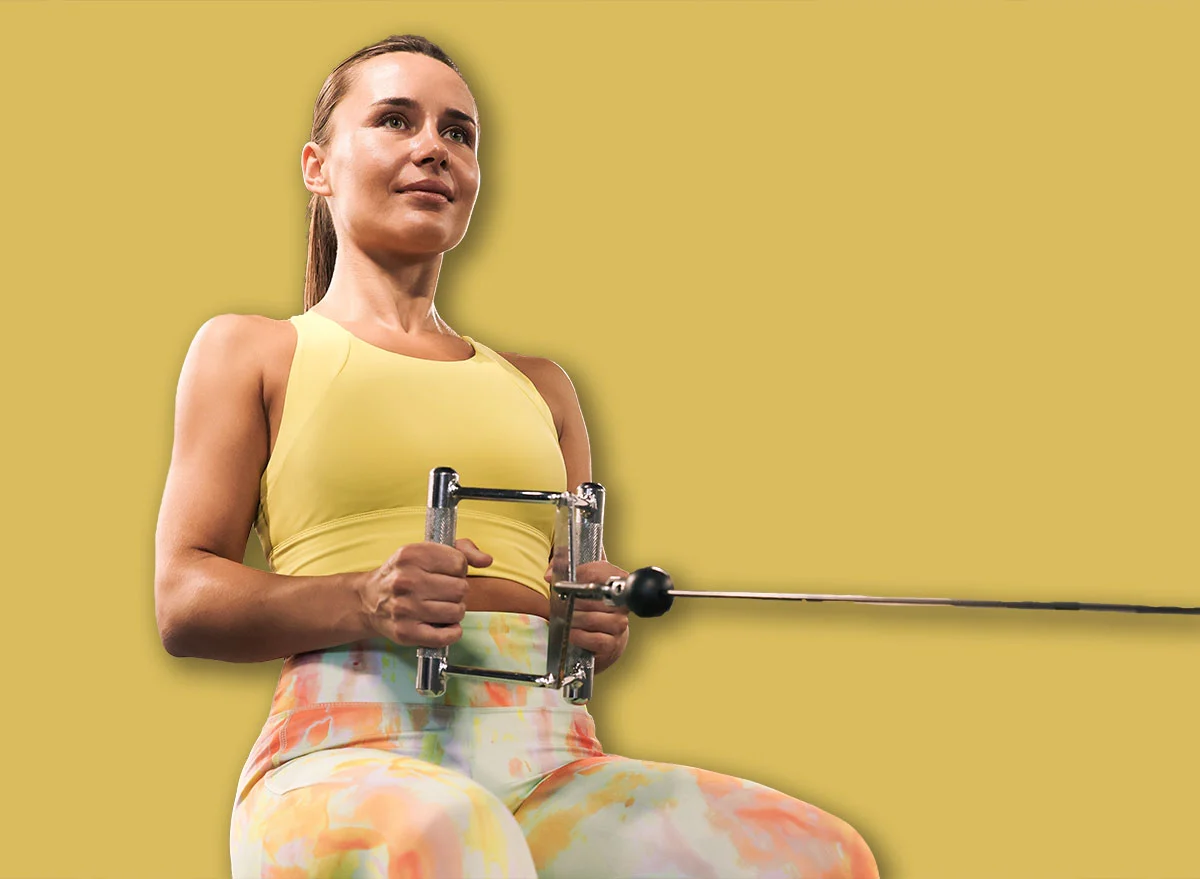
1. Cable Rows: Rebuilding the Spinal Foundation
Poor posture is a common concern as we age, often manifesting as a forward-rounded thoracic spine. This "hunch" is not just an aesthetic issue; it can compress the lungs and create chronic neck and shoulder tension.
"Cable rows are fantastic for strengthening the upper back and core," says Dobrez. "This exercise helps to rebuild the muscles that support the spine, which is crucial for those who have developed a rounded posture over time."
The Mechanical Advantage
Unlike crunches, which pull the body forward, cable rows pull the shoulders back and down, engaging the lats, rhomboids, and the deep stabilizers of the core. By maintaining a neutral spine throughout the movement, the individual is training their body to remain upright under load. This directly translates to better sitting and standing posture, reducing the strain on the lower back that often results from slouching.
2. Step-Ups: Stability in Motion
Stability is the hallmark of functional fitness. As we age, the ability to transition from one level to another—such as climbing stairs or stepping onto a curb—requires a complex interplay between the core and the lower extremities.
"Step-ups build the core using balance and controlled movement," Dobrez notes. "They mimic real-life activities, strengthening the core, hip, and legs, which is necessary for stability."
Why It Outperforms the Crunch
When you perform a step-up, your core must engage instantaneously to prevent the torso from swaying. It is a dynamic movement that requires constant micro-adjustments from the obliques and transverse abdominis. By focusing on the controlled descent and the powerful ascent, you are building the "brakes" and "accelerators" of your body, which is vital for preventing trips and falls.
3. Dead Bugs: The Gold Standard for Spine-Safe Activation
The "Dead Bug" is perhaps the most misunderstood yet effective exercise for core integrity. Despite its strange name, it is a masterclass in spinal stability.
"Dead bugs are one of the safest ways to retrain your core without putting too much strain on the spine," says Dobrez. "This exercise will help improve the coordination between the core and your limbs, ensuring that the back remains protected during movement."
Execution and Safety
The primary goal of the Dead Bug is to keep the lower back pressed firmly against the floor (or, if done on a raised surface, to maintain a neutral spine) while moving the arms and legs in opposition. By isolating the limbs while forcing the core to resist movement, you are training the body to stabilize the spine—a skill that is essential for every movement in life, from reaching into a high cabinet to walking across a room.
4. The Farmer’s Carry: Real-World Strength
If there is one exercise that encapsulates functional training, it is the Farmer’s Carry. It is as simple as it sounds: picking up a weight in each hand and walking.
"The farmer’s carry requires carrying weights while walking, which forces the core to stabilize your body against the load," Dobrez explains. "It is also immensely helpful for posture and coordination, both of which tend to decline with age if not actively trained."
The Implications for Longevity
The Farmer’s Carry is an "anti-lateral flexion" exercise. As you walk with weights, your body wants to tilt or sway; your core must work overtime to keep you perfectly vertical. This constant tension builds a dense, durable midsection that isn’t just "toned"—it is functionally capable of handling the rigors of daily life. For those over 60, this is the ultimate safeguard against the frailty that can accompany the aging process.
Supporting Data: The Case for Functional Fitness
The shift away from isolation exercises is supported by a growing body of sports science research. A study published in the Journal of Aging and Physical Activity suggests that older adults who prioritize "dynamic stability" training—exercises that involve movement, balance, and load—show significantly higher levels of independence compared to those who focus solely on static strength training.
The core is essentially the "transfer station" of the body. Power generated in the legs must be transferred through the core to the upper body to perform tasks like lifting an object. When the core is weak or only trained in a single plane of motion (like the crunch), the body becomes susceptible to injury during these transfers. By incorporating multi-planar movements, older adults can ensure that their muscles are ready for the unpredictable nature of real-life movement.
Official Recommendations and Expert Guidance
For those looking to transition from traditional crunches to these functional movements, Dobrez offers a few pieces of advice:
- Prioritize Form Over Load: Especially when starting out, the quality of the movement is more important than the weight being lifted.
- Consistency is Key: Aim for these movements 2–3 times per week. Because they are compound movements, they are more sustainable and less likely to lead to overuse injuries than daily ab-isolation sessions.
- Listen to Your Body: "These exercises should feel like work, but they should never cause sharp pain," says Dobrez. If you feel pain in your lower back or neck, stop and re-evaluate your form.
The Psychological Shift
Perhaps the most significant implication of this new approach is the psychological one. For many, the "six-pack" goal was driven by aesthetic pressure. By pivoting to functional strength, the goal becomes empowerment. When an individual realizes they can carry their own groceries, climb stairs without discomfort, and maintain a confident, upright posture, the vanity-driven goal of a six-pack often fades in importance, replaced by the far more valuable goal of a high quality of life.
Conclusion: A New Standard for Aging Well
The traditional crunch has had its day in the sun, but for those navigating their 60s and beyond, it is time to retire the mat-based obsession. By adopting a program centered on the Cable Row, the Step-Up, the Dead Bug, and the Farmer’s Carry, you are not just working out—you are investing in your long-term independence.
As Adam Dobrez aptly puts it, these moves "go beyond the surface and target deep abdominal muscles. They are also safer and more sustainable long-term, because they are easier to scale based on someone’s fitness level." Whether you are an elite athlete or someone just looking to stay active, the lesson is clear: train for the life you want to live, not just the physique you want to see in the mirror. Your spine, your posture, and your future self will thank you.