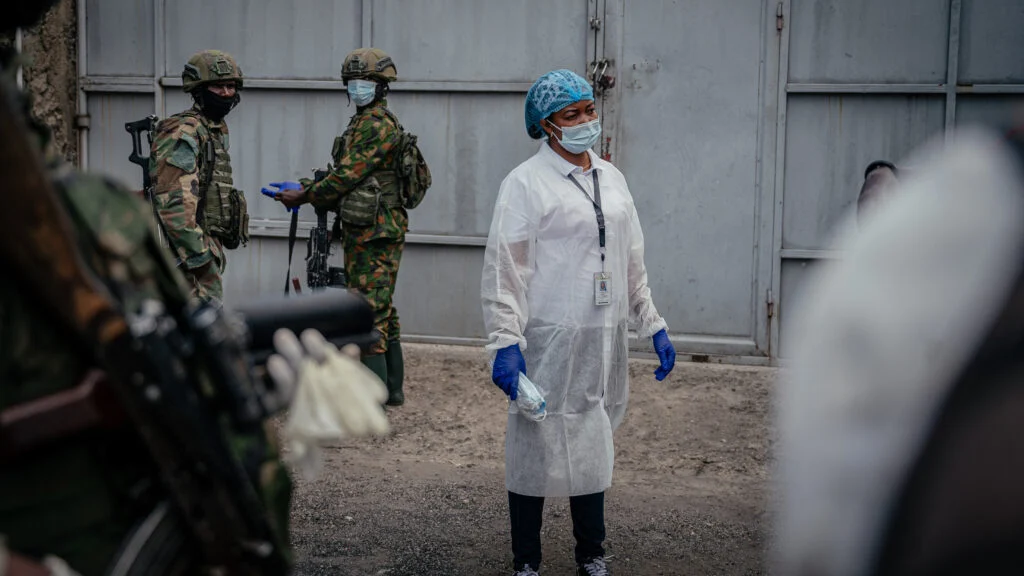
WASHINGTON — For years, the United States served as the primary bulwark against infectious disease outbreaks in the Democratic Republic of the Congo (DRC), investing hundreds of millions of dollars into robust surveillance, community health worker training, and the logistical supply chains necessary to contain biological threats. Today, that architecture has been dismantled, leaving a void that experts warn has fueled the third-largest Ebola outbreak in recorded history.
In the months leading up to the current surge, a series of aggressive funding cuts initiated by the Trump administration effectively severed the lifeblood of regional public health infrastructure. According to six individuals with direct knowledge of the efforts, the result has been a "cascade of consequences" that not only delayed the initial detection of the virus but crippled the ability of front-line responders to contain it.
As of this week, health officials estimate that at least 130 people have perished, with more than 600 confirmed cases. Among the afflicted is an American medical missionary, a development that has prompted the U.S. government to abruptly close its borders to individuals traveling from the region—a restriction from which U.S. passport holders are exempt.
The Anatomy of an Oversight: A Chronology of Withdrawal
The current crisis did not emerge in a vacuum. It is the culmination of a systematic dismantling of long-standing foreign aid commitments.
- Fiscal Year 2024: The U.S. maintains a robust presence in the DRC, with USAID disbursing approximately $1.2 billion in support, much of it funneled toward bolstering local health systems and infectious disease readiness.
- Early 2025: As part of the "America First" budget realignment, the Trump administration signals a massive pivot away from multi-lateral health funding. Internal disclosures reviewed by STAT and other agencies reveal a series of planned layoffs for global health staff and the suspension of critical supply chain contracts.
- Late 2025: USAID funding for the region plummets to $67 million for the final quarter, a staggering contraction from previous levels. Concurrently, the administration withdraws from the World Health Organization (WHO), further isolating U.S. efforts from the global coalition.
- Early 2026: As the Ebola virus begins to circulate in remote provinces, aid organizations—depleted of funding and personnel—are forced to consolidate operations. The International Rescue Committee (IRC) announces it has reduced its coverage area from five key zones to just two.
- May 2026: The outbreak gains momentum. The U.S. government imposes travel restrictions, while officials in Washington attempt to reconcile the absence of prior infrastructure with a reactive, limited response.
Data Points of a Failing System
The impact of these cuts is quantifiable and devastating. Research conducted by the Congolese NGO RHA and corroborated by public health scholars suggests that mortality rates in the affected regions have doubled since the withdrawal of U.S. support.
Financial records provide a grim map of the retreat. HHS foreign aid to the DRC dropped from nearly $33 million in fiscal year 2024 to less than $10 million in 2025. When combined with the massive contraction in USAID spending, the total investment in the region’s health security evaporated at a velocity that local health facilities could not absorb.
"The central pharmacies collapsed, the rural clinics collapsed, and the mortality doubled," says Les Roberts, a professor emeritus at Columbia University. Roberts, who has spent decades studying the region, notes that the system once functioned as an early warning network: rural clinics would identify anomalies, and aid-backed supply chains would move to contain them. With that network now severed, the delay between infection and intervention has stretched to lethal proportions.
Official Responses: Defense and Deflection
Within the halls of the White House and the State Department, the official stance remains one of justification, prioritizing a new, centralized "America First" diplomatic model over the previous, community-based grant system.
"We are doing everything we can to support Americans in the region," Heidi Overton, deputy director at the White House Domestic Policy Council, stated during a recent press conference. She emphasized that the administration’s focus remains on the protection of U.S. citizens.
The State Department, now tasked with overseeing global health functions through its newly formed Bureau of Global Health Security and Diplomacy, maintains that the restructuring was necessary. "By bringing USAID global health functions under the new Bureau of Global Health Security and Diplomacy at the State Department, our efforts are more aligned and effective," a department spokesperson claimed.
However, experts on the ground paint a different picture. They argue that State Department personnel lack the specialized public health staff and the deep, local-level resources that were the hallmark of USAID’s previous mandate. Daniel Jernigan, a veteran of the 2014-2016 Ebola response at the CDC, notes the loss of synergy. "We were sitting next to the USAID people the whole time," Jernigan said. "Those cuts are going to have an effect no matter what the situation is."
The "Perfect Storm": Implications for Global Security
The tragedy of the current Ebola crisis is compounded by the geopolitical instability of the DRC. The M23 rebel group’s expansion into health-sensitive zones has further complicated the delivery of aid. But as experts like Megan Coffee of the IRC point out, the combination of regional conflict and the sudden vacuum of U.S. funding has created a "perfect storm."
The Erosion of Trust
Perhaps the most damaging long-term implication is the degradation of the relationship between international aid workers and the local population. For years, the presence of American aid was synonymous with stability and survival. Today, that perception has soured.
Professor Les Roberts recalls a stark shift in his personal experience. In past trips to the DRC, his presence as a white American was viewed as a protective asset—a shield for the medical team. On his most recent visit, the dynamic had flipped. "The staff told me: ‘Les, you cannot come with us. You will put our lives in danger,’" he recounted. The perception of American withdrawal, coupled with the "America First" rhetoric, has fueled a climate of suspicion that makes the work of contact tracing and vaccination infinitely harder.
A Paradigm Shift to Reactive Medicine
The consensus among global health workers is that the world has entered a new, precarious era. The strategy has shifted from proactive investment in health systems to a "targeted response" model—a reactive approach that treats public health as a series of isolated fires rather than a landscape requiring firebreaks.
"There is this kind of paradigm shift of targeted responses to targeted problems," said one anonymous public health worker. "It’s not on a scale where it needs to be. You cannot fight a fire by showing up after the house has already burned down."
The implications extend far beyond the DRC. A study published in The Lancet suggests that if current trends in foreign aid cuts persist through 2030, as many as 14 million additional lives could be lost worldwide due to the resulting weakness in local health infrastructure.
As the DRC battles to contain the current Ebola surge, the global health community remains in a state of apprehension. The loss of U.S. leadership in global health security has not only left the Congo vulnerable; it has signaled to the world that the era of international health cooperation may be giving way to a era of national isolation—a shift that may prove, in the long run, to be the most contagious threat of all.