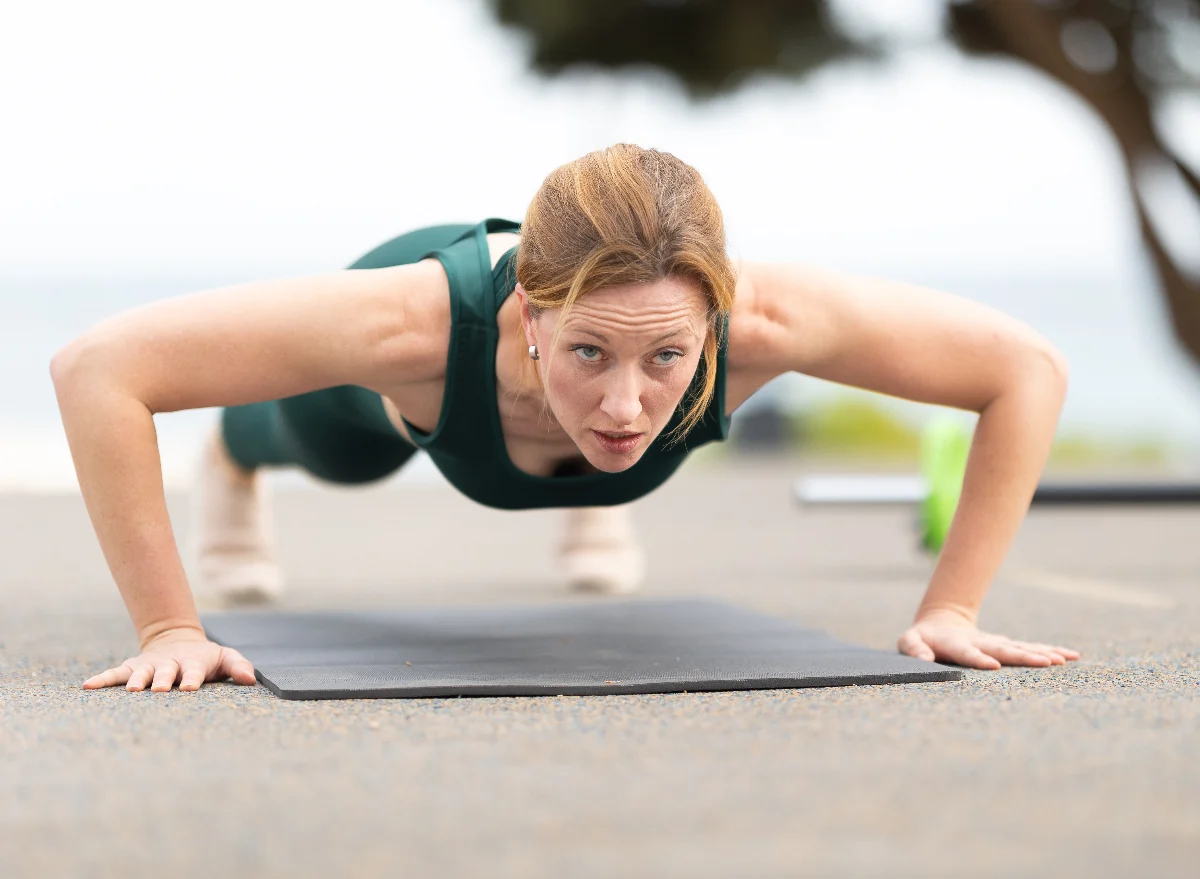
In the landscape of modern fitness, we are often inundated with complex training protocols, high-tech wearables, and boutique gym classes that promise miraculous transformations. Yet, one of the most effective barometers for long-term health and physical independence remains the humble, equipment-free push-up. As we navigate life past the age of 50, the push-up serves as a profound diagnostic tool—a simple, honest assessment of how well your body functions as a cohesive unit.
It is not merely a test of how much weight you can press; it is a measure of neurological control, structural integrity, and the ability of your chest, shoulders, triceps, core, and hips to synchronize under the pressure of fatigue. For those in the second half of their lives, the ability to perform a set of continuous, clean push-ups is not just a gym goal—it is a critical indicator of functional longevity.
The Science of Relative Strength
The push-up is the gold standard for testing "relative strength"—your ability to move your own body weight effectively. Unlike a bench press, which isolates the chest and triceps, the push-up requires a kinetic chain of engagement. When you drop to the floor, you are essentially performing a horizontal plank while adding a dynamic pressing movement.
Scientific research has long underscored the value of this movement. A notable study published in JAMA Network Open found that middle-aged men who were able to perform more than 40 push-ups had a significantly lower risk of cardiovascular disease compared to those who could complete fewer than 10. While the number itself is significant, the physiological reality behind it is even more telling: the ability to maintain a high-rep count indicates lower body mass index (BMI), higher muscular endurance, and improved metabolic health.
After 50, the stakes for functional movement increase. As we age, our bodies face the natural progression of sarcopenia (muscle loss) and decreased bone density. A strong push-up capability suggests that an individual has successfully mitigated these risks, maintaining the core and upper-body strength required for daily activities—whether that is pushing yourself up from the floor after playing with grandchildren, stabilizing yourself during a sudden trip or fall, or simply maintaining the posture that prevents chronic back pain.

Anatomy of the Movement: The Kinetic Chain
To understand why the push-up is such a comprehensive test, we must look at the body as a machine. The movement relies on three major components:
- The Engine (Pushing Muscles): The pectorals, anterior deltoids, and triceps are the primary movers. They provide the raw force required to elevate the torso.
- The Stabilizers (The Core): Without a rigid core, the push-up fails. The abdominals, obliques, and spinal erectors must remain in a state of isometric contraction to prevent the hips from sagging toward the floor.
- The Anchors (The Hips and Legs): The glutes and quads provide the necessary tension that keeps the entire body in a straight line, acting as the foundation for the force generated by the upper body.
When a person begins to fatigue, these systems start to "leak" energy. The hips might pike upward or sag downward; the elbows might flare outward, putting unnecessary stress on the shoulder joints. The ability to keep these components synced until the very last repetition is the true hallmark of a high-functioning, athletic individual.
A Chronology of the Push-Up Test
The push-up as a fitness standard did not arrive by accident. It has evolved from military basic training requirements into a staple of clinical diagnostics.
- The Early 20th Century: The push-up was popularized as a standardized measure of military readiness. Its simplicity meant that recruits could be tested in large groups, providing immediate data on the upper-body endurance of a unit.
- The Mid-Century Shift: As sports science began to flourish in the 1970s and 80s, the push-up was adopted by physical therapists and cardiologists as a non-invasive way to gauge a patient’s general fitness level.
- The Current Era: Today, we view the push-up through the lens of "functional fitness." The movement is no longer just about looking good or passing a test; it is about "pre-hab"—preparing the body to handle the physical stressors of daily life in a way that minimizes the risk of injury.
How to Perform the Perfect Push-Up
If you want to use the push-up as a gauge for your health, you must adhere to strict standards. A "rep" is meaningless if the form is compromised.
The Setup:
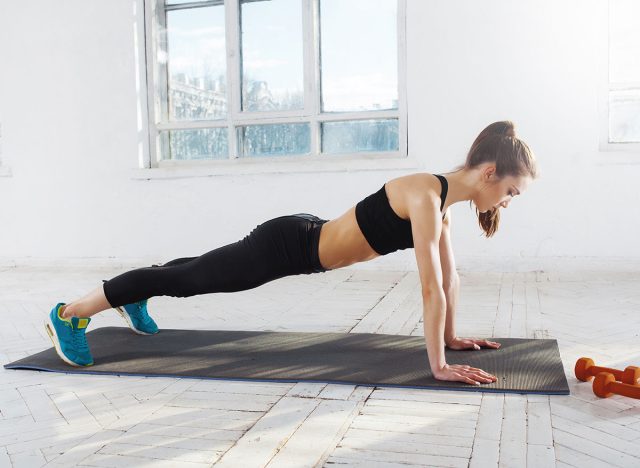
- Hand Placement: Place your hands slightly wider than shoulder-width apart, with fingers pointed forward or slightly outward.
- The Plank: Extend your legs behind you, feet together or hip-width apart. Squeeze your glutes and engage your core to create a straight line from your heels to the top of your head.
- The Descent: Lower your body under control. Your elbows should tuck slightly, forming an "arrow" shape with your body rather than a "T." Aim for your chest to touch the floor or hover just an inch above it.
- The Drive: Push through the floor, maintaining that rigid core position, and return to the starting position.
The Standards:
- Beginner (0–10 reps): Focus on consistency and range of motion. Use an incline (hands on a bench or countertop) if you cannot maintain a straight body line.
- Intermediate (11–25 reps): You have built a solid foundation. You likely possess enough strength for most daily tasks but can benefit from adding volume and endurance training.
- Advanced (26–35+ reps): You are in a top-tier category for your age group. This level of endurance indicates excellent heart health and structural robustness.
Implications for Longevity
Why should a 55-year-old care about hitting a specific rep count? The implications go far beyond the gym floor.
1. Shoulder Health:
Many individuals over 50 suffer from "rounded shoulder" syndrome, caused by prolonged desk work and lack of overhead or pressing movement. The push-up, when performed with proper scapular retraction, helps correct this by strengthening the muscles that support the shoulder blade, leading to better posture and reduced neck tension.
2. Core Connectivity:
The push-up is arguably one of the best core exercises in existence. Because it forces the trunk to resist gravity, it builds "functional" core strength—the kind that supports the spine during heavy lifting or sudden movements—rather than the superficial "six-pack" strength derived from traditional crunches.
3. Cognitive and Neurological Engagement:
Maintaining tension, managing breathing, and keeping the body in alignment requires significant neurological focus. This "mind-muscle connection" is a crucial aspect of cognitive health as we age, keeping the brain engaged in complex physical coordination.
Strategies for Improvement
If you find yourself struggling to reach your desired number, do not be discouraged. Strength is a skill that can be developed at any age.
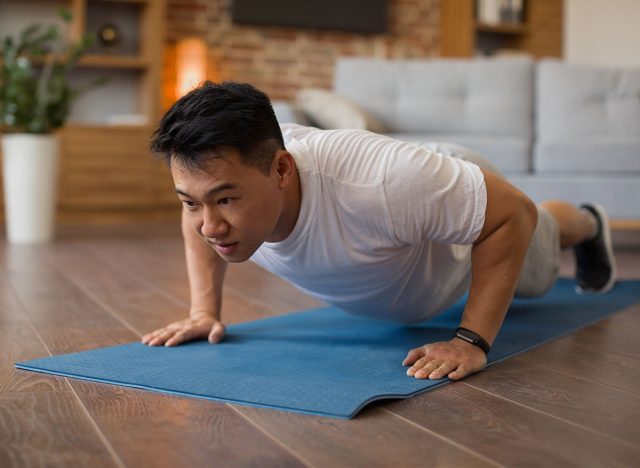
- The Incline Progression: If you cannot perform a perfect push-up on the floor, move to an incline. By placing your hands on a stable, elevated surface (like a sturdy kitchen counter or a Smith machine bar), you reduce the percentage of body weight you must move, allowing you to practice the form without failure. As you get stronger, lower the height of the incline until you are eventually on the floor.
- Tempo Training: Slow down. Perform a three-second descent (eccentric) and a one-second explosive ascent. This increases the "time under tension," which is one of the most effective ways to build muscular density and strength.
- Volume Accumulation: Instead of trying to hit a max set every day, use "greasing the groove." Do several sets throughout the day at 50% of your current max. By doing 30 total reps spread over the course of an afternoon, you accumulate volume without inducing excessive fatigue, allowing your central nervous system to adapt to the movement.
Conclusion: The Honest Test
In the end, the push-up is an honest broker. You cannot cheat it without the movement falling apart, and you cannot fake the strength required to perform high-volume sets. For those over 50, it is perhaps the most reliable metric we have for assessing our physical trajectory.
If you can complete 35 or more clean, continuous reps, you have built a level of strength that is not only impressive but protective. You have established a body that is capable, durable, and resilient. If you aren’t there yet, view the push-up as your roadmap. Every single rep you add is a deposit into your "longevity bank," ensuring that you stay mobile, independent, and strong for the decades to come.
Remember: The goal isn’t to look like a bodybuilder; the goal is to live like an athlete. Start where you are, prioritize your form, and let the numbers follow. Your body will thank you for it in the long run.