










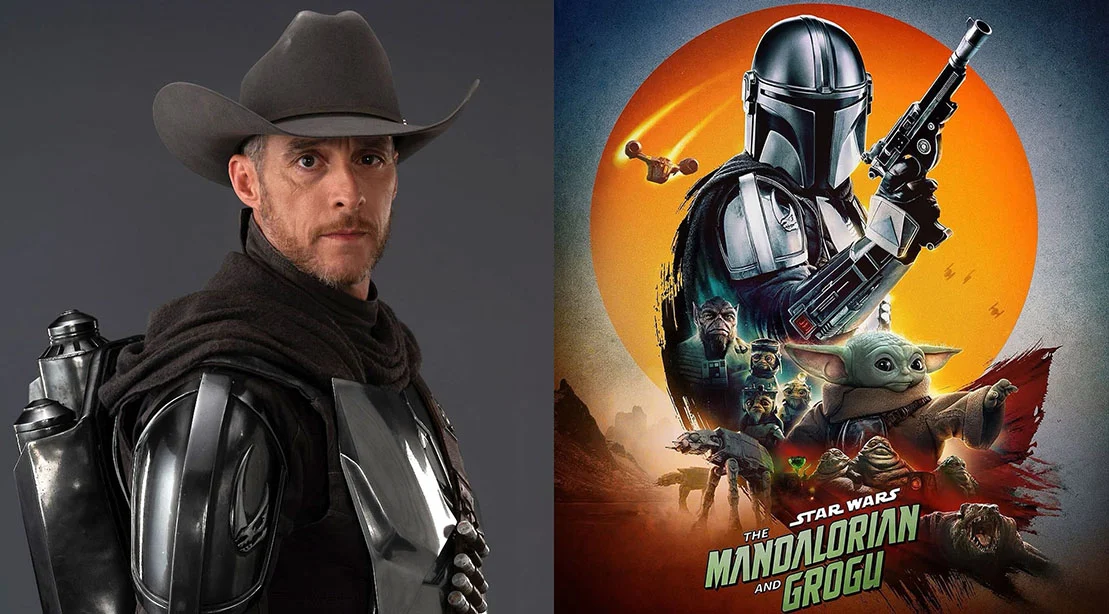
For decades, the name "Wayne" has been synonymous with the American West. From the dusty trails of The Searchers to the rugged plains of True Grit, John Wayne defined the cinematic archetype of the stoic, iron-willed hero. Today, that legacy has transitioned from the frontier of the 19th century to the outer reaches of a galaxy far, far away. Brendan Wayne, grandson of "The Duke," has spent the last several years etching his own name into the annals of pop culture history as the physical embodiment of Din Djarin, the titular protagonist of The Mandalorian.
As anticipation builds for the upcoming theatrical event, Star Wars: The Mandalorian and Grogu, Brendan Wayne is opening up about the grueling, transformative, and deeply personal journey required to bring a modern space-age gunslinger to life.
The Weight of the Beskar: A Physical and Emotional Odyssey
The portrayal of Din Djarin is a unique collaborative effort in Hollywood. Pedro Pascal provides the iconic voice and the face beneath the mask when the helmet is removed, while martial artist Lateef Crowder executes the high-octane, gravity-defying stunt sequences. However, it is Brendan Wayne who carries the heavy lifting—quite literally—of the character’s day-to-day existence. From the subtle tilts of the helmet that convey grief or confusion to the tactical movements of a bounty hunter in close-quarters combat, Wayne is the heart beating beneath the beskar armor.
"I don’t think you can avoid it, that’s for sure," Wayne says when asked about the constant comparisons to his grandfather. "I don’t know why you would, either." For Brendan, John Wayne was more than a screen icon; he was a grandfather who enjoyed the simple pleasures of life, like fishing. "That was where he was freest, you know?" he recalls. Now, Brendan finds himself mirroring that same heroic path, albeit in a costume that would test the resolve of any athlete.
A Chronology of the Craft: From Character Actor to Galactic Hero
Brendan Wayne’s path to the Star Wars universe was not a direct one. After some gentle, persistent encouragement from his mother to pursue the family business, he spent over 25 years building a formidable resume. His credits include roles in Angel, Sons of Anarchy, Agents of S.H.I.E.L.D., and the genre-bending Cowboys & Aliens.
However, it was the 2018 casting for The Mandalorian that proved to be his professional turning point. The role required a level of physical discipline that demanded more than just acting chops; it required the grit of a professional athlete.
The Evolution of the Armor
- Season 1 & 2: The original suit was a formidable 48 pounds of fiberglass and resin. The physicality of wearing this for 16-hour days took a heavy toll. During the production of the second season, Wayne suffered a torn intestine—an injury that underscores the sheer physical stakes of the role.
- The Feature Film Era: For the upcoming The Mandalorian and Grogu film, the suit has evolved into a 62-pound behemoth. The added weight is intended to provide a more realistic, grounded movement on the big screen, but for the man wearing it, it represents a significant increase in the necessary training load.
Supporting Data: The Science of Survival Behind the Mask
To inhabit a character who is meant to appear agile despite being encased in heavy plate armor, Wayne has adopted a regimen that borders on the extreme. His daily routine is a testament to the fact that, in the world of high-stakes action filmmaking, the costume is only as effective as the person wearing it.
The "Mando" Training Protocol
- Weighted Endurance: Wayne incorporates two-mile runs while wearing a 30-pound weight vest. He began with a 12-pound vest, systematically increasing the resistance to ensure he could handle the upcoming film’s 62-pound rig.
- Interval Conditioning: His routine features six rounds of skipping and six rounds of shadow boxing. To ensure he remains explosive, he integrates burpees between each round.
- Recovery and Hydration: The physical cost of the role is staggering. Wayne reports losing up to 10 pounds in the first 11 days of a production cycle. To combat this, he relies on rigorous hydration, high-protein intake, and frequent ice baths to manage inflammation and muscle fatigue.
"A lot of work is about: are you willing?" Wayne says. "Are you willing to go there? And that’s what ‘Mando’ was for me."
Official Perspectives: The Intersection of Legacy and Innovation
The brilliance of The Mandalorian lies in how it seamlessly blends the aesthetic of a classic Western with the expansive lore of Star Wars. For fans who have watched the show, the storytelling parallels to John Wayne’s filmography are undeniable. Brendan acknowledges this connection with a sense of humility and pride.
"I’m very lucky I got to play somebody who is heroic and physically conscious," Wayne notes. "I looked at my grandfather, and I went, ‘Oh my god, this is what he did.’"
The influence of the Western genre—the solitary drifter, the code of honor, the protection of the innocent—serves as the backbone of Din Djarin’s arc. While John Wayne’s characters often faced the dangers of the American frontier, Brendan’s character faces the moral and physical perils of the outer rim. In both cases, the core narrative remains the same: a man of few words standing between chaos and justice.
Implications for the Future: A New Era of Western Cinema
As the industry prepares for the theatrical release of Star Wars: The Mandalorian and Grogu on May 22, 2026, the stakes for the franchise have never been higher. Transitioning from the intimacy of streaming television to the grand scale of a blockbuster feature film requires a shift in both scope and performance.
The decision to lean into the "Western" roots of the project is a strategic move that appeals to a multi-generational audience. Brendan Wayne believes that this film will bridge the gap between traditional cinema lovers and modern sci-fi fans.
"It’s the best, and I recommend it one million percent," he beams. "Go see it in the theater, because you can bring your grandpa, who doesn’t like to watch space stuff, and he’s gonna look at this and go, ‘This is a great old-time!’"
The Enduring Legacy
The transition of the "Wayne" name into the Star Wars galaxy is more than just a piece of industry trivia; it is a profound testament to the evolution of the Western genre. Brendan Wayne has managed to honor his family’s cinematic heritage while simultaneously helping to create a new icon for a generation that grew up on lightsabers rather than six-shooters.
By pushing his body to the absolute limit, enduring the stifling heat of the suit, and focusing on the subtle, wordless communication that defines the character, Brendan Wayne has proven that heroism is not just about the lines of dialogue you deliver—it is about the integrity of the performance and the willingness to carry the weight of the legacy on your shoulders. Whether he is on the set of a Disney+ series or the massive stage of a feature film, the man inside the armor is, in every sense of the word, a hero of his own making.