For decades, the global food and beverage industry has operated on a foundational, immutable assumption: human appetite is inelastic and ever-growing. From the strategic placement of high-calorie impulse buys at supermarket checkout lines to the engineered "bliss point" of processed snacks, the business model of Big Food relies on the premise that consumers will always want more.
However, the rapid ascent of glucagon-like peptide-1 (GLP-1) receptor agonists—drugs like Ozempic, Wegovy, and Zepbound—has introduced a disruptive variable that Wall Street analysts are only beginning to quantify. As millions of patients experience a profound biological "off-switch" for hunger, the food industry is staring down a structural challenge that threatens to upend decades of consumer behavior patterns.
The Threat: A Shrinking Consumer Base
At its core, the threat posed by GLP-1 medications is existential. These drugs do not merely assist in weight loss; they fundamentally alter the hormonal signaling that dictates cravings, satiety, and the psychological reward loop associated with consumption.
For the food industry, this manifests as a direct decline in "share of stomach." When consumers take these medications, they report a significant decrease in the consumption of high-calorie, ultra-processed foods, sugary beverages, and alcohol. Analysts at Morgan Stanley have projected that the widespread adoption of these drugs could reduce the total caloric intake of the U.S. population by as much as 1.5% to 2% over the next decade. While that figure may sound modest, in an industry built on thin margins and high-volume turnover, such a contraction represents a multi-billion-dollar shift in quarterly earnings.
The concern is not just about eating less; it is about what is being eaten less. Early data suggests that the most affected categories include carbonated soft drinks, baked goods, and salty snacks—the very pillars of the "convenience food" economy.
Chronology: The Rise of the Anti-Appetite Era
The journey toward this current inflection point did not happen overnight. The chronology of the GLP-1 phenomenon tracks a shift from niche diabetes treatment to a broad-spectrum cultural and economic force.
- 2005: The FDA approves Exenatide, the first GLP-1 receptor agonist, for the treatment of Type 2 diabetes. It was seen as a medical advancement, with little to no impact on the broader food economy.
- 2017–2020: Clinical trials for semaglutide (Ozempic/Wegovy) reveal that significant weight loss is a consistent side effect. The medical community begins to pivot toward viewing obesity as a chronic, treatable metabolic condition.
- 2021: The FDA approves Wegovy for chronic weight management. The public discourse shifts, and social media begins to amplify the "miracle" results of the drug.
- 2023: As prescriptions reach record highs, major food companies begin acknowledging the trend during earnings calls. Walmart executives confirm they are observing a "slight pullback" in the total basket size of customers using GLP-1 medications.
- 2024–Present: A "wait-and-see" approach evolves into strategic diversification. Food giants are now actively restructuring R&D pipelines to mitigate the impact of a medicated, lower-calorie consumer base.
Supporting Data: Mapping the Market Shift
The economic implications are supported by emerging data points that paint a complex picture of consumer health and spending:
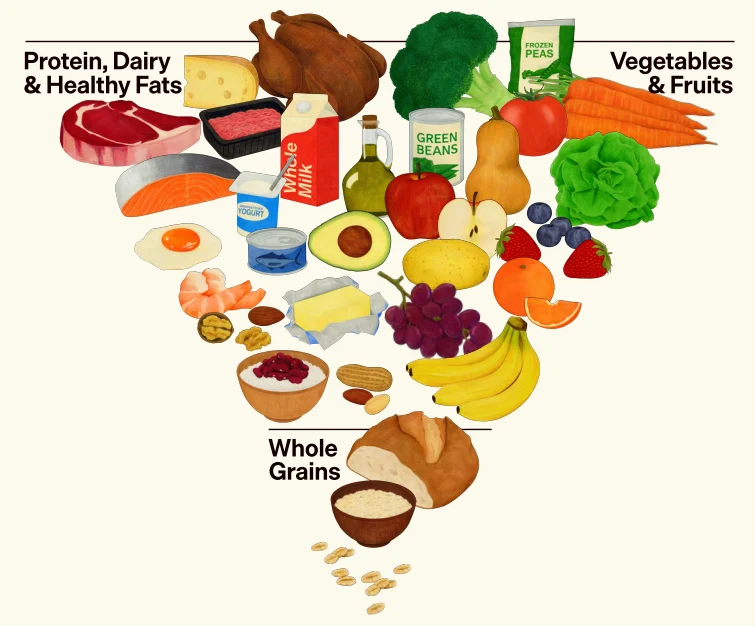
- Basket Analysis: Retail data from major grocery chains indicates that GLP-1 users show a marked preference shift. They are purchasing more fresh produce, high-protein items, and nutrient-dense whole foods, while reducing purchases of items categorized as "hyper-palatable."
- Caloric Displacement: Independent research firm Numerator found that households using GLP-1 drugs spend roughly 6% to 9% less on snack foods compared to their non-medicated counterparts.
- Stock Market Volatility: Throughout 2023 and 2024, stocks for snack food conglomerates and soda manufacturers experienced intermittent dips tied directly to headlines regarding the expansion of GLP-1 insurance coverage.
- The "Satiety Gap": Survey data indicates that 70% of GLP-1 users report a "drastic change" in their perception of food, describing cravings for junk food as "unappealing" or "distasteful."
Official Responses: Big Food’s Pivot
How is the industry responding to a world where their customers are biologically discouraged from overeating? The response has been a mix of denial, diversification, and rebranding.
Strategic Product Reformulation
Many companies are doubling down on the "better-for-you" category. Nestlé, for instance, has launched a line of "Vital Pursuit" frozen meals specifically tailored for those on weight-loss medications. These meals focus on high protein, fiber, and portion control—essentially aiming to provide the convenience that GLP-1 users still need, but with a nutritional profile that aligns with their new metabolic reality.
Acquisitions and R&D
Large-scale food companies are increasingly looking to acquire startups that specialize in functional foods and medical nutrition. By shifting their portfolio toward products that support weight management, these companies hope to capture the revenue lost from their legacy snack lines.
The Defensive Lobbying
Behind the scenes, food industry trade groups are monitoring the expansion of Medicare and private insurance coverage for these drugs. Their strategy involves lobbying for more holistic approaches to obesity, emphasizing "lifestyle and nutrition" over "medical intervention," an attempt to ensure that the food industry remains a central part of the conversation regarding public health.
When Customers Go Off the Drugs
A critical, yet under-researched, aspect of this trend is what happens when patients stop taking the medication. Data indicates a high rate of weight regain upon cessation of the drug.
For the food industry, this presents a unique "rebound" risk. If millions of people cycle on and off these medications due to cost, supply shortages, or side effects, the food industry must prepare for volatile demand cycles. Companies are now conducting internal modeling to determine if "post-GLP-1" consumers return to their previous eating habits with even greater intensity, or if the behavioral changes induced by the drugs leave a lasting, permanent imprint on their consumption habits.
The Marketing Opportunities: A New Value Proposition
Rather than viewing GLP-1s solely as a threat, some forward-thinking brands are identifying them as a massive marketing opportunity.
- Protein-Forward Branding: The demand for protein is skyrocketing among those looking to maintain muscle mass while losing fat. Brands that can prove high protein content with clean labels are winning in this new environment.
- The "Micro-Snacking" Trend: As the total volume of food consumed drops, consumers are looking for "quality over quantity." This opens a door for premium, nutrient-dense snacks that occupy the smaller gaps in a GLP-1 user’s daily caloric budget.
- Transparency as a Competitive Advantage: Consumers on these medications are hyper-aware of macronutrients. Companies that lead with radical transparency regarding ingredients, sugar content, and protein-to-calorie ratios are finding increased loyalty among this demographic.
Implications: The Future of the "Bliss Point"
The rise of GLP-1 agonists marks a potential end to the era of hyper-processed convenience as the primary driver of growth in the food industry. We are witnessing a transition from an economy based on "satiating cravings" to one based on "fueling health."
For the consumer, this is a transition toward greater agency over their metabolic health. For the food industry, it is a period of intense creative destruction. Those companies that cling to the old model—relying on salt, sugar, and fat to drive volume—will likely see their market share erode. Conversely, those that embrace the shift, retooling their offerings to serve a more health-conscious and nutrient-focused consumer, may find that the GLP-1 era is not the end of their business, but merely the beginning of its next, more sustainable chapter.
As the lines between pharmacy and pantry continue to blur, the ultimate winner will be the company that best understands that in the future, the most successful food product will not be the one that people can’t stop eating, but the one they choose to keep eating to support their new, medicated lifestyle.