










For decades, the standard narrative of neuroscience has been dominated by the neuron. From the firing of synapses to the complex architecture of cognitive processing, the brain’s primary signaling cells have held the spotlight, largely relegating other cell types to the role of "janitors" or "scaffolding." However, a groundbreaking study published on April 6, 2026, in the Proceedings of the National Academy of Sciences (PNAS) is dismantling this neuron-centric view.
Researchers from the University of Concepción in Chile and the University of Maryland (UMD) have uncovered a sophisticated, multi-layered communication circuit in the hypothalamus—the brain’s command center for hunger and fullness—that relies not just on neurons, but on the unsung heroes of the brain: astrocytes.
The Paradigm Shift: Redefining Brain Architecture
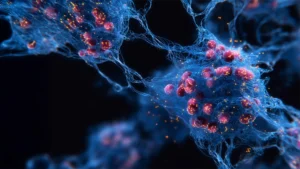
The study, titled "Tanycyte-derived lactate activates astrocytic HCAR1 to modulate glutamatergic signaling and POMC neuron excitability," reveals that astrocytes are active participants in metabolic regulation. Traditionally classified as glial cells, astrocytes were long thought to provide structural and nutritional support to neurons. The new findings suggest they act as critical "middlemen," processing metabolic cues and translating them into neural signals that dictate whether an individual feels hungry or sated.
"People tend to immediately think of neurons when they think about how the brain works," says Ricardo Araneda, a professor in UMD’s Department of Biology and a corresponding author of the study. "But we’re finding that astrocytes, what we used to think of as just secondary support cells, are also participating in how our brains regulate how much we eat. This research changes how we think about these communication circuits."
Chronology of a Decade-Long Discovery
The path to this discovery was not an overnight breakthrough but the culmination of a ten-year international partnership. The research represents a seamless collaboration between the laboratory of María de los Ángeles García-Robles at the University of Concepción and Ricardo Araneda’s lab at UMD.
- 2016–2020: The foundations of the project were laid as researchers began investigating the role of tanycytes—specialized cells lining the brain’s ventricles—in glucose sensing.
- 2022–2024: As the project matured, Sergio López, a doctoral student co-mentored by García-Robles and Araneda, became the driving force of the experimental phase. During an intensive eight-month research residency at UMD, López successfully mapped the interaction between tanycytes and astrocytes, identifying the HCAR1 receptor as the crucial link.
- April 2026: The findings were formally published in PNAS, presenting a new model of hypothalamic signaling that has already begun to generate significant interest in the endocrinology and neurology communities.
The Mechanism: How the Brain Detects a Meal
To understand how the brain detects energy intake, the research team looked at the hypothalamus, specifically the area responsible for monitoring glucose levels.
The Tanycyte Sensor
The process begins with tanycytes. These cells possess unique extensions that reach into the cerebrospinal fluid, allowing them to monitor the levels of glucose moving through the brain. When a person eats a meal, glucose levels in the blood and cerebrospinal fluid rise. In response, tanycytes process this glucose and convert it into lactate—a metabolic byproduct—which is then released into the local brain environment.
The Astrocytic Middleman
For years, the scientific consensus held that lactate spoke directly to neurons. However, the study uncovered an unexpected detour. The team discovered that astrocytes are equipped with a receptor called HCAR1 (Hydroxycarboxylic Acid Receptor 1). When lactate is released by tanycytes, it binds to the HCAR1 receptor on the surface of nearby astrocytes.
The Neural Signal
Upon receiving the lactate signal, the astrocytes undergo a rapid activation. They, in turn, release glutamate—a potent chemical messenger—which travels to neighboring neurons. This specific signaling cascade stimulates neurons known to suppress appetite, effectively communicating to the brain that the body has received sufficient fuel.
Supporting Data: A Chain Reaction of Signals
The researchers utilized high-resolution imaging to observe this interaction in real-time. In one notable experiment, the team introduced glucose into a single tanycyte and observed the subsequent reaction in the surrounding environment.
The resulting data provided visual evidence of a "spreading" effect: a localized trigger in one tanycyte prompted a coordinated response across a cluster of astrocytes. This confirmed that the brain does not operate through simple, isolated lines of communication, but rather through a complex, integrated network.
"What surprised us was the complexity of it," Araneda explains. "To put it simply, we found that tanycytes ‘talk’ to astrocytes, and then astrocytes ‘talk’ to neurons."
Furthermore, the team identified a "dual effect" mechanism. The hypothalamus houses two opposing populations of neurons: those that promote hunger and those that suppress it. The researchers hypothesize that lactate may simultaneously activate fullness neurons through the astrocytic pathway while potentially quieting hunger-promoting neurons through a more direct, separate route. This dual-action mechanism provides a robust "stop" signal to prevent overeating.
Official Responses and Scientific Implications
The implications of this discovery are far-reaching. Because tanycytes and astrocytes are present in all mammals, including humans, the biological mechanism identified in the animal models is highly likely to be conserved in the human brain.
Potential Therapeutic Targets
The current landscape of obesity treatment, including widely popular medications like GLP-1 agonists (e.g., Ozempic), focuses largely on hormonal signals originating outside the brain or acting on specific neural receptors. The discovery of the HCAR1-mediated pathway in astrocytes introduces a novel, brain-centric target.
"We now have a different mechanism where we might be able to target astrocytes or specifically this HCAR1 receptor," Araneda says. "It would be a novel target that may complement existing therapies like Ozempic, for example, and improve the lives of many who suffer from obesity and other appetite-related conditions."
Future Research Directions
The research team is already looking toward the next phase: testing whether manipulating the HCAR1 receptor can pharmacologically alter eating behaviors. While there are currently no drugs that directly target this specific pathway, the study provides a clear "blueprint" for pharmaceutical development.
The team cautions, however, that moving from basic research to clinical application requires rigorous testing. The goal is not to replace existing treatments, but to enhance them by addressing the neurological foundations of metabolic regulation.
Conclusion: A New Era in Neuroscience
The collaborative work led by García-Robles and Araneda serves as a reminder that the brain is far more than a collection of firing neurons. It is a highly integrated ecosystem where structural cells like astrocytes play an active, vital role in homeostasis.
As we continue to battle a global obesity epidemic, the shift toward understanding these "hidden" signaling pathways offers a glimmer of hope. By expanding our view of the brain’s architecture to include the complex dialogue between tanycytes, astrocytes, and neurons, science is gaining a clearer, more nuanced understanding of why we eat, when we stop, and how we might finally address the biological roots of metabolic disorders.
Funding Acknowledgement: This research was made possible through the support of Chile’s National Fund for Scientific and Technological Development, the Millennium Institute of Neuroscience in Valparaíso, and the U.S. National Institutes of Health (Award No. R01AG088147A). The views expressed herein are those of the researchers and do not necessarily reflect the official policies of these organizations.