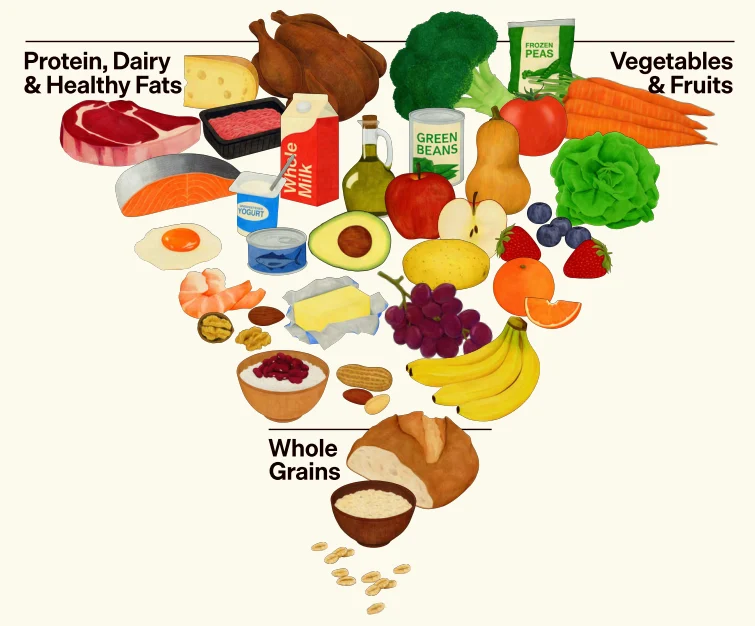
In an era where health-conscious consumers meticulously track caloric intake, prioritize organic produce, and engage in daily exercise, the modern plate has never looked healthier. Yet, beneath the vibrant colors of fresh vegetables and the lean proteins of a well-balanced diet lies a persistent, invisible challenge: chemical contamination. Even the most nutritious foods can harbor harmful compounds, not only from environmental pollutants but also as byproducts of the very culinary techniques—grilling, roasting, and frying—that we rely on to prepare them.
Among these hidden concerns, polycyclic aromatic hydrocarbons (PAHs) stand out as a significant public health priority. These hydrophobic organic compounds, characterized by their fused aromatic rings, are notorious for their potential carcinogenic properties. As scientific understanding of food safety evolves, the mandate for reliable, rapid, and environmentally sustainable detection methods has become a cornerstone of global food regulation.
A Hidden Food Safety Challenge: The Evolution of Detection
For decades, the detection of PAHs in food matrices has been a labor-intensive, costly, and environmentally taxing endeavor. Conventional extraction techniques—such as solid-phase extraction, liquid-liquid extraction, and accelerated solvent extraction—have long served as the industry standard. While effective in their own right, these legacy methods require extensive preparation, significant human labor, and the consumption of large volumes of hazardous solvents. These bottlenecks not only inflate the cost of routine safety monitoring but also create occupational hazards for laboratory technicians and contribute to chemical waste.
To overcome these obstacles, the scientific community has pivoted toward a streamlined, high-efficiency approach known as QuEChERS—an acronym standing for Quick, Easy, Cheap, Effective, Rugged, and Safe. By radically simplifying sample preparation and minimizing the reliance on toxic solvents, QuEChERS is transforming food contaminant testing from a specialized, slow-moving task into a practical, high-throughput routine.
Chronology of Innovation: The 2025 Breakthroughs
The year 2025 has proven to be a watershed moment for food safety technology. Researchers at the Department of Food Science and Biotechnology at Seoul National University of Science and Technology (SeoulTech), spearheaded by Professor Joon-Goo Lee, have published a landmark study in the journal Food Science and Biotechnology. Their work provides a robust framework for measuring eight priority PAHs: Benzo[a]anthracene, Chrysene, Benzo[b]fluoranthene, Benzo[k]fluoranthene, Benzo[a]pyrene, Indeno[1,2,3-cd]pyrene, Dibenz[a,h]anthracene, and Benzo[g,h,i]perylene.
The SeoulTech Methodology
Professor Lee’s team utilized acetonitrile as the primary solvent for PAH extraction, subsequently refining the process through various sorbent-based purification strategies. The validation process was exhaustive, ensuring the method’s efficacy across diverse food matrices. The resulting calibration curves exhibited R² values exceeding 0.99, confirming a high degree of linearity and reliability.
Following this study, the scientific momentum continued with two additional critical pieces of research published in 2025. One study, featured in the journal Foods, introduced a modified QuEChERS approach incorporating a "freeze-out" step, which was applied to over 300 retail food samples. Simultaneously, a study in the Journal of Food Composition and Analysis targeted cereal-based products using a Z-Sep™ clean-up protocol coupled with gas chromatography-tandem mass spectrometry (GC-MS/MS). These studies illustrate a rapid shift toward customizing QuEChERS for specific food categories, ranging from oils and smoked fish to processed cereals.
Supporting Data: Precision and Performance
The performance metrics of these new methods demonstrate a marked improvement over conventional testing. In the SeoulTech study, gas chromatography and mass spectrometry analysis revealed limits of detection (LOD) ranging from 0.006 to 0.035 µg/kg, with limits of quantification (LOQ) spanning 0.019 to 0.133 µg/kg.
Beyond mere detection, the accuracy of these methods is striking. Recovery rates remained impressively high—between 86.3% and 109.6% at varying concentration levels—while precision values remained tight, falling between 0.4% and 6.9% across all tested food matrices. These data points provide regulators with the statistical confidence necessary to enforce safety standards. Notably, the research identified specific high-risk foods, with soybean oil exhibiting the highest concentrations of PAHs, followed by duck meat and canola oil.
Understanding the Source: Why PAHs Matter
The chemistry of PAHs is inextricably linked to high-temperature processing. According to the National Cancer Institute (NCI), these compounds are generated when the fat and juices from meats drip onto open flames or hot surfaces. The resulting smoke creates a chemical veil, depositing PAHs onto the food surface.
While the link between PAH exposure through diet and human cancer remains a subject of ongoing study, the NCI confirms that these compounds have demonstrated clear carcinogenic potential in animal models. The presence of PAHs in everything from smoked fish (like Kezuribushi) to grilled poultry highlights the need for a nuanced understanding of how cooking methods—not just raw ingredients—dictate the safety profile of our meals. As Professor Lee notes, this uncertainty underscores the importance of accurate measurement; by pinpointing where and when contamination occurs, regulators and food producers can implement evidence-based mitigation strategies.
Official Responses and Expert Perspective
Professor Joon-Goo Lee, an expert in food regulation and a key figure in international safety policy, views the adoption of QuEChERS as a dual-win for the industry and the environment. Having served as a scientific officer at Korea’s Ministry of Food and Drug Safety and as a consultant for the FAO/WHO Joint Expert Committee on Food Additives (JECFA), Lee brings a policy-oriented perspective to his research.
"This method not only simplifies the analytical process but also demonstrates high efficiency in detection compared to conventional methods," Professor Lee states. "It can be applied to a wide range of food matrices, from complex oils to processed cereals. Furthermore, our research improves public health by providing safer food, while simultaneously reducing the use and emission of hazardous chemicals in the laboratory setting."
Global Implications: A Cleaner, Safer Future
The implications of these advancements extend far beyond the laboratory bench. For the food industry, the transition to faster, more efficient testing protocols like QuEChERS represents a significant reduction in operational overhead. By streamlining quality control, manufacturers can inspect products more frequently and with greater granularity before they reach the consumer’s shopping cart.
Impact on Policy and Public Health
- Regulatory Efficiency: The high degree of precision in these new methods allows for tighter regulatory compliance and more accurate labeling, reducing the risk of unsafe food reaching the market.
- Environmental Stewardship: By reducing the volume of toxic solvents required for extraction, laboratories can significantly lower their environmental footprint, aligning with global trends toward "Green Chemistry."
- Informed Consumer Choices: As studies identify specific products—such as grilled chicken feet or specific smoked goods—as having higher margins of exposure, health agencies can provide more targeted dietary advice to the public.
- Supply Chain Safety: The ability to test across diverse matrices ensures that contamination can be identified not just in the final product, but at various stages of processing and refinement.
Conclusion
The path toward a safer food supply is increasingly paved with the tools of analytical chemistry. By refining methods like QuEChERS, researchers are successfully peeling back the layers of complexity surrounding food contaminants. The work of Professor Joon-Goo Lee and his contemporaries demonstrates that we do not have to choose between culinary tradition and public safety. Instead, through the integration of high-precision, low-impact testing technologies, the industry can ensure that the food we eat—regardless of how it is grilled, smoked, or prepared—remains as safe as it is nutritious.
As we look toward the future, the integration of these methodologies into standard global food safety protocols will be essential. By turning the "invisible" into the "detectable," science continues to provide the necessary safeguards for a healthier, more transparent food system, one sample at a time.