










BUNIA, Democratic Republic of the Congo — A volatile combination of public mistrust, cultural resistance, and a rapidly evolving viral threat has pushed the eastern Democratic Republic of the Congo (DRC) to a breaking point. As health authorities struggle to contain an outbreak of the rare Bundibugyo strain of Ebola, recurring attacks on medical infrastructure have severely hampered containment efforts, leaving hundreds of potentially infected individuals unaccounted for.
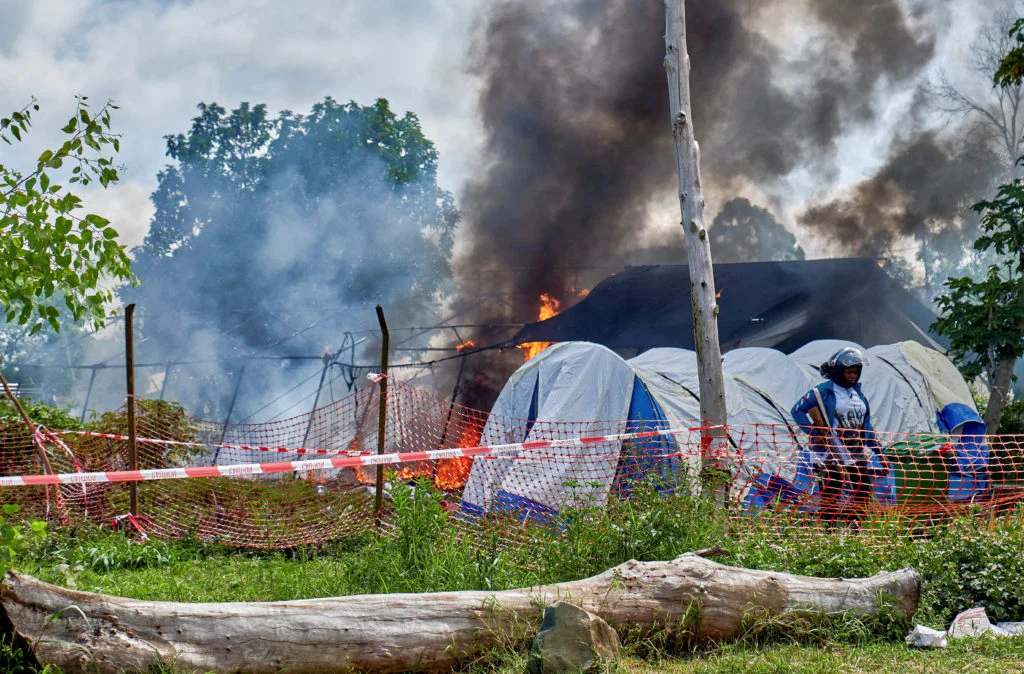
The situation reached a fever pitch this weekend when angry residents in the town of Mongbwalu stormed a Doctors Without Borders (MSF) treatment center, setting fire to a tent designated for the isolation of suspected Ebola patients. This act of violence marks the second such assault on medical facilities in the Ituri province within a single week, underscoring a deepening chasm between international health responders and the local communities they are attempting to serve.
The Anatomy of the Crisis: Main Facts
The current emergency in the DRC is defined by its unpredictability. The outbreak, initially misidentified as a different strain, has been circulating undetected for weeks, allowing the virus to take deep root in the dense, often difficult-to-reach terrain of Ituri province.
The immediate fallout from the Mongbwalu attack was catastrophic for public health efforts. As the facility went up in flames, 18 individuals undergoing evaluation for suspected Ebola infections fled into the surrounding community. Dr. Richard Lokudi, director of the Mongbwalu hospital, expressed grave concern regarding the incident, noting that the escape of these patients has effectively created a "blind spot" in the contact tracing network. "We strongly condemn this act," Dr. Lokudi stated. "It caused panic among the staff and resulted in the uncontrolled dispersal of potential carriers, who are now moving through the population without medical supervision."
This attack follows a similar incident in the town of Rwampara, where a treatment center was incinerated after health authorities denied a family’s request to reclaim the body of a relative suspected of dying from the virus. These incidents are not isolated outbursts; they are symptoms of a profound lack of trust in the protocols mandated by the Ministry of Health and international humanitarian organizations.
A Chronology of Escalation
The timeline of this outbreak suggests it is significantly older and more widespread than initial projections indicated.
- Late March: While previously believed to have begun in late April in Bunia, evidence now suggests the virus was present in the region as early as March 27. The International Federation of Red Cross and Red Crescent Societies (IFRC) recently reported that three of its volunteers lost their lives to the virus during a humanitarian mission in Mongbwalu that was not initially identified as Ebola-related.
- Late April: The first confirmed death of the current outbreak was reported in the provincial capital of Bunia, finally alerting authorities to the presence of the virus.
- Early May: The World Health Organization (WHO) confirmed 82 cases and seven deaths, though they warned these numbers were likely gross undercounts.
- Thursday: A treatment center in Rwampara was burned down by locals protesting burial restrictions.
- Friday: Local authorities implemented a ban on funeral wakes and gatherings exceeding 50 people, aiming to curb transmission via traditional burial practices. The U.S. government announced strict entry restrictions for green card holders traveling from affected regions.
- Saturday: The Mongbwalu center was attacked. Simultaneously, Red Cross workers, escorted by armed military personnel, conducted a high-tension communal burial in Rwampara, facing vocal resistance from the local population.
Supporting Data and Epidemiological Reality
The epidemiological data provided by global health bodies paints a picture of a crisis that is outpacing current resources. While official counts sit at 82 confirmed cases, the reality is far more dire. Authorities are currently tracking 750 suspected cases and 177 suspected deaths.
The virus at the heart of this outbreak—the Bundibugyo strain—is particularly challenging because there is no currently available, widely distributed vaccine. The delay in identification, caused by initial tests for a more common Ebola variant returning negative, provided the virus with a critical head start.
Dr. Jean Kaseya, director-general of the Africa Centers for Disease Control and Prevention (Africa CDC), emphasized that the technical response is only half the battle. "A response to the outbreak must include building trust with communities," Kaseya stated. "Without the cooperation of the local people, our medical interventions are essentially fighting an uphill battle against both the virus and the population."
The WHO has officially upgraded the risk assessment for the DRC from "high" to "very high," though it maintains that the risk of global transmission remains low. However, the geographic spread through the Ituri province suggests that the logistical challenges of reaching remote villages will continue to inflate mortality rates.
Official Responses and Strategic Shifts
The response from the Congolese government, in coordination with the WHO and the Red Cross, has shifted toward a more securitized approach. The presence of armed soldiers and police at burial sites—intended to protect medical workers—has, according to observers, inadvertently heightened the tension between the state and the people.
The Red Cross, currently managing the dangerous task of "safe and dignified burials," has reported increased hostility. David Basima, a Red Cross team leader, described the recurring obstacles: "We were forced to alert the authorities so that they could come to our aid. We experienced significant resistance from young people and the community. It is a very difficult environment to operate in."
The International Perspective
On the global stage, the United States has taken a preemptive and controversial stance. On Friday, federal health officials issued a rule barring green card holders—permanent residents of the U.S.—from re-entering the country if they have recently visited the DRC, Uganda, or South Sudan.
The inclusion of South Sudan in this list has caused confusion, as the country has reported zero cases of the virus. While the U.S. Department of Health and Human Services claims the measure is necessary to ensure that screening, contact tracing, and quarantine monitoring remain manageable for U.S. citizens, the move has been criticized by civil liberties groups as an overreach that may complicate the movement of essential medical personnel.
Implications: A Crisis of Trust
The core of the problem remains the deep-seated cultural and historical friction surrounding death and mourning. In many parts of the Ituri province, the act of preparing a body for burial is a sacred family duty. When the state intervenes, clad in hazmat suits and backed by armed guards, the community often views this not as a public health measure, but as a violation of their dignity and customs.
The "disappearance" of 18 suspected patients from the Mongbwalu facility is a catastrophic outcome that will likely lead to a surge in new infections over the coming weeks. These individuals, if they are indeed infected, will return to their homes, likely infecting family members and neighbors who may not realize the danger until it is too late.
The road ahead for the DRC is fraught with complexity. As the death toll rises and the humanitarian infrastructure continues to be targeted, the international community is being forced to reconsider its strategy. The transition from a purely clinical response to one that prioritizes community engagement, communication, and the sensitive navigation of local customs is no longer an optional component of the mission—it is the most critical hurdle to preventing a regional catastrophe.
As of Sunday, humanitarian groups are calling for an immediate dialogue with local community leaders in Mongbwalu and Rwampara. The goal is to find a middle ground where burial rites can be observed without sacrificing the containment of the virus. Whether such a compromise can be reached in a climate of fear, violence, and extreme political tension remains the defining question of this outbreak.