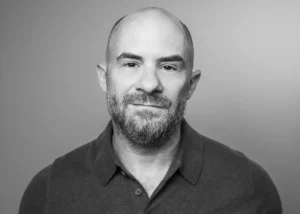












The medicine cabinet has long served as a private sanctuary of secrets, a mirrored box containing the chemical evidence of our vulnerabilities. For Laura Yeager, a writer and educator based in Akron, Ohio, this small household fixture was the front line of a decades-long battle with social stigma. For over thirty years, Yeager’s pre-party ritual was not defined by the selection of music or the chilling of wine, but by the systematic removal of her psychotropic medications. To leave them in sight was to risk exposure; to be exposed was to be defined by a diagnosis rather than a personality.
Today, however, the bottles remain on the shelf. Yeager’s journey from the shadows of "saneism" to a state of radical self-acceptance reflects a broader societal shift in the perception of mental health—a shift accelerated by the collective trauma of a global pandemic. Her story, once one of calculated concealment, has transformed into a narrative of authenticity, signaling a new era for the millions of Americans living with bipolar disorder.
Main Facts: The Reality of Bipolar Disorder and the Burden of Stigma
Bipolar disorder, formerly known as manic depression, is a chronic mental health condition characterized by significant fluctuations in mood, energy, and activity levels. According to the National Institute of Mental Health (NIMH), approximately 2.8% of the U.S. adult population—roughly 7 million people—live with the diagnosis. Despite its prevalence, the condition has historically carried a heavy social tax, often resulting in "self-stigma," where individuals internalize the negative stereotypes surrounding their illness.
For Yeager, who was diagnosed in 1991, the weight of this stigma dictated her social interactions for most of her adult life. The act of hiding medication is a common coping mechanism known as "selective disclosure." By curating what others see, individuals with bipolar disorder attempt to navigate a world that often equates psychiatric conditions with instability or danger.
However, the landscape of mental health is undergoing a seismic transformation. The intersection of personal resilience, academic advocacy, and the universal stress of the COVID-19 era has created a fertile ground for "Mad Studies"—a discipline that seeks to reclaim the narrative of mental "atypicality" from a purely clinical or stigmatized perspective.
Chronology: Three Decades of Silence and the Path to Emancipation
1991–2019: The Era of Concealment
When Laura Yeager received her diagnosis in 1991, the mental health conversation was in its infancy. While the 1990s saw the rise of selective serotonin reuptake inhibitors (SSRIs) and a burgeoning "Prozac Nation," bipolar disorder remained deeply misunderstood. The prevailing cultural narrative often swung between romanticizing the "tortured artist" and demonizing the "unpredictable" patient.
During these years, Yeager maintained a rigid boundary between her private health and her public persona. The ritual of clearing her medicine cabinet before social gatherings was a survival strategy. In an era where a psychiatric diagnosis could lead to professional marginalization or social ostracization, concealment was a rational choice. Yeager describes this period as one where she "paid her dues" to a society that demanded conformity.
2020–2021: The Pandemic as a Mirror
The onset of the global health crisis in 2020 served as a paradoxical catalyst for mental health advocacy. As the world entered lockdown, the prevalence of anxiety and depression skyrocketed across all demographics. For the first time, mental health struggles became a "universal" experience rather than a "marginal" one.
For Yeager, the period of social isolation offered an unexpected gift: the time to reflect on her humanity without the pressure of the social gaze. Away from the need to perform "sanity" for others, she began to view her bipolar disorder not as a defect, but as a "worn, holey, paint-stained pair of old jeans"—comfortable, familiar, and undeniably hers. This period of introspection allowed her to move from tolerance of her condition to complete acceptance "as is."
2021–Present: Radical Transparency
The post-pandemic era marked Yeager’s emergence as a "new woman." This transition was solidified by her engagement with "Mad Studies" while teaching a writing course on disability in 2021. By learning the terminology of her own oppression—specifically the concept of "saneism"—she was able to externalize the shame she had carried for thirty years.
The culmination of this journey was a neighborhood party where the jambalaya was plentiful, the music was perfect, and the psychiatric medications remained in the cabinet for all to see. The "pre-party ritual" of hiding was officially retired, replaced by a commitment to authenticity.
Supporting Data: The Changing Landscape of Mental Health Awareness
The shift in Yeager’s perspective is mirrored by broader statistical trends and academic movements.
- The Impact of COVID-19: A 2021 study by the Kaiser Family Foundation (KFF) found that during the pandemic, about 4 in 10 adults in the U.S. reported symptoms of anxiety or depressive disorder, up from 1 in 10 in 2019. This massive increase in shared experience lowered the threshold for discussing mental health openly.
- The Rise of Mad Studies: As Yeager noted, the academic field of Mad Studies has gained traction in universities across Canada and the UK, and increasingly in the US. This field challenges the "medical model" of disability, which views mental illness solely as a problem to be fixed. Instead, it promotes the "social model," which argues that the "disability" lies in a society that refuses to accommodate neurodiversity.
- Economic and Social Costs of Stigma: Research published in The Lancet suggests that social stigma is often more debilitating than the symptoms of the illness itself, leading to reduced access to healthcare, lower employment rates, and social isolation. Yeager’s move toward transparency is, therefore, a health-positive behavior.
Official Responses and Expert Insights: Redefining "Saneism"
Psychological experts and disability advocates have increasingly focused on the concept of "Saneism"—a term Yeager discovered during her research. Saneism is defined as the systematic discrimination and oppression of people who are perceived to have a mental abnormality.
Dr. Pat Deegan, a prominent advocate in the mental health recovery movement, has long argued that the goal of treatment should not just be symptom management, but the reclamation of a "valued social role." Yeager’s decision to stop hiding her medication is a textbook example of reclaiming that role.
"When an individual moves from hiding to disclosing, they are performing an act of resistance against saneism," says one mental health advocate. "It shifts the burden of ‘shame’ from the individual to the society that created the stigma in the first place."
Furthermore, the American Psychological Association (APA) has noted that family disclosure—such as Yeager’s open conversation with her 16-year-old son—is crucial for breaking the cycle of intergenerational stigma. By discussing her research into Mad Studies and saneism with her son, Yeager transformed a "taboo" subject into a shared educational experience, fostering emotional intelligence and empathy in the next generation.
Implications: The Future of Authenticity
The implications of Yeager’s journey extend far beyond a single medicine cabinet in Ohio. Her story highlights a critical turning point in how we define "authenticity" in the 21st century.
1. The Normalization of Neurodiversity
As more individuals like Yeager step forward, the definition of "normal" is expanding. The "worn jeans" metaphor suggests a future where mental health conditions are viewed as part of the human fabric—imperfect, perhaps, but functional and personal. This normalization is essential for the 7 million Americans with bipolar disorder who may still be in the "concealment" phase of their journey.
2. The Role of Education
Yeager’s experience as an educator using her own research to inform her worldview underscores the importance of integrating disability studies into mainstream education. Understanding the history of psychiatric treatment and the mechanics of stigma allows individuals to move from being "patients" to being "advocates."
3. Family Dynamics and Transparency
The casual, open discussion of mental health within the family unit—typified by Yeager’s Sunday afternoon phone call—is a powerful tool for prevention. When children grow up seeing mental health managed with the same matter-of-factness as physical health, the power of stigma is neutralized before it can take root.
4. A New Social Contract
The post-pandemic party Yeager hosted represents a new kind of social contract: one where guests are invited to see the host in their entirety. By refusing to hide her medication, Yeager is not just asking for acceptance; she is demanding a social environment where "authenticity" is not a performance, but a baseline.
Conclusion: "It’s a New Day"
Laura Yeager’s transition from hiding her medication to viewing it as a "badge of authenticity" serves as a microcosm for a world in flux. The decades she spent in concealment were a reflection of a society that feared the "atypical." Her current state of emancipation is a reflection of a society beginning to realize that complexity is a hallmark of the human condition.
As she quotes the iconic Nina Simone, "It’s a new day." For those living with bipolar disorder, that new day is characterized by the freedom to leave the medicine cabinet as it is—unfiltered, unhidden, and unapologetic. The "lot of livin’ to do" that Yeager references is finally being done on her own terms, proving that while a diagnosis may be a part of one’s history, it no longer has to be a secret.