






In the quiet laboratories of the Broad Institute of MIT and Harvard, a quiet revolution is underway—one that involves neither beakers nor traditional petri dishes, but rather the immense, invisible architecture of deep neural networks. As humanity stands on the precipice of a post-antibiotic era, where routine surgeries could once again become life-threatening procedures, artificial intelligence (AI) has emerged as the most potent weapon in our arsenal against the rising tide of drug-resistant infections.
The Global Health Crisis: A Biological Arms Race
The statistics surrounding antimicrobial resistance (AMR) are nothing short of chilling. Globally, drug-resistant infections claim more than one million lives annually. Projections from the World Health Organization and other health bodies suggest that if the current trajectory remains unchecked, this death toll could climb by 50 percent by the year 2050.
Modern medicine is built upon the assumption that we can treat bacterial infections with ease. Antibiotics are the bedrock of chemotherapy, organ transplants, and routine surgeries; without them, the medical landscape would revert to a pre-1920s reality. However, we are locked in a "biological arms race." Dr. Melis Anahtar, a clinical microbiologist at Massachusetts General Hospital, describes the situation as a paradox of success: "The more we deploy this lifesaving medicine, the less effective they are in the long term. We are in a constant race with bacteria, where the bugs can evolve resistance in real time."
Bacteria are masters of adaptation. When exposed to an antibiotic, the most vulnerable organisms perish, but those possessing random genetic mutations that grant them resistance survive. They then multiply, passing on these protective traits until the drug becomes effectively useless. This evolutionary persistence ensures that microorganisms "just don’t quit," forcing scientists into a perpetual cycle of discovery and obsolescence.
The Traditional Bottleneck: Searching for Needles in Haystacks
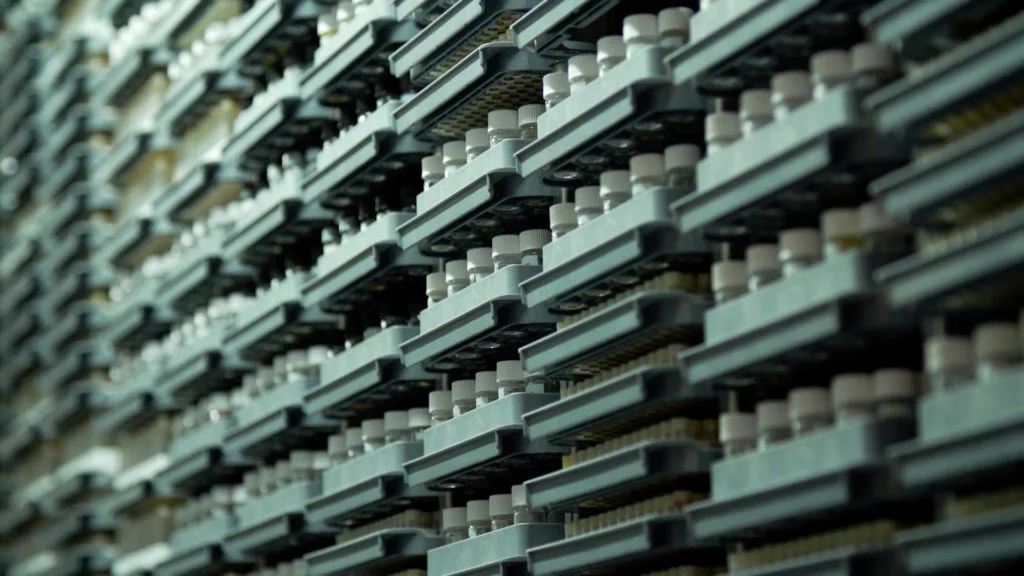
Historically, the process of drug discovery has been notoriously inefficient, expensive, and slow. Researchers typically relied on "screening libraries"—massive collections of frozen chemical compounds—which they would test against pathogens one by one.
Biomedical engineer Jim Collins, who leads a pioneering lab at the Broad Institute, describes the old methodology as "searching for a needle in a haystack that is itself an expensive haystack." The hit rate for finding a viable, non-toxic, and effective antibiotic candidate using these methods was historically less than 1 percent. The financial and temporal costs of this "trial and error" approach caused many pharmaceutical companies to abandon antibiotic research altogether, as it offered little return on investment compared to drugs for chronic illnesses.
The AI Transformation: Digital Discovery
The paradigm shifted with the introduction of deep learning. Rather than relying solely on manual testing, researchers like Collins began training neural networks to understand the "language" of molecular structure. By feeding the AI thousands of known chemical compounds, the model learned to associate specific molecular substructures—the "balls and sticks" of high school chemistry—with antibacterial properties.
The Discovery of Halicin
The power of this technology was demonstrated when the team screened a library of 6,000 compounds. The AI identified one molecule that satisfied all criteria: it was potent, non-toxic to human cells, and structurally novel. Named "halicin" in a nod to the sentient computer HAL from 2001: A Space Odyssey, this compound proved capable of killing multidrug-resistant, extensively drug-resistant, and pan-resistant bacteria through an entirely new mechanism of action.
Scaling Up: The Molecular Dating App
If the initial discovery was impressive, the subsequent scaling was transformative. Using computational chemistry, researchers have begun generating and virtually screening tens of billions of theoretical molecules. Computational chemist Andreas Luttens likens the process to a "molecular dating app." While Luttens can intuitively sort through compounds based on his experience, the AI provides a level of scale and persistence that no human, regardless of caffeine intake or endurance, can match.
Case Study: Tackling the Gonorrhea Threat
Nowhere is the urgency of this research more apparent than in the study of Neisseria gonorrhoeae. As the bacterium evolves to outsmart almost every known treatment, the standard antibiotic, Ceftriaxone, is rapidly losing its efficacy.
In a recent study, the AI system analyzed 45 million chemical fragments to identify a candidate. This "seed" molecule was used to virtually generate an additional seven million potential candidates. Through rigorous filtering and synthesis, the team successfully identified a novel compound that, in lab tests, effectively killed drug-resistant gonorrhea while leaving human cells unharmed. "This was created from scratch based on what it learned from existing small molecules and drugs," Dr. Anahtar notes, highlighting the system’s ability to innovate rather than merely replicate.
Implications for the Future of Medicine
While the integration of AI into antibiotic discovery is a breakthrough, experts caution that it is not a "magic bullet." There are significant structural hurdles that remain, regardless of how fast we can find new drugs.
Clinical Trials and Regulatory Hurdles
AI can accelerate the discovery phase, but it does nothing to shorten the necessary, rigorous timeline of clinical trials. Patient safety remains the paramount concern, and any new drug must undergo extensive testing to ensure it is safe for human consumption, a process that can take years.
The Economic Dilemma
Perhaps the greatest challenge is the lack of economic incentive. Big pharmaceutical companies have historically shied away from antibiotic research because the drugs are intended to be used sparingly to prevent resistance, resulting in low sales volumes compared to long-term maintenance drugs. If AI can lower the cost of the initial R&D phase, it might bridge the gap, making antibiotic development a viable venture once more.
Conclusion: A Game-Changer in the Making
Despite the remaining challenges, the sentiment within the scientific community is one of renewed optimism. For years, resistance had been developing faster than our ability to innovate, but the infusion of AI has fundamentally altered the landscape.
"I believe this infusion of AI has changed the game," says Jim Collins. "We now have tools that have dramatically expanded our ability to both discover and design new antibiotics."
As researchers continue to harness the power of deep learning to scan the vast chemical universe, we are finally moving from a reactive stance to a proactive one. While the "never-ending war" against bacteria will continue, humanity now has a new, silicon-based shield. By turning the computer into a laboratory, we are not just finding new ways to kill germs; we are ensuring that the foundations of modern medicine remain intact for generations to come.