









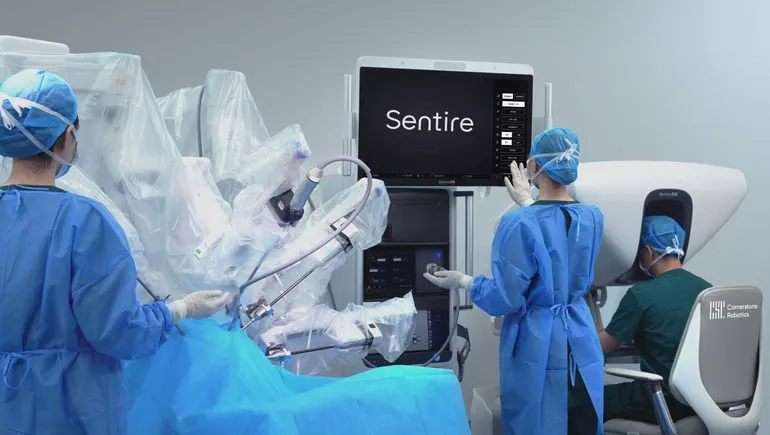
Introduction: A Strategic Pivot to Europe
In a landmark development for the global medical technology sector, Cornerstone Robotics has officially secured the CE Mark for its proprietary surgical robotic system. This regulatory milestone serves as a formal gateway for the China-based innovator to penetrate the highly competitive European market, signaling a shift in the balance of power within the soft-tissue robotic surgery landscape. By achieving this certification, Cornerstone joins an elite group of international manufacturers—including industry stalwarts like Intuitive Surgical and emerging challengers like CMR Surgical—in a bid to redefine the standards of precision, accessibility, and efficiency in the operating theater.
The approval, which follows a period of rapid technological maturation and substantial capital infusion, represents more than just a regulatory victory; it is a declaration of intent. As Cornerstone expands its footprint from its stronghold in mainland China and Hong Kong into the United Kingdom and the broader European Economic Area, the company is positioning itself as a high-performance alternative to incumbent technologies.
Main Facts: The CE Mark and Market Entry
The CE Mark certification is the cornerstone of the company’s internationalization strategy. It validates that Cornerstone’s robotic platform meets the rigorous safety, health, and environmental protection requirements mandated by European Union standards.
- Regulatory Status: With the CE mark now in hand, Cornerstone is authorized to market its surgical robotic system across Europe.
- Infrastructure Investment: To facilitate this entry, the company has formally established a United Kingdom subsidiary in 2025. This hub is intended to serve as a nerve center for professional training, clinical technical support, and comprehensive after-sales service.
- Operational Scale: The company currently operates three dedicated Research and Development (R&D) hubs and six business centers globally, supported by a massive 30,000-square-meter manufacturing facility in China.
Chronology: A Trajectory of Rapid Growth
The ascent of Cornerstone Robotics has been characterized by aggressive scaling and strategic milestones that have allowed it to move from a regional player to an international contender in a remarkably short timeframe.
The Foundation and Domestic Success (Pre-2024)
Before turning its eyes toward the West, Cornerstone solidified its presence in the Asia-Pacific region. By deploying its robots across major hospital networks in mainland China and Hong Kong, the company successfully demonstrated the efficacy of its platform in real-world clinical environments. This initial phase was critical for gathering the clinical data necessary to support its regulatory filings.
The Regulatory Breakthrough (September 2024)
A pivotal moment occurred in September 2024, when China’s National Medical Products Administration (NMPA) granted approval for the company’s robot. This approval was a vote of confidence from domestic regulators and provided the operational stability required to pursue international certifications like the CE Mark.
Capital Infusion and Global Expansion (January 2025 – Present)
In January 2025, Cornerstone closed a significant funding round, raising more than $70 million. This capital was specifically earmarked to accelerate global expansion, with a primary focus on Europe and Southeast Asia. The formation of the U.K. subsidiary shortly thereafter marked the transition from a regional Chinese firm to a global entity, ready to integrate into the Western surgical ecosystem.
Supporting Data: Infrastructure and Capability
Cornerstone’s ability to scale is backed by significant physical and financial assets. A surgical robot is only as viable as the ecosystem that supports it; therefore, the company has invested heavily in both manufacturing capacity and human capital.
Manufacturing and R&D Prowess
The company’s 30,000-square-meter manufacturing plant serves as the engine of its supply chain. By maintaining control over its manufacturing processes, Cornerstone aims to ensure consistent quality control—a critical factor for European regulatory compliance. The three R&D hubs, distributed strategically, suggest a commitment to localized innovation, allowing the company to iterate on its hardware and software based on feedback from international surgeons.
Financial Health
The $70 million raised in early 2025 is not merely for expansion; it is for market entry costs, including the development of professional training centers. In the field of robotic surgery, training is a massive barrier to entry. Hospitals do not simply buy the hardware; they buy into the surgeon training and certification programs. Cornerstone’s allocation of resources toward a U.K.-based training center demonstrates a sophisticated understanding of the medical device sales cycle.
Official Responses and Strategic Philosophy
While formal press releases have focused on the technical milestones, the underlying corporate philosophy of Cornerstone Robotics remains rooted in the concept of "accessible excellence."
According to company leadership, the primary motivation for expanding into Europe is to address the growing demand for minimally invasive surgery (MIS). The company has consistently stated that its goal is to make high-quality surgical care both more accessible and more efficient. By lowering the total cost of ownership or increasing the throughput of robotic surgeries, Cornerstone aims to capture market share from hospitals looking to optimize their surgical budgets without compromising patient outcomes.
Furthermore, the decision to establish a U.K. subsidiary indicates a desire for proximity to European key opinion leaders (KOLs). By embedding itself in the U.K. medical community, Cornerstone is seeking to facilitate collaborative research and clinical trials, which will be essential for building the brand equity required to challenge established giants like Intuitive Surgical.
Implications: A New Era of Competition
The entry of Cornerstone Robotics into the European market has profound implications for the surgical robotics industry.
Disruption in the Soft-Tissue Market
The soft-tissue robotics market is currently crowded with heavyweights. Intuitive Surgical’s da Vinci systems have long enjoyed a near-monopoly. However, the emergence of companies like CMR Surgical, Distalmotion, Moon Surgical, and Medtronic has begun to fragment the market. Cornerstone’s arrival adds a layer of competitive pressure that will likely drive innovation in two key areas: cost-effectiveness and system ergonomics.
The "China-to-Global" Transition
Cornerstone is part of a broader wave of Chinese med-tech firms transitioning to global status. Historically, Chinese medical device companies focused on domestic consumption. Cornerstone’s success in securing the CE Mark serves as a blueprint for other manufacturers, demonstrating that with high-quality engineering and robust clinical data, Chinese innovators can compete on the global stage.
Impact on Clinical Practice
For surgeons and hospital administrators, the arrival of a new competitor is a net positive. It forces incumbents to reconsider their pricing structures and support models. Furthermore, as robotic systems become more prevalent, the standard of care for soft-tissue procedures will likely shift further toward robotic-assisted platforms, moving away from traditional laparoscopy.
Challenges Ahead
Despite the optimism surrounding the CE mark, the road ahead is fraught with challenges. The European market is fragmented, with different countries maintaining different healthcare reimbursement policies. Cornerstone will need to navigate these complex health-economic landscapes to ensure that their systems are not only available but also financially viable for public and private hospital systems. Additionally, winning the trust of European surgeons—who are accustomed to specific workflows and high-touch support from established players—will require sustained, long-term commitment to clinical excellence and local support.
Conclusion: Looking Toward the Future
The journey of Cornerstone Robotics from a domestic Chinese manufacturer to a CE-marked international competitor is a testament to the rapid evolution of medical technology. As the company begins to roll out its systems across Europe, the industry will be watching closely. Will Cornerstone be able to replicate its domestic success in the demanding European theater?
If the company’s recent trajectory is any indication, the answer is a resounding "perhaps." By balancing its massive manufacturing capabilities with a newfound commitment to local European training and support, Cornerstone has established the infrastructure required to make a serious run at the market. As the surgical robotics space continues to consolidate and evolve, Cornerstone Robotics has firmly planted itself as a name to watch, signaling that the future of surgery is becoming increasingly global, increasingly digital, and increasingly competitive.
The successful navigation of regulatory hurdles in 2024 and 2025 was the first act; the second act, which involves proving the system’s long-term clinical and economic value to European healthcare providers, is now underway. For patients and practitioners alike, this competition promises a future of greater choice, enhanced surgical precision, and a more robust technological ecosystem.