











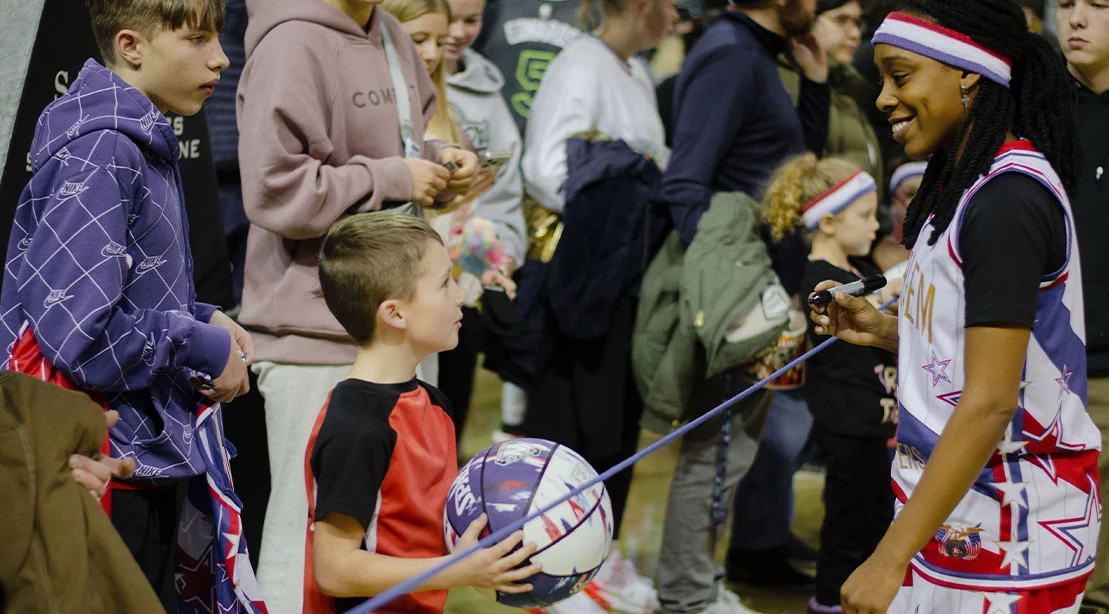
Since Dr. James Naismith nailed a peach basket to a balcony railing in 1891, basketball has evolved from a modest gymnasium experiment into a cornerstone of American culture and a universal language spoken on every continent. While the NBA dominates the professional landscape, there is a singular entity that has arguably done more to popularize the sport, break down racial barriers, and export basketball’s inherent joy to the farthest corners of the globe: The Harlem Globetrotters.
As the franchise celebrates its monumental 100th anniversary in 2026, the team stands not just as an entertainment troupe, but as a historic institution. From their humble beginnings in 1926 to their upcoming induction into the International Sports Hall of Fame (ISHOF), the Globetrotters remain a beacon of athletic excellence and cultural significance.
A Legacy Written in Red, White, and Blue: The Chronology
The story of the Globetrotters begins with Abe Saperstein, a visionary who saw potential in the game long before it was the commercial juggernaut we know today. Founding the team in 1926, Saperstein served as the squad’s architect and original head coach. During an era of deep segregation in the United States, Saperstein became a vital advocate for Black athletes, providing a platform for talent that the major leagues refused to acknowledge.
Throughout the 1920s and 30s, the Globetrotters operated as a dual-threat entity. While they were renowned for their showmanship, they were also a lethal competitive force. By 1940, they secured their first world championship—a feat achieved well before the formation of the National Basketball Association.
The turning point for the sport’s integration occurred in the years following World War II. In a defining moment that proved the prowess of Black basketball players, the Globetrotters faced off against the then-reigning champion Minneapolis Lakers, securing a victory that sent shockwaves through the sporting world. This competitive superiority made it impossible for the NBA to ignore the talent pool they had previously shunned. In 1950, Nat “Sweetwater” Clifton, a standout Globetrotter, became the first Black player to sign an NBA contract, joining the New York Knicks.
This act of breaking the color barrier was not merely a sports milestone; it was a civil rights victory that paved the way for the integrated professional leagues that exist today.

The Evolution of an Icon: From Court to Culture
The Globetrotters’ influence extends far beyond the final score. Over the last century, they have served as a revolving door for the greatest basketball minds in history. Legends such as Wilt Chamberlain, Connie Hawkins, and Magic Johnson have all donned the iconic red, white, and blue uniforms. These collaborations were mutually beneficial: the legends brought star power, while the Globetrotters provided a masterclass in ball-handling, court vision, and fan engagement.
Perhaps the most transformative moment in the team’s modern history occurred in 1985, when Lynette Woodard joined the roster. By becoming the first woman to play on a men’s professional basketball team, Woodard shattered the glass ceiling of the sport. Her tenure not only elevated the profile of women’s basketball but directly informed the eventual formation of the WNBA.
Today, that commitment to progress remains intact. In 2026, the team features four female stars, continuing a tradition of inclusivity that is woven into the very fabric of the franchise. As Globetrotters President Keith Dawkins notes, this is not a branding exercise; it is a fundamental business philosophy. “It’s not a trend for us,” Dawkins explains. “It’s just a real part of our business, and so that’s something that we continue to do.”
The DNA of Modern Basketball
When observers watch modern trick-shot influencers like Dude Perfect, or witness the stylistic flair of the And1 Mixtape tours, they are witnessing the direct lineage of the Harlem Globetrotters. The team pioneered the “fusion” of basketball with pop culture, fashion, and music.
This influence is so pervasive that it has bled into other sports. When NFL superstar Patrick Mahomes executes a sidearm pass or a receiver makes a gravity-defying catch, commentators and fans often draw comparisons to the Globetrotters. This linguistic shorthand exists because the Globetrotters have spent 100 years teaching the world that sports are meant to be an act of creative expression.
“When you turned on the TV to watch Wide World of Sports, the Globetrotters were there,” recalls Dawkins. “To see their wizardry and ball-handling and how they introduced the red, white, and blue ball or the hook shot or granny shot was amazing to watch. My love of sports started with the Globetrotters.”

Official Recognition: The ISHOF Induction
In recognition of their century-long contribution to the global sporting fabric, the International Sports Hall of Fame will induct the Harlem Globetrotters as a collective organization during their 2026 ceremony. This marks a historic first, as the ISHOF has historically focused on individual achievements.
Fairfax Hackley, Vice President of the ISHOF, emphasized that the honor is meant to encompass every person who has contributed to the team’s success over the last 100 years. “President Dawkins will be accepting on behalf of the Globetrotters, but we want everyone that has ever been a part of the Globetrotters in their 100-year history, including players and those who worked for them in any way, to know that they are all Hall of Famers.”
For Dawkins, the induction is a profound validation of the team’s enduring mission. “It’s wonderful that they recognize the impact and love that the Globetrotters bring to the table year in and year out for 100 years,” he said.
Looking Toward the Second Century
As the team prepares for their next world tour, the sentiment remains focused on the power of the game to transcend borders. Having performed in 124 countries and territories—a Guinness World Record—the Globetrotters are arguably the world’s most successful cultural ambassadors.
The implications of their 100-year run are clear: basketball is more than a game of points and rebounds. It is a vehicle for joy, hope, and social progress. By maintaining a balance between high-level athleticism and accessible entertainment, the Globetrotters have ensured that they remain relevant to every generation of fans.
“It’s really just bringing joy, love, hope, possibilities, and humor—bringing families together across planet Earth all through sports,” Dawkins concluded. “And that’s pretty awesome when you think about the power of sport to do that work.”

Event Details: Join the Celebration
The induction ceremony for the 2026 International Sports Hall of Fame will take place on September 26, 2026, at the Palms Casino Resort Grand Ballroom in Las Vegas, Nevada. The ceremony, which is a centerpiece of the 2026 Olympia Weekend, is scheduled for 12:30 PM Pacific Time and is open to the public.
For those looking to witness the magic firsthand, the Globetrotters are currently organizing their massive centennial world tour. To follow their journey or secure tickets to an upcoming game, fans are encouraged to visit the official Harlem Globetrotters website or follow their social media channels at @harlemglobetrotters.
As the sun sets on their first century, the Harlem Globetrotters have proven one thing definitively: while players change and eras fade, the spirit of the game—when played with love and creativity—is eternal.