The landscape of sleep-disordered breathing (SDB) treatment is undergoing a significant transformation. For decades, the gold standard for addressing obstructive sleep apnea (OSA) has remained relatively static, defined by the clinical dichotomy of Continuous Positive Airway Pressure (CPAP) therapy or traditional Mandibular Advancement Devices (MADs). However, a breakthrough development from Achaemenid LLC promises to bridge the gap between mechanical airway support and high-fidelity physiological data collection.
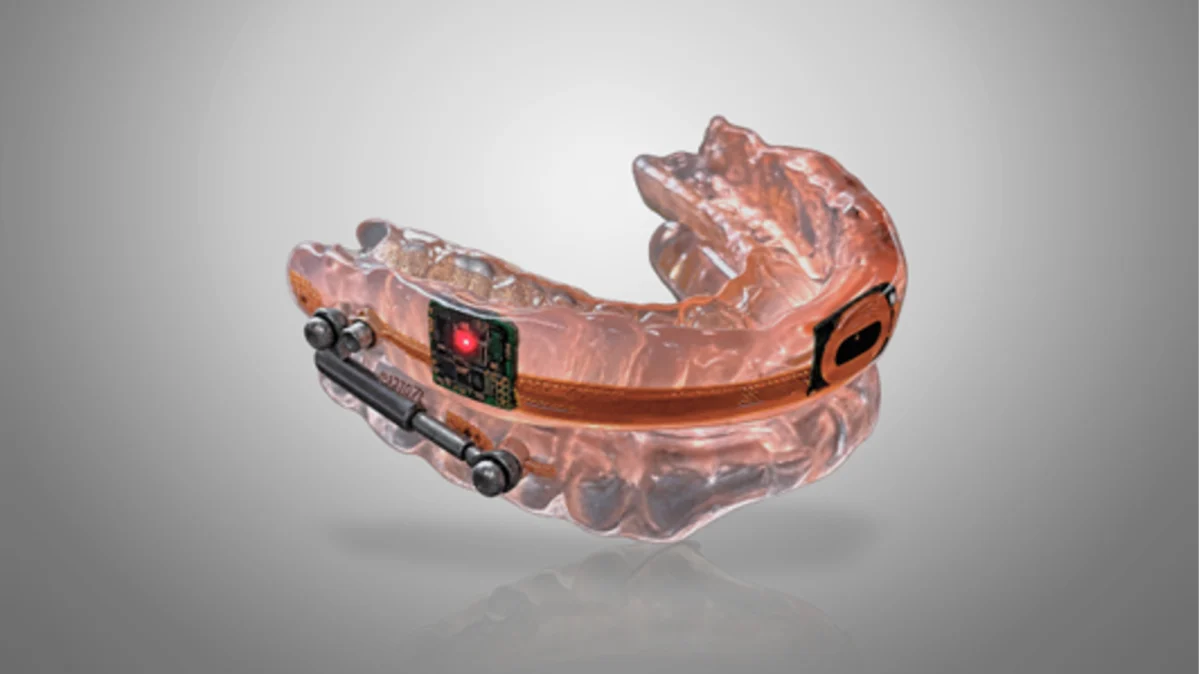
The U.S. Food and Drug Administration (FDA) has officially granted 510(k) clearance to the iNOS intraoral biosensor. This novel prescription device represents a convergence of dental sleep medicine and digital health, combining a custom-fitted oral appliance with a hermetically sealed, medical-grade pulse oximeter. By integrating the ability to treat airway collapse with the capability to continuously track arterial oxygen saturation (SpO₂), the iNOS marks a shift toward "intelligent" therapeutic intervention.
Main Facts: The Intersection of Therapy and Telemetry
At its core, the iNOS is designed to address the mechanical obstruction associated with snoring and mild-to-moderate OSA while simultaneously providing the longitudinal data that clinicians have long struggled to collect outside of a formal sleep laboratory.
Unlike traditional oral appliances, which rely on patient self-reporting—often notoriously unreliable—the iNOS acts as an objective witness to the patient’s nightly respiratory health. The device is built into either the upper or lower dental arch, utilizing advanced light-emitting diode (LED) technology to perform pulse oximetry through the highly vascularized soft tissue of the mouth.
Key specifications of the system include:
- Measurement Modality: Red, green, and infrared light sensors that detect arterial pulse fluctuations via oral soft tissue.
- Connectivity: Real-time data transmission via encrypted Bluetooth protocols.
- Data Integrity: On-board flash memory capable of buffering 30 minutes of data should the Bluetooth connection be interrupted.
- Power Management: A rechargeable 3.7V lithium-ion battery, optimized for a full eight-hour sleep cycle.
- Software Ecosystem: A dedicated Android companion application that decrypts, displays, and facilitates the transfer of physiological data to healthcare providers.
The device is intended for use across a variety of settings, including clinical sleep laboratories, long-term care facilities, hospitals, and the patient’s home, offering a versatile tool for sleep physicians and dentists alike.
Chronology of Development: From Concept to Clearance
The journey of the iNOS biosensor is a testament to the accelerating pace of innovation in medical hardware. The development process, led by Reza Radmand, DMD, FAAOM, and his team at Achaemenid Innovations, was predicated on a fundamental observation: patients often experience "treatment drift" or intermittent compliance with sleep apnea devices, yet clinicians rarely know exactly when or how these therapy failures occur.
Development Phases:
- Conceptualization (2022-2023): Initial research focused on the feasibility of housing medical-grade sensors within the confined space of a dental appliance without compromising comfort or structural integrity.
- Prototyping and Biocompatibility (2024): Engineers developed the hermetic sealing process to ensure the electronics could withstand the oral environment, including moisture, temperature changes, and the chemical composition of saliva.
- Regulatory Engagement (2025): Achaemenid LLC engaged in iterative dialogue with the FDA regarding the safety and performance standards of a combined therapy-and-monitoring device.
- FDA 510(k) Clearance (2026): After rigorous bench testing and verification of the sensor’s accuracy compared to standard-of-care pulse oximetry, the FDA granted clearance, affirming the device’s substantial equivalence to existing diagnostic and therapeutic equipment.
Achaemenid LLC has announced a strategic "soft launch" scheduled for October 2026, intended to gather real-world clinical feedback before a broader commercial rollout in the first quarter of 2027.
Supporting Data: Why Oral Pulse Oximetry Matters
The reliance on wrist-worn or finger-based pulse oximeters has long been the standard for home sleep apnea testing (HSAT). However, these peripheral devices are prone to motion artifacts, accidental removal, and patient discomfort, all of which can lead to data gaps.
The iNOS leverages the mouth as a unique anatomical site for measurement. Because the device is custom-fitted to the dental arch, it maintains a consistent, stable position relative to the tissue throughout the night.
The Physics of the Biosensor
The device utilizes a multi-wavelength approach. By emitting red and infrared light through the mucosa, the sensor calculates the ratio of oxygenated to deoxygenated hemoglobin. The addition of green light—a relatively new development in consumer and clinical health tracking—improves the signal-to-noise ratio, particularly in instances where skin pigmentation or light ambient interference might otherwise skew results.
This technological robustness is essential for the clinical management of OSA. OSA is characterized by repetitive cycles of oxygen desaturation (hypoxia) followed by arousal. By tracking these desaturations in real-time, the iNOS provides clinicians with a "desaturation index," a critical metric for assessing the efficacy of the oral appliance’s positioning. If a patient continues to experience frequent drops in SpO₂ while using the device, the clinician can use the data to justify titration adjustments to the appliance’s advancement mechanism.
Official Responses and Clinical Vision
Dr. Reza Radmand, the visionary behind the iNOS, views this technology as the next logical step in the evolution of patient-centric care. In a recent press statement, he emphasized that the era of "set and forget" sleep therapy is coming to an end.
"The future of sleep apnea therapy is no longer just treating the airway—it’s continuously monitoring the physiology behind the treatment," Dr. Radmand noted. "By embedding high-fidelity sensing into the very device that treats the patient, we remove the guesswork from dental sleep medicine. We are giving clinicians a window into the patient’s respiratory health that was previously only available in a sleep lab."
Industry analysts have praised the move, noting that the "Internet of Medical Things" (IoMT) is finally penetrating the dental office. While traditional oral appliance therapy (OAT) has been sidelined by CPAP due to the lack of objective data, the iNOS levels the playing field, providing the "compliance and efficacy" logs that insurance companies and physicians require to justify long-term treatment plans.
Implications for Patients and Providers
The clearance of the iNOS biosensor has far-reaching implications for both the healthcare industry and the millions of adults currently struggling with untreated or poorly managed obstructive sleep apnea.
For the Patient:
For the patient, the device promises a less intrusive experience. Unlike the cumbersome headgear and hoses associated with CPAP, the iNOS is a discreet oral appliance. For those who find CPAP intolerable—a demographic estimated at nearly 50% of the OSA population—the iNOS provides a viable, data-backed alternative that fits seamlessly into their nightly routine.
For the Healthcare Provider:
Dentists specializing in sleep medicine can now move beyond subjective patient reports of "feeling better" or "snoring less." They can provide tangible reports to primary care physicians and sleep specialists, demonstrating the effectiveness of the therapy. This fosters a more collaborative, multidisciplinary approach to sleep health.
For the Healthcare System:
The economic implications are equally significant. OSA is a major contributor to comorbidities such as hypertension, stroke, and type 2 diabetes. By improving adherence to therapy and providing a means for rapid titration, the iNOS has the potential to reduce the long-term healthcare costs associated with poorly managed sleep-disordered breathing.
Challenges Ahead:
Despite the excitement, challenges remain. The primary hurdle will be the integration of this data into existing Electronic Health Record (EHR) systems. Furthermore, the success of the device will depend on the proficiency of dental practitioners in interpreting physiological data, a skill set that is currently evolving within the dental sleep medicine community. Achaemenid LLC will likely need to invest in robust educational initiatives to ensure that providers can maximize the clinical utility of the data the iNOS provides.
Conclusion
The FDA clearance of the iNOS intraoral biosensor represents more than just a new product launch; it is a signal that the barrier between diagnostic monitoring and therapeutic intervention is dissolving. As we look toward the 2027 commercial launch, the medical community will be watching closely to see how this "smart" appliance impacts patient outcomes.
In a field long defined by the challenges of patient compliance and diagnostic complexity, Achaemenid LLC has provided a glimpse into a future where sleep therapy is not only effective but also transparent, data-driven, and seamlessly integrated into the patient’s life. The iNOS stands as a hallmark of modern engineering, proving that sometimes, the most effective way to solve a complex health problem is to bring the technology directly to the source of the obstruction.