











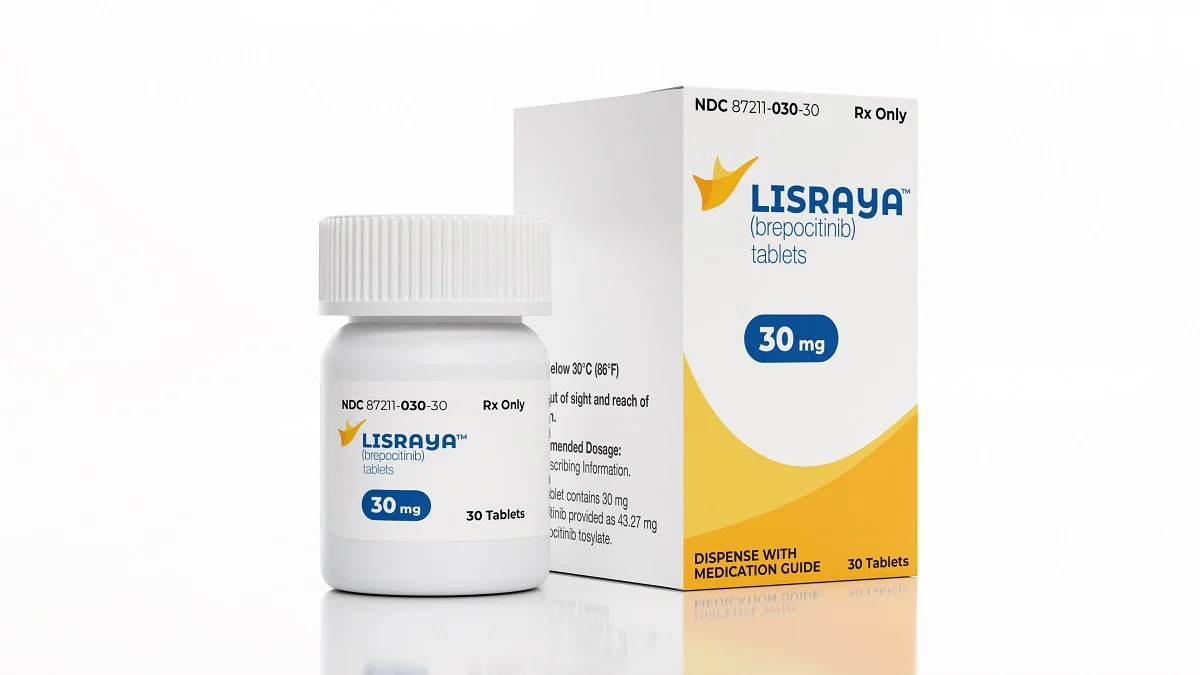
In a landmark decision that promises to reshape the therapeutic landscape for rare autoimmune disorders, the U.S. Food and Drug Administration (FDA) has officially approved Lisraya (brepocitinib) for the treatment of dermatomyositis in adults. This regulatory milestone represents the first time a therapy has been specifically developed and approved to address the underlying drivers of inflammation in this chronic, debilitating condition. For the estimated 70,000 Americans living with dermatomyositis, the approval of this once-daily oral pill offers a long-awaited departure from decades of reliance on non-specific, high-risk immunosuppressants.
The approval is a significant victory for Priovant Therapeutics, a subsidiary of Roivant Sciences, and serves as a profound validation of Roivant’s "asset-recycling" business model—a strategy that identifies promising pharmaceutical compounds abandoned by larger firms and shepherds them through clinical development. With its immediate market entry, Lisraya is positioned not only as a potential medical breakthrough but also as a cornerstone of Roivant’s commercial future, with analysts projecting it could become the company’s first blockbuster product.
The Burden of Dermatomyositis: A History of Therapeutic Stagnation
Dermatomyositis is a rare and complex immunological disease characterized by the immune system’s systemic attack on the skin and muscles. The physical manifestations are often severe: the disease typically presents as persistent, painful skin rashes and progressive muscle weakness that can significantly impair daily function and quality of life.
For decades, the standard of care has been limited to "blunt force" medicine. Patients have historically been treated with high-dose corticosteroids to reduce inflammation and broad-spectrum immunosuppressants to quiet the immune system. While these treatments can manage symptoms, they often come with a heavy toll, including systemic side effects, susceptibility to secondary infections, and long-term organ damage. In severe cases, physicians have resorted to intravenous immunoglobulin (IVIG)—a labor-intensive treatment derived from the plasma of healthy donors—which, while helpful, lacks the precision of a targeted therapy.
The clinical path to this week’s approval was littered with the failures of some of the most potent drugs in modern immunology. Despite the promise shown by blockbuster therapies like Rituximab, Remicade, and Enbrel in other autoimmune conditions, none had successfully demonstrated efficacy in dermatomyositis-specific clinical trials. This history of failure left the patient and physician community in a state of therapeutic paralysis, awaiting a breakthrough that seemed perpetually out of reach.
Chronology of a Breakthrough: From Pfizer’s Shelf to Regulatory Success
The journey of Lisraya is a testament to the shifting tides of biopharmaceutical development. The drug was initially developed by Pfizer, which advanced it through Phase 3 testing for dermatomyositis and Phase 2 testing for lupus. However, the global outlook for the JAK (Janus kinase) inhibitor class of drugs took a sharp turn in 2021.
Following a post-marketing study of Pfizer’s Xeljanz that suggested elevated risks of cardiovascular events and cancer, the FDA issued a sweeping mandate requiring black box warnings on all JAK-inhibiting drugs. This regulatory crackdown led many large pharmaceutical companies to pause or divest their JAK-inhibitor programs. Recognizing an opportunity where others saw liability, Roivant Sciences stepped in.
Roivant formed its subsidiary, Priovant Therapeutics, specifically to continue the development of brepocitinib. The company licensed the drug from Pfizer—which retained a 25% equity stake in the subsidiary—and repositioned the therapy to target orphan inflammatory diseases. By focusing on the unmet needs of smaller, well-defined patient populations, Roivant sought to navigate the "swim lane" left open by the exodus of larger competitors.
While the drug’s development for lupus hit a wall after failing a mid-stage trial in 2023, the data for dermatomyositis proved robust. The regulatory submission was bolstered by a pivotal Phase 3 study involving 241 adults, with results published in the New England Journal of Medicine in March, followed by skin-specific data in JAMA Dermatology this past Wednesday.
Supporting Data: The Mechanism and Clinical Efficacy
Lisraya is a small-molecule inhibitor designed to block both JAK1 and TYK2, two proteins that act as critical signaling hubs for the inflammatory pathways responsible for the symptoms of dermatomyositis. While other JAK inhibitors have been approved by the FDA, Lisraya distinguishes itself by dual-targeting these pathways simultaneously within a single molecule.
The Phase 3 clinical trial used a composite rating index to measure improvement in both skin and muscle health. At the 52-week mark, patients in the Lisraya arm showed statistically significant improvements compared to those in the placebo group. Beyond the primary metrics of disease control, the trial results highlighted:
- Enhanced Physical Function: Patients reported better mobility and strength.
- Dermatological Clearance: A noticeable reduction in the severity and frequency of disease-related skin rashes.
- Steroid-Sparing Effect: Participants in the Lisraya group showed a greater likelihood of being able to reduce their reliance on daily corticosteroids, thereby mitigating the long-term side effects associated with those drugs.
Common adverse reactions noted during the trial included headaches, fatigue, upper respiratory tract infections, and nausea. While the drug carries the mandatory class-wide black box warning regarding cardiovascular and malignancy risks, clinicians view this as a manageable trade-off given the severity of the disease and the previous lack of targeted alternatives.
Official Perspectives: The View from the C-Suite
During a conference call held the morning after the FDA’s announcement, Roivant CEO Matt Gline expressed a mix of professional pride and deep empathy for the patient community.
"Not for lack of trying, there have been a lot of attempts in history to bring some of the greatest drugs in immunology across the finish line in dermatomyositis, and none of those have been successful in DM-specific studies," Gline remarked. "It’s just really exciting that we’ve been able to deliver this kind of opportunity, and I think the DM patient and physician community have been waiting for a moment like this."
Gline emphasized that the drug’s label is broad, allowing it to be prescribed either as a standalone monotherapy or as an add-on treatment for patients who are not yet ready to transition away from their existing non-targeted regimens. He framed the approval of Lisraya as the "first brick" in a much larger strategy to treat a spectrum of rare, under-served immunological conditions.
Implications for the Market and Future Indications
The financial implications of the launch are substantial. Priovant has set the list price for Lisraya at $35,000 per month, totaling $420,000 annually. While this price point is significantly higher than that of general-purpose JAK inhibitors like Xeljanz—which treats more common conditions like rheumatoid arthritis—industry analysts argue that the pricing reflects the "orphan" nature of the drug and the specialized care required for dermatomyositis.
Investors are watching closely, as the drug’s commercial success is tied to its potential expansion into other rare diseases. Priovant is currently deep in clinical development for several other conditions:
- Non-infectious Uveitis: A Phase 3 study is underway, with preliminary data expected by the end of 2025.
- Cutaneous Sarcoidosis: A Phase 3 study is currently in progress, with results projected for 2028.
- Lichen Planopilaris: The company is enrolling patients for a Phase 2b/3 trial focused on this inflammatory hair-follicle disorder.
Each of these conditions shares a commonality: they are debilitating, rare, and currently lack effective, targeted pharmaceutical treatments.
Conclusion: A New Standard of Care
The FDA’s approval of Lisraya is more than just a regulatory administrative win; it is a profound shift in how rare autoimmune diseases are treated. By moving away from the era of non-specific systemic immunosuppression and toward targeted molecular inhibition, the medical community can now offer patients a strategy tailored to the biological mechanisms of their disease.
For Roivant Sciences, the success of Lisraya validates a business model that relies on boardroom agility and clinical precision. For the patient, however, the implications are far more personal. As Gline noted during the call, the arrival of Lisraya represents a moment of hope for those who have spent years navigating the limitations of legacy therapies. While the path ahead includes continued monitoring for safety and the pursuit of new indications, the approval of Lisraya marks the end of a long, stagnant chapter in dermatomyositis treatment and the beginning of a new era of precision medicine.