




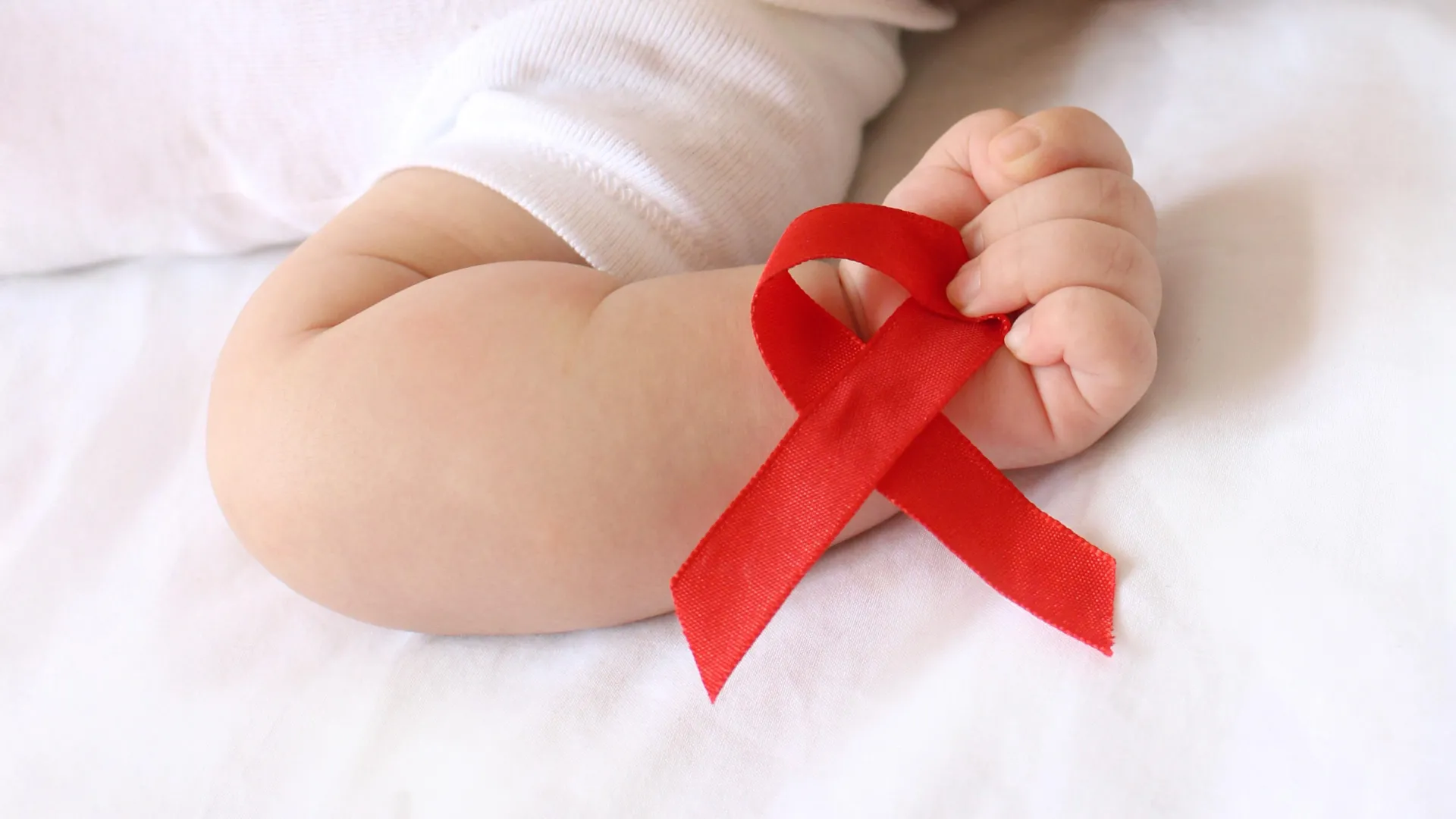
Every year, the global health community faces a sobering statistic: more than 120,000 newborns are infected with HIV. For the millions currently living with the virus, the reality of survival is tethered to a lifelong regimen of antiretroviral medication—a daunting requirement that hinges entirely on the accessibility, affordability, and consistent availability of life-saving drugs.
However, a groundbreaking study published in the journal Nature Microbiology has ignited a flicker of hope for a future where HIV is not merely managed, but permanently eradicated. Led by researchers at the Oregon Health & Science University (OHSU), the study reveals that a precise combination of three distinct therapies, administered within 72 hours of birth, succeeded in completely purging the virus in nonhuman primate models.
The Scientific Breakthrough: A Synergistic Approach
The core of the study lies in a paradigm shift regarding how we treat early-stage HIV. For decades, the medical community has focused on suppressing the virus rather than eliminating it. The OHSU research team, led by Jonah Sacha, Ph.D., professor and chief of pathobiology and immunology at OHSU’s Oregon National Primate Research Center, and longtime collaborator Dr. Nancy Haigwood, challenged this status quo by testing a tripartite treatment regimen.
The cocktail consists of:
- Standard Antiretroviral Therapy (ART): The backbone of current HIV care, which limits the virus’s ability to replicate.
- Broadly Neutralizing Antibodies: Specialized proteins that "corral" the virus, reducing its circulation in the blood.
- Leronlimab: An experimental monoclonal antibody that blocks the CCR5 receptor—a surface protein that serves as the primary "gateway" for HIV to enter and infect human immune cells.
While each of these therapies has been studied in isolation, none had previously demonstrated the ability to permanently clear an established HIV infection. When combined, however, the results were transformative.
The "Faucet and Valve" Mechanism
To explain the success of this combination, Dr. Haigwood employs a vivid analogy. She describes the virus as an uncontrolled leak in a building. The antiretroviral therapy acts as the "faucet," turning down the flow of the virus. The neutralizing antibodies serve as the "mopping crew," capturing the virus that has already escaped into the bloodstream. Finally, leronlimab acts as a "watertight valve," sealing off the immune cells so that any remaining virus is unable to find a host, effectively starving it out of the system.
Chronology of the Research
The path to this discovery was not linear. For years, Dr. Sacha and Dr. Haigwood approached the problem from different angles within the OHSU ecosystem.
- Initial Skepticism: Dr. Sacha, who has spent years developing leronlimab, was initially hesitant to believe that simply layering treatments would yield a cure. The historical failure of individual therapies to achieve a "sterilizing cure" suggested that the virus’s ability to hide in reservoirs was too sophisticated to be defeated by basic combinations.
- The Hypothesis: Dr. Haigwood, an immunologist and former director of the Oregon National Primate Research Center (ONPRC), maintained that the synergy between these specific therapies could be the missing link.
- The Study: The research was conducted across two major facilities—the Oregon and California national primate research centers. Researchers introduced the virus to newborns and administered the three-part regimen within a 72-hour window.
- The Result: The observation period post-treatment revealed that the virus had been completely cleared, a result the research team described as "astounding" and "overjoyed."
Supporting Data and Biological Implications
The success of this study rests on the critical timing of the intervention. The researchers emphasize that the first days of life represent a unique window of opportunity where the virus has not yet established deep, permanent reservoirs within the host’s genetic architecture.
Why 72 Hours Matters
The team posits that during the first week of infection, the virus is in a state of dynamic flux, constantly interacting with the immune system as it attempts to establish its foothold. By intervening within 72 hours, the researchers were able to dismantle the virus’s entry mechanisms before it could "set up shop" in the immune system’s long-term storage sites.
The use of nonhuman primates as a model is vital to the validity of these findings. Because primates and humans share significant anatomical and immunological structures, the researchers believe the results provide a high-fidelity roadmap for human applications. The study confirms that when you block the CCR5 receptor—the "fuel" for the fire—the virus lacks the necessary machinery to sustain the infection, even if it manages to survive the initial onslaught of antiretroviral drugs.
Official Responses and Expert Perspectives
The research community has reacted with cautious optimism. Dr. Jonah Sacha, reflecting on the discovery, noted, "There was no reason to think this would completely clear the virus. It’s one of those things where you test it and, holy cow, it works and you’ve discovered something new."
Dr. Haigwood added that the results are a testament to the power of collaborative, multi-disciplinary science. "There’s a lot more going on during the first week of infection than we previously thought," she noted, emphasizing that their findings challenge the conventional wisdom that HIV infection is an immediate, lifelong death sentence for the immune system.
The study was backed by an extensive list of federal grants, including support from the National Institutes of Health (NIH), the Eunice Kennedy Shriver National Institute of Child Health and Human Development, and the National Institute of Allergy and Infectious Diseases. This level of institutional backing underscores the potential significance of the findings for global public health policy.
Implications for the Future: Toward Human Trials
While the results in primate models are groundbreaking, the journey to clinical practice is governed by rigorous safety and efficacy standards. The researchers are now focused on the next logical phase: transitioning to human trials.
The Path Forward
- Clinical Trials for Adults: Before the treatment can be widely administered to newborns, the research team anticipates that initial human studies will involve adults who have been recently exposed to HIV. These trials will assess whether the three-part cocktail can safely and effectively neutralize the virus in a human body.
- Expanding the Window: A major question remaining is the "treatment window." The current study only tested the efficacy of the regimen when administered within 72 hours. Future research will explore whether the window can be extended—perhaps to one or two weeks—which would significantly increase the number of infants who could be saved.
- Global Impact: If the treatment proves successful in humans, it could fundamentally alter the trajectory of the global HIV epidemic. With approximately 600,000 deaths caused by HIV-related complications annually, a cure that is safe for newborns could save tens of thousands of lives and alleviate the massive economic and social burden of lifelong antiretroviral dependency.
A New Era of HIV Management
The OHSU study represents a shift from "living with HIV" to "eliminating HIV." By targeting the infection during its most vulnerable infancy, medical science may finally be moving toward a future where a positive test result at birth is no longer a permanent sentence.
"The really exciting part," Dr. Sacha concluded, "is that it could go to clinical trials immediately to eliminate HIV infection in newborns."
As the medical community awaits the next stage of research, the findings from Nature Microbiology serve as a potent reminder that even the most stubborn viral adversaries are not invincible. Through the combination of existing pharmaceutical tools and a deeper understanding of early-stage viral dynamics, the prospect of an HIV-free generation is moving from the realm of theory into the realm of possibility.