




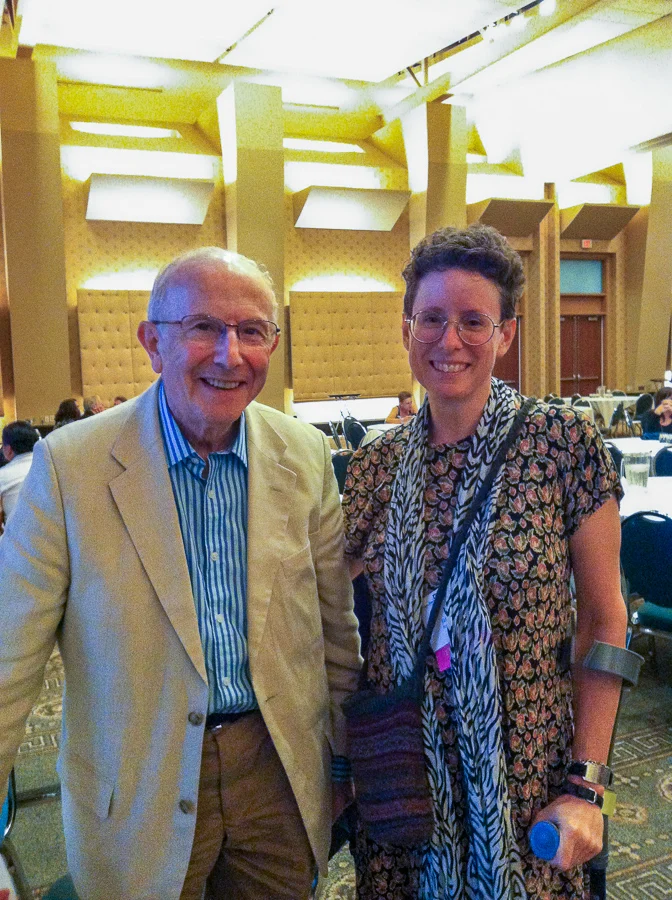
On March 29, 2026, the global medical community and the millions of patients living with Ehlers-Danlos Syndromes (EDS) and Hypermobility Spectrum Disorders (HSD) suffered a profound loss. Professor Rodney Grahame, a pioneering British rheumatologist and one of the world’s foremost authorities on connective tissue disorders, passed away, leaving behind a legacy that transformed how modern medicine perceives hypermobility.
For decades, Dr. Grahame served as a beacon of clinical validation for a patient population that was—and often still is—frequently dismissed, gaslit, or misdiagnosed. His passing marks the end of an era, but his contributions continue to serve as the bedrock upon which current research and clinical guidelines are built.
The Life and Legacy of a Medical Pioneer
Born in 1932, Dr. Rodney Grahame dedicated his life to the pursuit of medical clarity in an area of rheumatology that many of his peers ignored. Throughout his illustrious career, he served as a consultant at some of London’s most prestigious institutions, including Guy’s and St Thomas’ Hospitals and University College London.
However, his true impact was not confined to the halls of academia. It was found in the consulting room, where he listened to patients who had been told their chronic pain was "all in their heads." He provided them with the one thing they had been denied for years: a medical name for their suffering.
A Chronology of Advocacy and Discovery
- 1971: Dr. Grahame publishes seminal research, signaling early interest in the intersection of joint laxity and systemic pathology.
- 1983: Co-authors the foundational text Hypermobility of Joints alongside Drs. Peter Beighton and Howard Bird. This work becomes the "bible" for clinicians seeking to understand non-articular rheumatology.
- 1998: Awarded the Commander of the Order of the British Empire (CBE) for his tireless services to disabled people, a recognition of his advocacy that transcended standard clinical practice.
- 2008: Plays a key role in the research identifying the genetic basis of hypermobility syndromes, shifting the narrative from "symptom" to "systemic condition."
- 2010: Publishes Hypermobility, Fibromyalgia and Chronic Pain, bridging the gap between rheumatology and pain management.
- 2014: Delivers a powerful address at the Ehlers-Danlos National Foundation (EDNF) Conference, famously declaring EDS to be one of the most neglected conditions in the history of modern medicine.
- 2017: Consults on the international classification reform that formally distinguished Hypermobile EDS (hEDS) from Hypermobility Spectrum Disorders (HSD).
- 2018: Celebrates 50 years of service to the National Health Service (NHS) with a tribute from the Ehlers-Danlos Society, cementing his status as a pillar of the British medical establishment.
The Paradigm Shift: From "Bendy" to "Systemic"
To understand the weight of Dr. Grahame’s contribution, one must understand the medical landscape of the late 20th century. Before his intervention, joint hypermobility was often treated as a harmless quirk—an "advantage" for dancers or athletes.
Dr. Grahame was among the first to argue that hypermobility was not merely a trait, but a systemic condition capable of causing debilitating, body-wide dysfunction. He documented the association between loose joints and autonomic dysfunction, chronic pain, and gastrointestinal issues long before these symptoms were accepted as part of the EDS "constellation."
Clinical Validation as a Human Right
For many patients, the diagnostic journey is fraught with medical trauma. Jan Groh, a prominent advocate and author of OhTWIST, recalls her own experience: "I was first tipped off to the world of hypermobility at age 40 by my massage therapist… Upon Googling the word hypermobility, I stumbled on an article by Dr. Grahame. This introduced me to symptomatic Hypermobility Syndrome… and the possibility that I wasn’t ‘just bendy.’"
This anecdote highlights the "Grahame Effect." By writing and speaking publicly, he gave patients the vocabulary to advocate for themselves. He transformed the clinical encounter from a dismissive interaction into a collaborative investigation, ensuring that patients felt heard, seen, and validated.
Official Responses and Professional Reflections
The outpouring of grief from the medical and patient communities has been immense. The Ehlers-Danlos Society and various international advocacy groups have highlighted his role as a mentor to the next generation of geneticists and rheumatologists.
"Professor Grahame was a rare breed of clinician," notes one colleague. "He possessed the technical brilliance of a top-tier researcher and the bedside manner of a family doctor. He never lost sight of the human being behind the diagnosis."
His work with the Hypermobility Syndromes Association (HMSA) as a long-term advisor ensured that his clinical expertise remained accessible to non-profits and support groups. He was not an "ivory tower" academic; he was a partner to the community, frequently appearing at conferences and participating in public forums to bridge the gap between scientific discovery and patient life.
Implications: A Future Built on His Foundation
Dr. Grahame’s influence on the medical field is measurable in the current diagnostic criteria for hEDS and HSD. The 2017 international classification overhaul, which he helped guide, was a watershed moment that allowed for better epidemiological tracking and targeted clinical research.
The Challenges Ahead
Despite his successes, Dr. Grahame’s 2014 assertion—that EDS remains a "neglected" condition—still rings true in many parts of the world. While awareness has exploded, access to specialized care, multidisciplinary pain management, and surgical expertise for connective tissue disorders remains inconsistent.
The challenge for the medical community in the wake of his passing is to sustain the momentum he generated. His career serves as a blueprint for how a single, dedicated physician can change the trajectory of an entire field of medicine.
Why His Work Matters Today
In an era where "long-COVID" and other systemic, multi-faceted conditions are gaining recognition, the lessons taught by Dr. Grahame are more relevant than ever. He taught us to look for the connections between seemingly unrelated symptoms—to connect the dots between a twisted ankle, a heart palpitation, and chronic fatigue.
His legacy is not just in his books or his papers, but in the thousands of clinicians he mentored and the millions of patients who now receive care that was non-existent when he began his practice.
Conclusion: A Legacy of Empowerment
As we honor the life of Professor Rodney Grahame, we are reminded that medicine is, at its core, an act of empathy. He entered a field that was fraught with misunderstanding and, through sheer force of intellect and compassion, dragged it into the light of modern scientific scrutiny.
Whether through his seminal 1983 text, his work on the genetic basis of hypermobility, or his heartfelt speeches at international conferences, he consistently advocated for the humanity of his patients. He taught us that to be a doctor is to listen; to be an advocate is to persist; and to be a leader is to create a path for those who come after you.
Dr. Grahame leaves behind an outsized legacy. While the medical community mourns the loss of a giant, the EDS and HSD communities celebrate a life that provided the gift of validation. His work continues in every doctor who takes the time to listen to a patient’s story, and in every patient who feels empowered to speak their truth.
Rest in peace, Professor Grahame. Your impact on the world of rheumatology—and on the lives of those living with chronic, invisible illness—will never be forgotten.
Written by the Chronic Pain Partners editorial team, April 2026.