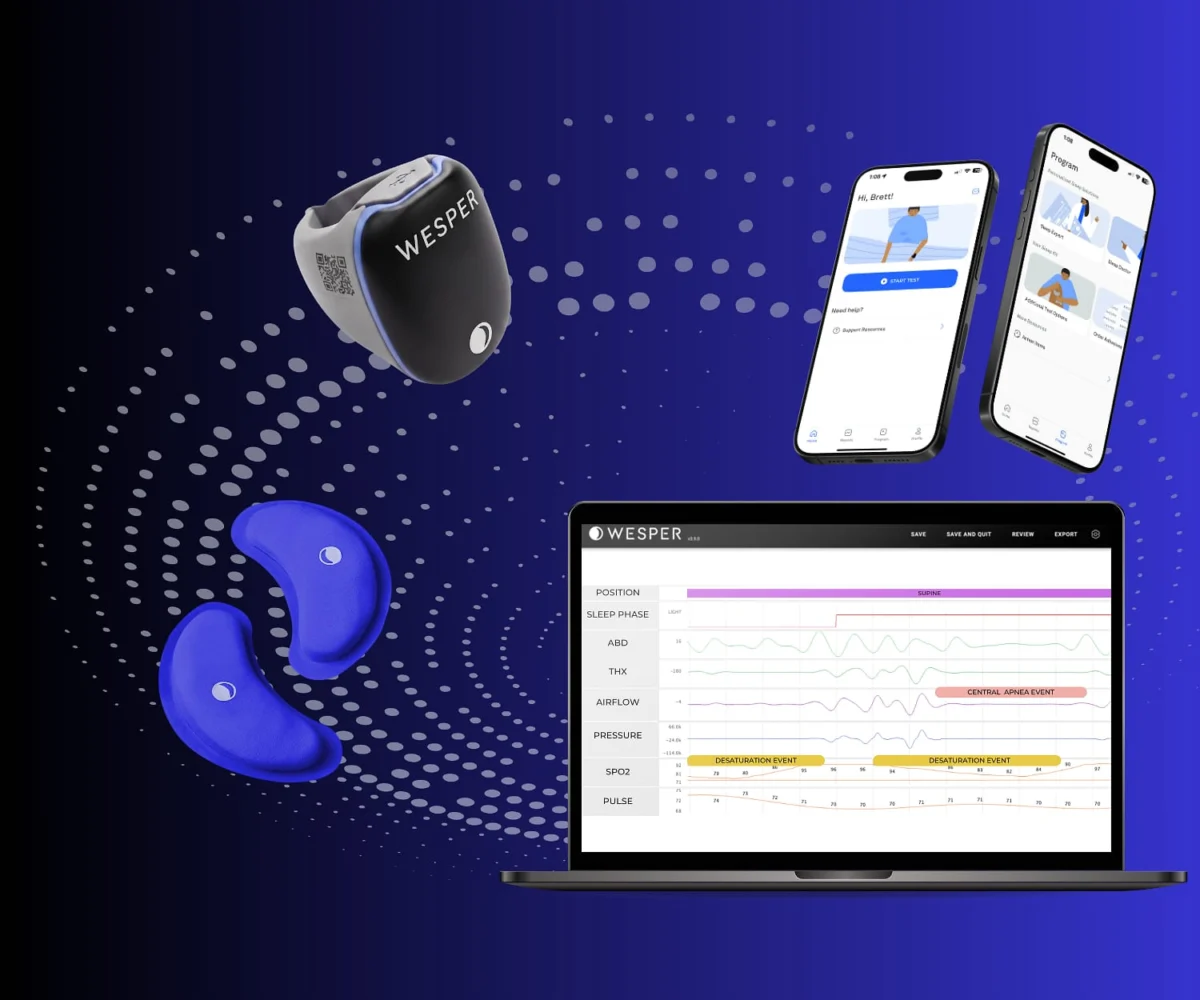
At the SLEEP 2026 conference in Denver, Colorado, medical technology innovator Wesper officially unveiled a groundbreaking shift in sleep diagnostics: a unified, multi-tiered ecosystem designed to bridge the gap between high-volume screening and clinical-grade diagnostic precision. By integrating its two flagship testing solutions—Wesper Lab and Wesper Lite—onto a single, seamless platform, the company is positioning itself to fundamentally alter how sleep clinics manage patient pathways.
For sleep specialists, the announcement represents more than a product update; it is a move toward a more scalable, personalized diagnostic model that aims to replace the industry’s traditional "one-size-fits-all" approach to obstructive sleep apnea (OSA) and other sleep-disordered breathing conditions.
The New Ecosystem: Bridging the Gap in Sleep Diagnostics
The core innovation of the Wesper ecosystem is its ability to consolidate two distinct diagnostic modalities—Wesper Lab and Wesper Lite—into a single patient record and interpretation pipeline. Historically, clinics have often been forced to choose between high-fidelity testing and high-volume screening, often utilizing disparate systems that result in fragmented patient data.
Wesper Lab: Clinical Precision
Wesper Lab serves as the company’s high-fidelity, respiratory-based diagnostic tool. Designed for comprehensive analysis, it is engineered for patients requiring a deep dive into their physiological sleep patterns. Its capabilities include cannula-free airflow monitoring, sophisticated positional analysis, and robust central apnea detection. It is intended for clinicians who require clinical-grade data to make definitive treatment decisions or to conduct rigorous ongoing follow-up.
Wesper Lite: Scalable Screening
Conversely, Wesper Lite utilizes advanced optical sensor technology (PPG) to facilitate high-volume screening and remote patient monitoring. This tier is optimized for general diagnostics, allowing clinics to cast a wider net in identifying at-risk populations without the administrative and logistical burden of more complex testing equipment.
The Power of Integration
The true value proposition of the new platform lies in its interoperability. Because both tiers operate on the same proprietary signal analysis engine, clinicians can initiate a study using the Lite pathway and escalate to a Lab study if initial findings warrant further investigation—all without the patient needing to re-onboard. This continuity of care preserves the patient’s historical data and maintains a single longitudinal record, significantly reducing administrative overhead and improving the continuity of the patient-physician relationship.
Chronology: From Concept to Clinical Ecosystem
Wesper’s journey to this unified platform has been marked by a series of strategic technical milestones.
- Initial Development: Wesper began as an innovator in wireless, wearable diagnostic patches, focused on moving away from the cumbersome, wired traditional polysomnography (PSG) setups.
- The Launch of Wesper Lab: The company established itself as a serious player in the sleep space with the launch of its high-fidelity patch, which provided respiratory-based data comparable to clinical standards.
- Expansion into Screening: Recognizing that not all patients require the same level of diagnostic granularity, the company developed the Lite platform to address the massive, underserved population of undiagnosed sleep apnea patients.
- System Integration (2025-2026): Over the past 18 months, Wesper engineers focused on the backend infrastructure, creating a single "interpretation pipeline." This ensured that data from both the optical PPG sensors (Lite) and the respiratory sensors (Lab) could be analyzed using the same artificial intelligence (AI) and signal processing frameworks.
- SLEEP 2026 Reveal: The official demonstration at booth #1007 at the SLEEP 2026 conference marked the commercial availability of the integrated ecosystem, signaling to the industry that Wesper is shifting from a hardware provider to a comprehensive diagnostic solutions partner.
Supporting Data: Validating the Science
Wesper’s clinical strategy is backed by extensive research, with the company presenting three significant posters at this year’s SLEEP conference. These studies provide the empirical foundation for the efficacy of their ecosystem.
1. AI-Driven Central Sleep Apnea (CSA) Detection
Perhaps the most notable study is the validation of Wesper’s AI-driven CSA detection algorithms against traditional PSG. In a clinical environment where distinguishing between obstructive and central apneas is critical for proper treatment selection (e.g., CPAP vs. ASV), the study demonstrated that Wesper’s automated analysis provides a level of accuracy that rivals the manual scoring of sleep technologists.
2. Provider-Tuned Autoscoring
Wesper is also introducing new data on "provider-tuned autoscoring." By allowing clinicians to adjust the sensitivity and parameters of automated scoring algorithms, Wesper is empowering providers to maintain clinical oversight while benefiting from the efficiency of automation. This hybrid approach addresses the "black box" concern often associated with AI in healthcare, ensuring that human expertise remains the final arbiter in diagnostic outcomes.

3. The Obese Patient Phenotype
A third study presented at the conference sheds light on an underrecognized positional obstructive sleep apnea (OSA) phenotype in obese patients. By leveraging the granular data collected by their respiratory-based sensors, researchers were able to identify specific positional triggers for apnea that were previously overlooked by less sophisticated monitoring tools. This underscores the value of multi-night, direct respiratory data in personalizing care plans for complex patient populations.
Official Responses: A Vision for Personalized Sleep
For Dr. Amir Reuveny, CEO and founder of Wesper, the launch is the culmination of a mission to humanize a traditionally data-heavy, disjointed medical field.
"Sleep apnea is a complicated condition that presents uniquely in every patient," Reuveny said in a press release. "Existing sleep testing has often been approached as one-size-fits-all, which simply doesn’t align with the reality of patient physiology. With Wesper Lab and Wesper Lite on one ecosystem, physicians can choose the right test for each patient and follow that patient through diagnosis, treatment, and ongoing monitoring on a single record. That is what personalized sleep testing—and ultimately personalized care—looks like."
The leadership team emphasizes that the ecosystem is designed specifically to solve the "workflow fatigue" experienced by sleep clinics. By removing the need to manage multiple software platforms or disparate vendor relationships, Wesper aims to allow clinicians to spend more time interpreting data and counseling patients, and less time managing logistics.
Implications for the Future of Sleep Medicine
The implications of the Wesper ecosystem for the broader sleep medicine landscape are significant and multifaceted.
Efficiency and Economic Impact
For sleep clinics, the ability to seamlessly escalate testing tiers offers an economic advantage. Clinics can now employ a "triage-first" diagnostic strategy, using the more cost-effective Lite test as a primary screening tool, and only utilizing the more intensive Lab test when clinically indicated. This maximizes resource utilization and allows clinics to accommodate a higher volume of patients without sacrificing diagnostic quality.
The Shift Toward Longitudinal Monitoring
By creating a single, continuous patient record, Wesper is encouraging a shift from episodic "point-in-time" testing to longitudinal monitoring. Sleep apnea is a chronic condition that requires long-term management; by simplifying the process of recurring follow-up studies, the Wesper platform facilitates a more proactive approach to monitoring treatment efficacy, such as ensuring that CPAP pressure settings remain optimal as a patient’s weight or health status changes over time.
The Role of AI in Diagnostic Confidence
The successful validation of AI-driven CSA detection and provider-tuned autoscoring suggests that the industry is moving toward a future where diagnostic accuracy and operational speed are no longer mutually exclusive. As these tools become more refined, they will likely reduce the burden on sleep labs that are currently struggling with staffing shortages and the rising demand for sleep services.
Conclusion: A New Standard?
As the healthcare industry continues to embrace the potential of digital health, the Wesper ecosystem stands as a case study in how hardware and software integration can solve clinical bottlenecks. By focusing on the patient journey—from initial screen to long-term management—Wesper is not just selling diagnostic tools; it is providing a framework for a more personalized, efficient, and data-driven future for sleep medicine.
As attendees at SLEEP 2026 continue to evaluate the new platform, the broader question for the medical community remains: Will this level of integration become the new standard for the industry? For now, Wesper’s focus on bridging the gap between screening and clinical depth suggests a promising, and perhaps inevitable, trajectory.