











By Staff Reporters
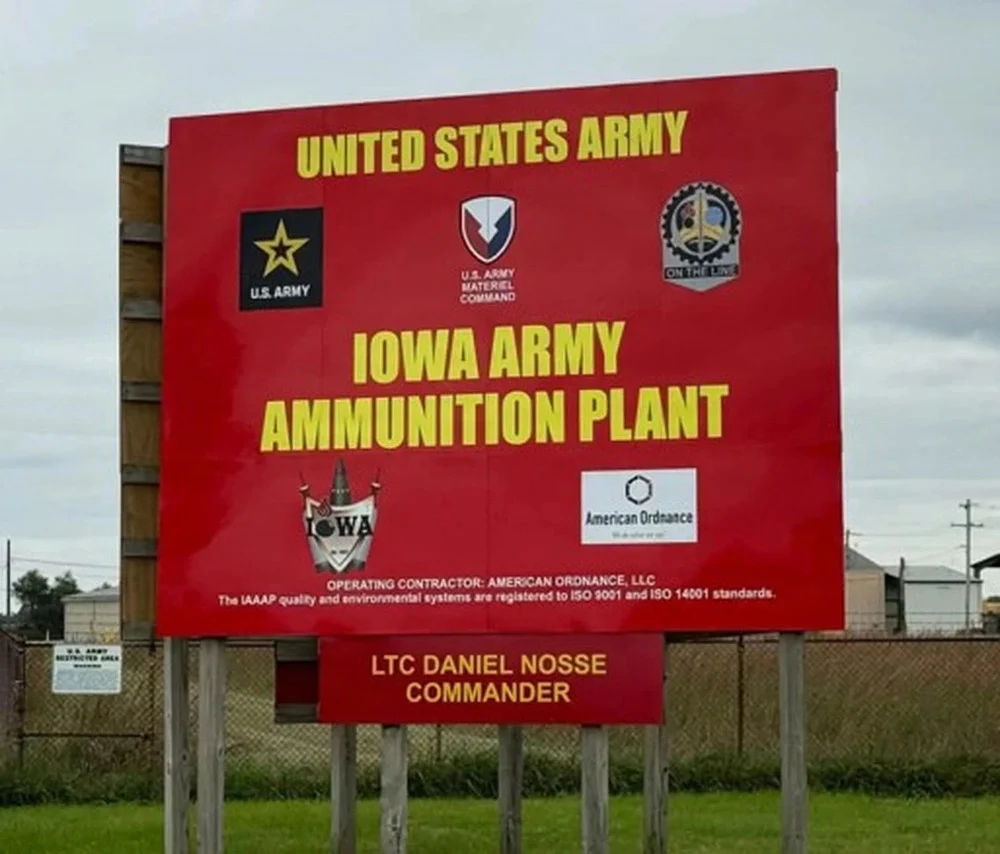
DES MOINES, Iowa — Residents across southeast Iowa are bracing for a tense Friday as the U.S. Army prepares to execute a high-stakes, controlled detonation of approximately five tons of hazardous, bomb-making chemicals. The operation, centered at the Iowa Army Ammunition Plant, follows the discovery of degraded lead azide that officials deem too unstable to transport, leaving them with no choice but to destroy the material in place.
The impending blast has triggered a wave of uncertainty, public health concerns, and logistical scrambling across several counties. As the date approaches, school districts are shuttering their doors, local officials are voicing frustration over delayed communications, and environmental experts are warning of the potential long-term risks associated with lead particulate dispersal.
The Genesis of the Crisis: A Routine Check Gone Wrong
The crisis began with a routine safety inspection earlier this year. For more than two decades, the Iowa Army Ammunition Plant had stored barrels of lead azide—a highly sensitive explosive compound—within earthen-covered containers. To maintain stability, the chemicals were submerged in a protective "bath" of ethanol and water.
However, inspectors discovered that the protective liquid had partially evaporated over time, causing the lead azide to crystallize. In this state, the material is notoriously volatile, becoming hyper-sensitive to even minor friction or shock. According to Army Sustainment Command officials, the degraded state of the chemicals rendered the facility’s storage methods obsolete and dangerous.
"The safety of our people and our neighbors is non-negotiable," Lt. Col. Daniel Nosse, commander of the plant, stated in March, acknowledging the severity of the situation.
Expert panels, including specialists in munitions chemistry and engineering, were quickly assembled to determine the safest course of action. Their conclusion was grim: any attempt to move or relocate the barrels carried an unacceptable risk of accidental, potentially fatal detonation. Consequently, the Environmental Protection Agency (EPA) granted an emergency permit on November 13, authorizing the controlled, on-site destruction of the material.
Chronology of Events
- Early 2024: Routine inspections reveal that lead azide stored at the Iowa Army Ammunition Plant has crystallized due to the evaporation of its stabilizing liquid bath.
- March 2024: The Army announces a pause in operations and acknowledges the discovery of the unstable material, sparking initial concerns among local residents.
- October 2024: During a public meeting in Middletown, the Army informs the community that a detonation will take place sometime in November.
- November 13, 2024: The EPA issues an emergency permit for the disposal, mandating strict safety protocols and public notification requirements.
- November 17, 2024: The Army issues an official public advisory detailing the potential for lead dust dispersal and recommending safety measures for residents in a 100-mile radius.
- November 19, 2024: Local school districts, including Danville Community, announce closures. City officials in towns like Mediapolis express confusion over rapidly changing exposure maps.
- November 22, 2024 (Scheduled): The detonation is slated to occur, pending favorable weather conditions.
The Science of the Blast: Minimizing the Fallout
The Army’s plan involves a complex series of containment measures. The barrels of lead azide are currently surrounded by concrete on all sides, buried under soil, and reinforced by two-story-high sand barriers.
During the detonation, the Army intends to spray the soil with water and use misting machines in the air to trap as much lead particulate as possible. Despite these efforts, the official advisory issued on Sunday admits that some lead-containing particles will inevitably enter the air and settle on the ground.
"The goal of this advisory is to provide the public with actionable information out of an abundance of caution," the advisory stated. Officials have warned that while the dust is expected to linger for no more than one hour, the vibrations from the two-part blast could potentially damage older structures, specifically shattering fragile or aging windows in the nearby town of Middletown.
A Fractured Communication Strategy
While the Army has operated under the guidance of technical experts, the rollout of information to the surrounding communities has been described by local leaders as chaotic.
The city of Mediapolis, located roughly 20 miles from the blast site, serves as a primary example of this friction. Local officials were initially contacted in late October regarding soil and air testing, but they did not realize the town was directly in the path of potential dust drift until a map was released on Sunday. This led to a scramble to close public libraries and schools, and a plan by the local fire department to hose down playgrounds as a preventive measure.
"The biggest issue we’re having is the lack of information," said Amy Stucker, deputy city clerk of Mediapolis. She noted that the rapid changes to the Army’s dispersal maps—which at one point suggested the town was in the center of the danger zone, only to be revised later—created significant anxiety for the 2,000 residents.
The Governor’s office, headed by Kim Reynolds, reported that they were only briefed on the advisory on Monday, adding another layer of frustration to the state’s oversight of the operation.
Health Implications: The Threat of Lead Exposure
The core of the public’s concern lies in the toxic nature of lead. Patrick O’Shaughnessy, a professor at the University of Iowa’s Department of Occupational and Environmental Health, emphasizes that while the Army’s mitigation efforts are "encouraging," the reality of atmospheric dispersal is inherently unpredictable.
"Lead is a neurological toxicant that can decrease brain activity and development, especially in young children," O’Shaughnessy explained. He expressed specific concern for toddlers, who, due to developmental behaviors, are at higher risk of ingesting lead particles that may settle on surfaces in their homes or on playgrounds.
The Army has recommended that residents who cannot vacate the area keep all windows and doors closed during the detonation. Following the event, they advise a thorough cleaning of cars, windowsills, and outdoor surfaces. However, for many, these measures feel like an inadequate response to the potential long-term contamination of their neighborhoods.
Regional and Environmental Fallout
The reach of this operation extends beyond Iowa. Environmental and public health officials in Illinois have already reached out, urging the U.S. military to conduct rigorous, comprehensive environmental sampling in their state following the blasts.
The EPA’s involvement has been heavy, yet some critics argue that the emergency nature of the permit bypassed more extensive environmental impact reviews that would have been required under normal circumstances. EPA documents confirm that while alternative methods for neutralization were considered, they were ultimately rejected because the mere act of handling the drums was deemed too likely to cause an accidental, fatal explosion.
As the clock ticks toward Friday, the atmosphere in southeast Iowa is one of cautious, and in some cases, indignant, waiting. For the 400 residents of Middletown—and the thousands in the surrounding region—the Army’s promise that the risk is "minimal" is being weighed against the reality of potential long-term environmental hazards.
The U.S. military has stated it will continue to update its drift maps based on real-time wind speeds and weather conditions leading up to the Friday blast. For now, the people of southeast Iowa remain in a state of self-imposed lockdown, waiting to see what the air will carry when the smoke finally clears.