




The International Sports Hall of Fame (ISHOF) has long served as a bastion for the world’s most elite athletes—individuals whose physical prowess, mental fortitude, and sheer dominance have redefined the boundaries of human potential. However, the 2026 induction class, set to be honored during the prestigious Olympia Weekend in Las Vegas, reflects a shifting paradigm. This year, the Hall is not merely recognizing those who have conquered the field, court, or arena; it is celebrating "champions of the world"—individuals whose legacies are measured not just in medals, but in advocacy, environmental stewardship, and the elevation of their respective disciplines.
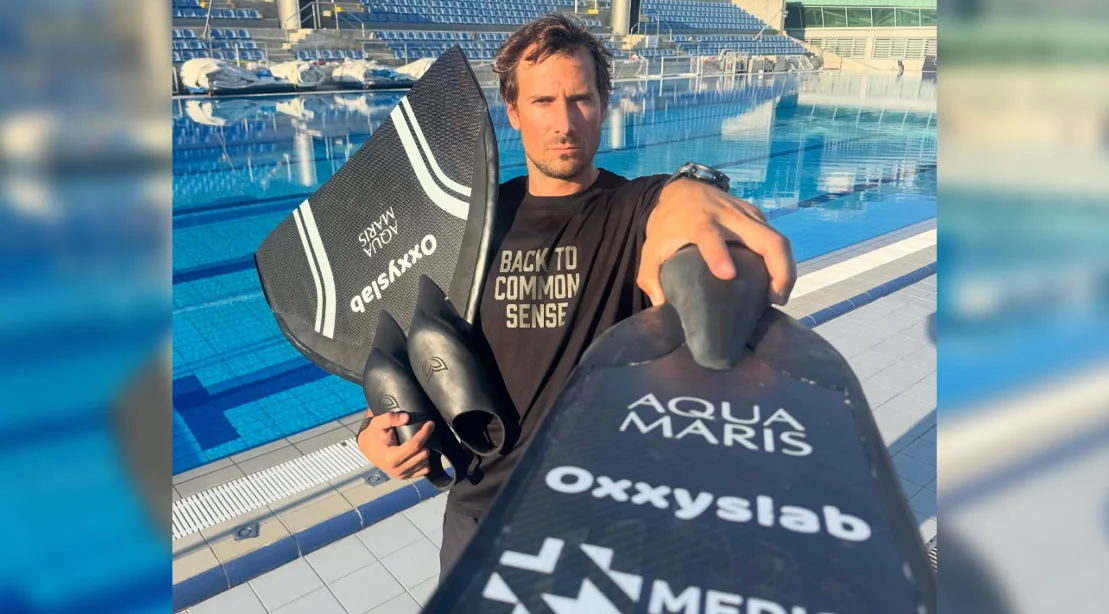
Among this elite cohort, which includes legends like Dexter Jackson, Forrest Griffin, the Harlem Globetrotters, and chess grandmaster Garry Kasparov, stands the Croatian free-diving icon Vitomir Maričić. His induction is a testament to an athlete who has mastered the art of breath-holding to such a degree that he has become a modern-day pioneer of the deep. Yet, for Maričić, the accolade is more than a trophy for his world-record performances; it is a validation of a life dedicated to protecting the very oceans he calls home.
A Life Submerged: The Chronology of a Record-Breaker
To understand the magnitude of Vitomir Maričić’s induction, one must first look at the biological anomaly that is his career. Most humans experience a visceral panic when submerged for even sixty seconds. Maričić, however, treats the underwater environment as his natural habitat, holding his breath for a staggering 29 minutes and 3.07 seconds.
His journey began in the sun-drenched coastal towns of Croatia. Unlike most children who found their playgrounds in neighborhood parks, Maričić’s childhood was inextricably linked to the Adriatic Sea. By the time he was a pre-teen, he was already displaying an uncanny ability to compete against adult spear-fishermen, demonstrating a composure under pressure that defied his years. While his peers focused on conventional swimming, Maričić realized early on that his physiology was uniquely adapted for the extreme, characterized by high bone density and a rare anaerobic efficiency.
"It’s much easier when my head is underwater and I hold my breath," Maričić reflects. "While other people prioritized breathing rapidly, I prioritized holding my breath."
As a young man, he lacked the financial resources for high-end gear, but he viewed his poverty as a crucible. He approached the sport with the same gravity an astronaut might approach space exploration. By the time he reached adulthood, he had transformed his "deep diving" hobby into a formalized pursuit of excellence. His competitive ascent was meteoric:
- Early Career: He quickly rose through the ranks to become the fourth-ranked European diver.
- 2019 Milestone: He secured a world championship medal in Belgrade, Serbia, and finished the year as the number one ranked athlete by the Association Internationale pour le Développement de l’Apnée (AIDA).
- Modern Era: His repertoire now includes a 107-meter underwater walk, ice-diving feats, and a world-record 300-kilogram (661-pound) underwater squat.
Data and Demands: The Physics of Human Potential
The statistics associated with Maričić’s career are not merely impressive; they are scientifically confounding. Free diving requires a delicate balance of the "mammalian dive reflex," a physiological response that slows the heart rate and redirects blood flow to vital organs. Maričić has pushed these reflexes to the edge of current medical understanding.
His goal of hitting a 30-minute breath hold and a 160-meter depth record represents the "final frontier" of the sport. However, these figures are secondary to the structural growth he has fostered within the free-diving community. When he began, free diving was a niche, fragmented activity. Through his professional commitment, he has helped standardize training protocols and safety measures, ensuring that the sport evolves from a dangerous underground pursuit into a respected, structured discipline.
The Rivalry: A Lesson in Professional Sportsmanship
Perhaps the most compelling aspect of Maričić’s career is his relationship with his primary competitor and training partner, Petar Klovar. In a sport where safety relies on having a reliable partner—someone who can dive to depths that would crush an average person—the dynamic between competitor and comrade is fraught with tension.
"In free diving, it’s very hard to find that kind of community where you want the best for yourself and your competition," Maričić notes. "Most athletes have difficulty coming to peace with this. I am very proud of Petar’s achievements and his work."
This "friendly rivalry" serves as a case study in modern sportsmanship. By fostering an environment where he and Klovar push each other to reach new depths, Maričić has not only improved his own records but has also effectively doubled the speed of innovation in the sport. This mentorship extends beyond his peer group; he is currently training a new generation of coaches, ensuring that his philosophy of "mind-body integration" survives long after his competitive days are behind him.
Official Stance: Advocacy as an Athletic Mandate
The International Sports Hall of Fame’s decision to include Maričić signals a broader cultural pivot. The organization is explicitly looking for athletes who leverage their platform to address global crises. For Maričić, the primary crisis is the systematic destruction of marine ecosystems.
His partnership with the Sea Shepherd Conservation Society is not a mere PR arrangement; it is a reflection of his ethos. He rejects passive activism in favor of direct action. "I need to draw attention to this because it is the biggest and most imminent threat to the ecosystem of Earth," he asserts.
Maričić favors Sea Shepherd because of their willingness to engage in the field—confronting illegal poaching and working with lawmakers to enact real change. He believes that athletes in the modern age have a moral obligation to act as stewards of the environments in which they excel. His work in marine conservation has, in many ways, eclipsed his athletic achievements in terms of his personal fulfillment.
The Implications: A New Era for the Hall of Fame
As the date for the 2026 induction ceremony at the Palms Casino Resort approaches, the implications of Maričić’s presence are clear. The ISHOF is sending a message to the world of sports: the definition of a "hero" is expanding. It is no longer enough to be the fastest, the strongest, or the most technically proficient. The athletes of the future must be thinkers, environmentalists, and community builders.
For Maričić, the induction is not a retirement party or a career capstone. He speaks of it as a moment of reinforcement—a platform to renew his vows to the ocean and to the sport he loves. He is already conceptualizing his "lasting touch" on free diving, looking beyond the record books to determine how he can leave the sport more inclusive, safer, and more environmentally conscious than he found it.
When he stands on that stage in Las Vegas on September 26, 2026, he will carry with him the weight of the deep sea and the hopes of a conservation movement. Vitomir Maričić has spent his life holding his breath, but as an inductee into the International Sports Hall of Fame, he is finally speaking out—ensuring that his legacy will breathe for generations to come.
Ceremony Details
The 2026 ISHOF induction ceremony will be held in the Palms Casino Resort Grand Ballroom in Las Vegas on Saturday, September 26, starting at 12:30 PM Pacific time. The event is open to the public, offering fans a unique opportunity to witness the formal recognition of one of the world’s most unique athletes. Further information regarding the ceremony and the organization’s mission can be found at ishof.net. To follow the ongoing projects and conservation efforts of Vitomir Maričić, visit his official website at vitomirmaricic.com.