




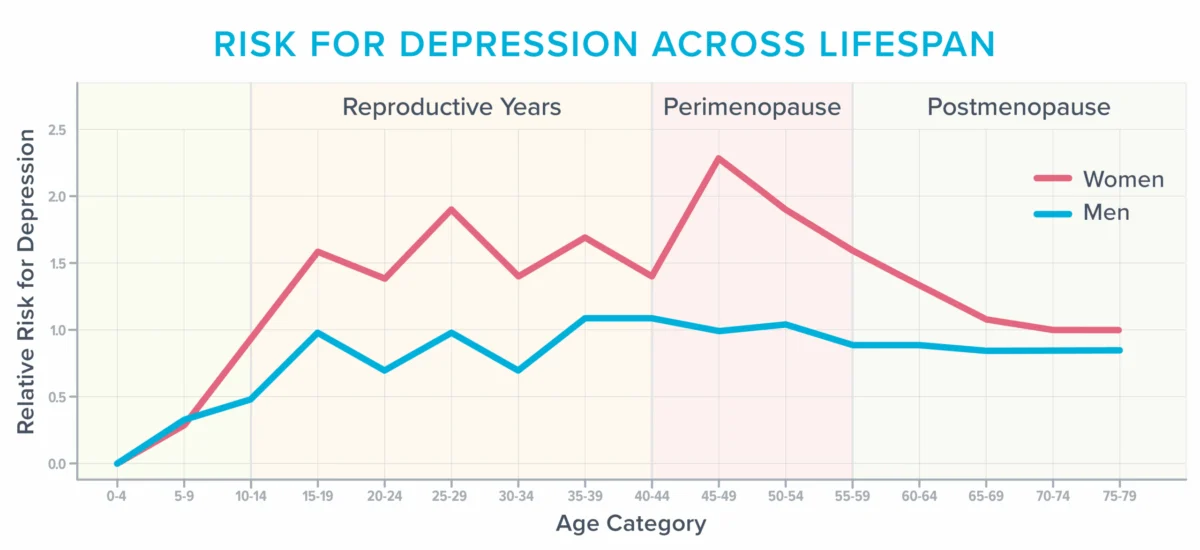
For many women in their late 40s and early 50s, the mental experience of midlife feels like a gradual descent into a thick, impenetrable haze. Simple tasks—recalling the name of a familiar restaurant, maintaining focus during a routine workday, or stringing together coherent sentences—become Herculean efforts. For some, this isn’t just "senior moments" or typical aging; it is a profound biological transition that often goes misdiagnosed for years.
As one woman recounted, "It was as if my thoughts were under a pile of garbage." This sentiment is shared by millions, yet the medical community has historically been slow to connect these cognitive symptoms to the hormonal shifts of menopause, often mislabeling them as generalized depression or burnout.
The Chronology of a Misdiagnosis
The journey for many women experiencing these symptoms follows a frustratingly similar arc. It often begins with subtle lapses in recall, followed by an increasing inability to sustain mental clarity throughout the workday.
The Search for Answers
Initially, many women seek medical intervention, only to find themselves caught in a cycle of "defensive medicine." When symptoms like fatigue, irritability, and cognitive fog are presented to primary care physicians, the standard clinical response is often to screen for depression or thyroid dysfunction.
One patient’s experience highlights the futility of this approach: after consulting three separate healthcare professionals, she was prescribed multiple antidepressants and sleep aids, all of which exacerbated her feeling of being "a zombie." It wasn’t until she brought up unrelated symptoms—specifically vaginal dryness—during a routine gynecological exam that the true nature of her condition was identified. Her gynecologist recognized the "brain fog" and energy crashes not as a primary mental health disorder, but as hallmark symptoms of the menopausal transition.
The Turning Point: Hormone Therapy
Upon starting a prescribed regimen of estradiol and progesterone, the change for many is swift and transformative. For those whose symptoms are driven by hormone depletion, the restoration of hormonal balance acts like a circuit breaker, suddenly allowing for sustained focus, restored sleep, and emotional stabilization.
The Biology of the "Hot Flash" Brain
For decades, hot flashes and night sweats were dismissed as minor inconveniences—socially embarrassing, perhaps, but medically benign. However, emerging research suggests that these "vasomotor symptoms" are indicators of deeper physiological changes that affect both the cardiovascular system and the brain.
Vasomotor Symptoms and Brain Health
During a hot flash, the body experiences a spike in norepinephrine and cortisol, accompanied by a surge in heart rate and blood pressure as the hypothalamus—the brain’s internal thermostat—attempts to regulate temperature.
New studies using MRI technology have identified a correlation between frequent hot flashes and "whole-brain white matter intensities." These patchy areas on the brain were once considered a normal byproduct of aging. Today, neuroscientists view them as markers of future risk, noting that individuals with a higher density of these lesions are statistically more prone to cognitive decline, dementia, and stroke.
The Sleep Connection
The cognitive impact is compounded by sleep fragmentation. Many women experience "night sweats" that wake them abruptly, even if they don’t recall the heat itself. These micro-awakenings prevent the brain from completing necessary restorative cycles, such as toxin clearance and memory consolidation. The result is an amygdala that becomes hyper-reactive, leading to the anxiety, irritability, and "rage" that many women report during this stage.
Supporting Data and Clinical Realities
The systemic failure to address these issues is rooted in a lack of specialized training. Surveys indicate that 80 percent of medical residents feel "barely comfortable" discussing menopause. Consequently, the medical field often leans on the PHQ-9 depression scale, which inadvertently captures menopausal symptoms like fatigue and sleep disturbances, leading to inaccurate diagnoses of clinical depression.

Re-evaluating Hormone Therapy (MHT)
The hesitation to prescribe Menopausal Hormone Therapy (MHT) is largely a holdover from outdated studies conducted in the early 2000s, which were later found to have significant limitations. Current clinical consensus—supported by experts like Dr. Jerrold H. Weinberg—suggests that for women under 60 who are within 10 years of menopause, the protective benefits regarding bone density and cognitive health often outweigh the risks.
Navigating the Path Forward: Strategies for Advocacy
To secure appropriate care, women must become their own best advocates. This begins with rigorous documentation.
- Track Everything: Utilize apps or journals to record sleep quality, the frequency and timing of vasomotor symptoms, and emotional fluctuations. This data allows a physician to move beyond subjective complaints to objective patterns.
- Seek Specialized Care: Look for practitioners certified by the Menopause Society (formerly NAMS). These professionals are trained to view menopause as a systemic transition rather than a simple reproductive change.
- Demand Shared Decision-Making: Use the medical appointment to discuss the specific risks and benefits of all interventions. Ask, "What does the current research say about my specific risk profile?"
Lifestyle Interventions for Cognitive Resilience
While medical intervention is often necessary, lifestyle strategies play a vital role in supporting the brain during this transition.
1. The Power of Fundamental Health
Nutrition, physical activity, and social connection remain the pillars of health. Prioritizing consistent sleep hygiene and stress management is essential when the body is already experiencing hormonal volatility.
2. Strategic Supplementation
Creatine monohydrate (5 to 7 grams daily) is gaining traction for its potential to support cognitive function and mitigate mental fatigue, particularly during periods of poor sleep.
3. Light Exposure and Circadian Health
Morning sunlight is a potent tool for resetting the internal clock. Regular exposure to natural light can improve sleep latency and help stabilize mood by regulating cortisol and serotonin levels.
4. Adjusting the Physical Load
The "go hard or go home" mentality of younger years may be counterproductive in middle age. Recovery takes longer, and excessive, high-intensity training can drive up cortisol levels. Integrating "Zone 2" training or gentle movement like yoga can provide the benefits of exercise without the added stress of overtraining.
5. Cognitive Behavioral Therapy (CBT)
CBT for Insomnia (CBT-I) is an evidence-based approach that helps address the behavioral and psychological patterns that contribute to sleep loss, providing a non-pharmacological path to better rest.
Implications: The "Hidden Opportunity"
While the cognitive and emotional toll of menopause is undeniable, viewing it solely as a decline misses a crucial point. For many, this stage of life serves as a mandatory, albeit difficult, period of recalibration. It forces a rigorous audit of one’s life.
The question, "Do I really need to be doing this?" is not merely a sign of cognitive fatigue; it is a catalyst for setting boundaries. Whether it means offloading professional responsibilities, simplifying domestic expectations, or re-prioritizing social connections, menopause provides a unique, biological impetus to stop "doing it all" and start focusing on what truly provides purpose.
The "fog" is a signal—not just that the body is changing, but that the life one has built may need to evolve alongside the biology. By combining modern medical advocacy with sustainable lifestyle shifts, women can move through this transition not just with their sanity intact, but with a renewed sense of clarity and autonomy.