







Published October 30, 2026
In the modern era, the human experience is increasingly defined by a relentless series of confrontations. Whether navigating the high-pressure demands of the workplace, the intricate dynamics of personal relationships, or the sensory overload of urban environments, we are constantly engaged in a push-and-pull with the world around us. When we lack the psychological and somatic tools to process these external stressors, our internal systems begin to contract.
This contraction—manifesting as physical tension, emotional withdrawal, and mental rigidity—is often so gradual that it mimics the slow, steady progression of aging. We rarely notice the tightening of the shoulders or the shallowing of the breath until the process is deeply ingrained. However, according to insights from the Yoga Journal archives, specifically an analysis of Uttanasana (Standing Forward Bend) originally published in 2001, this very contraction can serve as a profound vehicle for growth. By utilizing the “in-tense(ness)” of a pose, practitioners can learn to dismantle the distortions in their perception and view confrontation not as a threat, but as a necessary catalyst for evolution.
The Anatomy of Resistance: Understanding Uttanasana
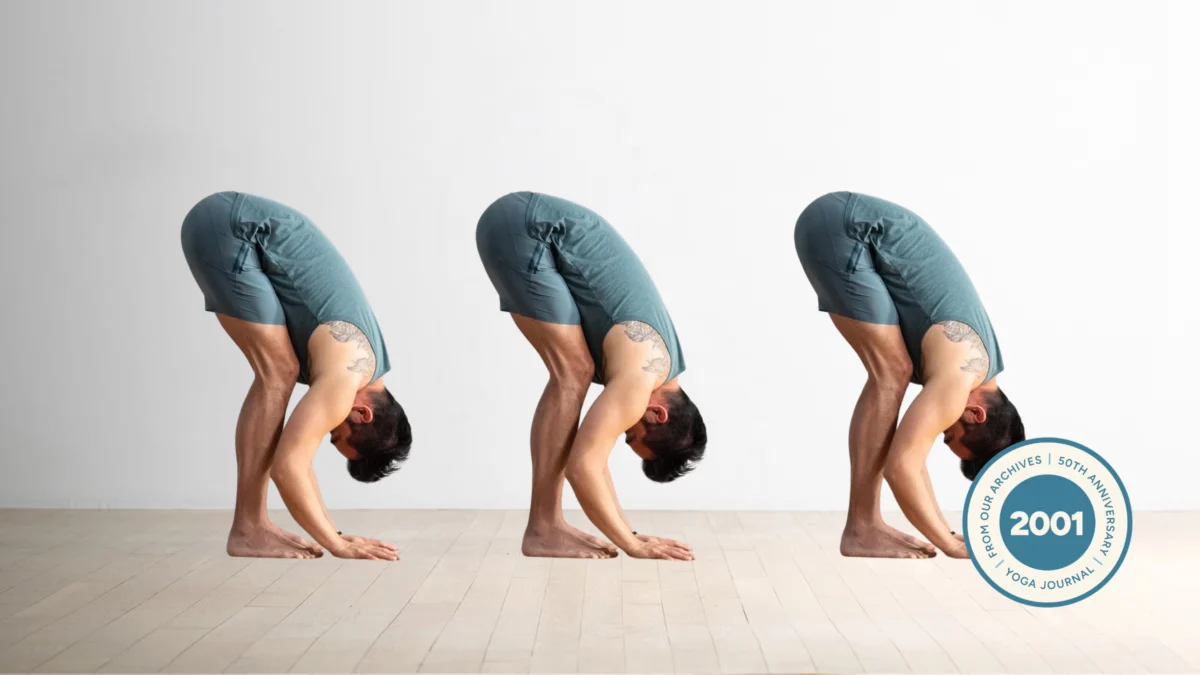
At its core, Uttanasana is more than a simple stretch for the hamstrings; it is a deliberate, confrontational journey into the dense matter of one’s own consciousness. The Sanskrit prefix ut signifies intensity, while the root implies a point of indicated deliberation. For the beginner, this pose is often the first true encounter with the "language of pain"—that sharp, demanding feedback loop that warns of potential injury or "overdoing."
Stiff practitioners often view this resistance as an insurmountable wall. However, the pedagogical philosophy behind Uttanasana suggests that this resistance is actually a map. By learning to work with the intensity rather than retreating from it, the practitioner begins to penetrate the "gaps" in their attention. When we are forced to sit with the discomfort of a tight hamstring or a locked hip, we are effectively being forced into an alert, present state. This is the crucible of the pose: the opportunity to observe the physical dynamics of stress in a controlled environment, eventually translating that physical awareness into mental resilience.
Chronology: A Step-by-Step Guide to Practice
Achieving the full expression of Uttanasana requires a systematic approach that prioritizes spinal health and mindful alignment over raw flexibility. The following progression, refined through decades of instructional practice, serves as a blueprint for safe and effective engagement.
1. Preparation and Warm-Up
For those practicing in the early morning, the body is naturally more rigid. Warming the spine is a prerequisite. A simple, low-impact method is to sit in a cross-legged position and fold forward gently, which acts as a "wake-up call" for the hips. For a more intensive release, some practitioners utilize heat, such as a focused shower on the lumbar region, to encourage blood flow to the connective tissues.
2. The Transition: Downward-Facing Dog
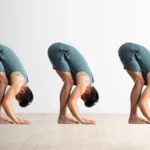
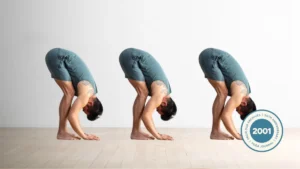
Transitioning from a seated position into Downward-Facing Dog serves two purposes: it elongates the posterior chain and begins the process of spinal decompression. From this inversion, the practitioner exhales to step or jump the feet forward. As the inhalation begins, one should slowly straighten the legs while keeping the hands rooted to the floor.
3. The Lift and the Press
As you gaze forward with the spine elongated, focus on the inhalation filling the back of the lungs. The goal is to allow the expansion of the ribcage to support the thoracic spine. Simultaneously, apply a downward pressure on the iliac crests (top of the hip bones). This creates a structural anchor.
4. The Descent and Release
Upon exhalation, release the weight of the head and shoulders entirely. Shift the hips slightly forward until the weight is balanced over the balls of the feet. A common mistake is to shift the weight back into the heels, which causes the toes to grip the floor in a protective, tension-filled reflex. To counter this, apply a firm downward pressure from the tops of the knees into the heels.
5. Final Alignment
Hands should rest beside or behind the feet with fingers pointing forward. If hamstrings are tight, palms may be placed on the shins. If the lower back is vulnerable, keeping the feet hip-width apart provides a wider, more stable base. The key is to avoid using the arms to force the spine deeper; instead, let the breath guide the descent, surrendering the weight of the spine on every exhalation.
Supporting Data: The Science of Sustained Practice
The efficacy of Uttanasana is supported by its dual impact on the physiological and nervous systems. While modern practitioners often focus on the muscular lengthening of the hamstrings and calves, the traditional benefits are far more holistic.
- Digestive Fire: By compressing the abdominal cavity, the pose stimulates the organs of digestion, aiding in metabolism and detoxification.
- Nervous System Regulation: The inversion aspect—where the head is below the heart—encourages a shift from the sympathetic nervous system (fight-or-flight) to the parasympathetic nervous system (rest-and-digest). This is particularly effective for those suffering from chronic mental fatigue.
- Cognitive Focus: The demand for constant weight distribution between the heels and the balls of the feet requires a high level of proprioceptive focus, effectively "training" the brain to remain present during intense physical sensation.
Official Responses and Expert Consensus
Over the years, the expert consensus on Uttanasana has shifted toward an emphasis on "passive persistence." Rather than viewing the pose as a battle to be won through brute force, teachers increasingly advocate for a "non-aggressive" approach.
Physical therapists and yoga educators alike warn against the "gripped diaphragm" phenomenon. When a student attempts to force their way into a deep fold, they often lock their core and hold their breath. This not only renders the pose ineffective but can lead to acute injury in the lower lumbar vertebrae. The official recommendation is clear: if the buttocks are tight and the breath is trapped, the nervous system remains in a state of high alert, and the physical benefits are negated. The pose is only as "advanced" as the practitioner’s ability to remain relaxed while the tissues are being challenged.
Implications for Modern Life
The implications of mastering Uttanasana extend well beyond the yoga mat. If we can learn to hold our ground, breathe through the discomfort, and maintain a calm, centered awareness while our body is in a state of intense physical challenge, we are essentially rehearsing for the inevitable confrontations of daily life.
By practicing the "intelligence of the fold," we develop the capacity to:
- Identify the onset of contraction: Recognize when we are physically bracing for a difficult conversation or a high-stress task.
- Utilize the breath as a regulator: Use rhythmic, deep inhalation to expand our capacity to hold space for others’ emotions or demands.
- Surrender without collapsing: Learn the difference between being "soft" (vulnerable and responsive) and being "collapsed" (defeated).
As one progresses, the initial "confrontation" of the pose begins to transform. The pain that once signaled a warning becomes a source of information. The resistance in the hamstrings becomes a marker of progress. Eventually, the pose serves as a mental touchstone, a place to return to when the world feels overwhelming, reminding us that with persistent, patient practice, even the most rigid parts of our internal selves can be softened, stretched, and ultimately integrated into a more intelligent, resilient whole.
In conclusion, Uttanasana remains a cornerstone of the yogic canon not because it is difficult, but because it is honest. It reflects the truth of the human condition: we are all under pressure, and we are all capable of opening up to that pressure if we approach it with the right tools. By integrating the physical mechanics of the pose with the mental discipline of conscious breathing, we move from a state of contraction to one of expansion, turning the "in-tense" experiences of our lives into the fuel for our own transformation.