









17 November, 2026
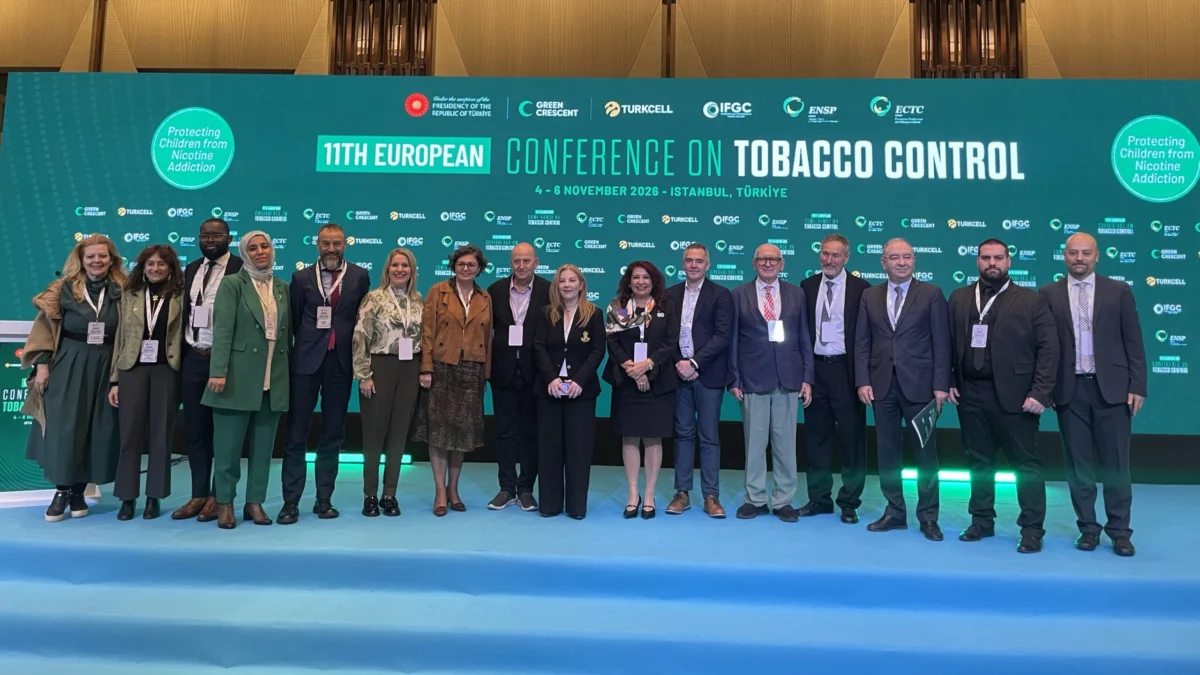
The historic city of Istanbul recently served as the epicenter for a critical global dialogue on public health. From across the continent, academics, medical professionals, policymakers, and civil society leaders converged for the 11th European Conference on Tobacco Control (ENSP-ECTC). Held under the prestigious auspices of the Presidency of the Republic of Türkiye, the event underscored a singular, urgent mission: safeguarding the youth of Europe from the rapidly evolving landscape of nicotine addiction.
At the heart of the proceedings were experts from the European Respiratory Society (ERS) Tobacco Control Committee (TCC), who played an integral role in shaping the conference agenda. As the tobacco industry continues to pivot toward novel delivery systems, the conference served as a clarion call for legislative reform and a unified medical front against what experts describe as a burgeoning public health emergency.
The Shifting Landscape: From Smoking to "Poly-Use"
The 11th ENSP-ECTC did not take place in a vacuum; it was convened against the sobering backdrop of rising e-cigarette prevalence among European adolescents. For decades, the tobacco control movement focused primarily on combustible cigarettes. Today, however, that paradigm has shifted.
Data presented at the conference by the World Health Organization (WHO) painted a harrowing picture: 14.3% of 13- to 15-year-olds in the WHO European Region currently use e-cigarettes—the highest rate recorded in any WHO region globally.
Perhaps more alarming than the prevalence is the evolution of consumption patterns. Speakers at the conference highlighted a transition from “dual use” (using two products) to “poly-use,” where adolescents are increasingly layering traditional cigarettes, e-cigarettes, nicotine pouches, and other novel nicotine-delivery systems simultaneously. This trend suggests that the industry is successfully capturing youth across multiple channels, creating a web of addiction that is increasingly difficult for public health officials to dismantle.
Chronology of the Summit: A Multi-Day Focus on Prevention
The conference was organized through a strategic partnership between the European Network for Smoking and Tobacco Prevention (ENSP) and the Green Crescent. The event was structured to bridge the gap between clinical research and high-level policy implementation.
Days 1–2: The Clinical Reality
The opening days were dedicated to exploring the biological impacts of the “new” nicotine market. Medical professionals shared longitudinal studies on how aerosolized nicotine and synthetic salts affect the developing lungs of adolescents. The focus was not merely on the known carcinogens of traditional smoke but on the neurological and physiological impacts of high-concentration nicotine, which remains the common denominator across all modern products.
Day 3: The Policy Pivot
The final day of the conference elevated the discourse to the political arena. In a significant show of support for the event’s objectives, the Vice President of the Republic of Türkiye, Cevdet Yılmaz, addressed the delegates. His presence underscored the Turkish government’s commitment to tobacco control and highlighted the importance of international cooperation in regulating transnational corporations.
The closing sessions focused on the legislative levers available to European nations, emphasizing that the speed of innovation in the tobacco industry currently outpaces the speed of the legislative process—a gap that policymakers are now desperate to close.
Key Symposiums: ERS and ENSP in Collaboration
A centerpiece of the conference was the joint symposium titled “Youth Nicotine Addiction: From Prevention to Protection.” Organized by the ERS and ENSP, the session was chaired by two leading voices in respiratory medicine: Prof. Arzu Yorgancıoğlu, ERS President-Elect, and Prof. Florin Dumitru Mihălțan, President of the Romanian Society of Pneumology.
The symposium served as a forum to debunk the industry-led narrative that these products represent a “harm reduction” strategy for the general population. Instead, the experts focused on the demographic most vulnerable to marketing tactics: children and teenagers.
The Medical Perspective: Beyond Addiction
In a separate symposium hosted by Contre-Feu (the French alliance against the tobacco industry), Dr. Maria Juusela, a member of the ERS Tobacco Control Committee, provided a detailed breakdown of the respiratory health risks associated with nicotine products. Her presentation was a sobering reminder that while addiction is the psychological outcome, the physical outcomes—chronic inflammation, reduced lung function, and unknown long-term pulmonary damage—are the true medical costs. Dr. Juusela stressed that the medical community must stop viewing nicotine as a "cleaner" alternative and start viewing it as a significant threat to respiratory health.
The Core Argument: Why Policy Must Evolve
The consensus among the experts in Istanbul was clear: the tobacco industry is no longer just selling cigarettes; it is selling a lifestyle of constant, pervasive nicotine intake.
Prof. Des Cox, a leading voice within the ERS, provided a stark assessment of the current state of affairs during the conference’s concluding panel:
“Young people in Europe are not giving up nicotine; they are switching to vapes and pouches, often using several at once. The products differ, but the molecule and the addiction are the same. The measures that protect children from cigarettes—from restricting flavors to controlling packaging and advertising—must apply to every nicotine product. The revision of the EU Tobacco Products and Tobacco Advertising Directives is the moment to put child protection at the centre of EU law, with rules that keep pace with whatever the industry brings to market next.”
Implications for EU Law and Global Tobacco Control
The implications of the 11th ENSP-ECTC are profound. As the European Union prepares for a critical revision of its Tobacco Products and Tobacco Advertising Directives, the evidence presented in Istanbul serves as a roadmap for legislators.
1. Closing the Regulatory Loophole
The primary implication for policymakers is the need to move away from product-specific regulation and toward "substance-based" regulation. If the EU treats all nicotine-containing products with the same strictness as combustible tobacco—banning characterizing flavors, enforcing plain packaging, and prohibiting youth-targeted advertising—the industry’s ability to "product-hop" will be severely curtailed.
2. The Challenge of Innovation
The conference highlighted that the industry is adept at staying one step ahead of the law. When one product is banned, a new, unregulated variant appears. Experts argued that future legislation must include "catch-all" clauses that allow regulators to act against new nicotine delivery systems without requiring a multi-year legislative process for each individual device.
3. A Call for Global Solidarity
The presence of international delegates reinforced that nicotine addiction is not a regional problem but a global one. The findings from Istanbul are expected to be carried forward to the next Conference of the Parties (COP) to the WHO Framework Convention on Tobacco Control (FCTC), providing a unified European stance on the necessity of stricter global standards.
Supporting Data: A Landscape of Concern
The data circulating at the conference underscores the urgency of these policy recommendations:
- 14.3% prevalence rate: The highest youth e-cigarette use in the world, concentrated in the WHO European Region.
- Poly-use trends: Increased reporting of adolescents utilizing multiple nicotine delivery systems simultaneously, leading to higher levels of nicotine dependency.
- The "Gateway" Effect: Clinical evidence presented at the conference suggests that the use of vapes and pouches is not acting as a cessation tool for youth, but as an initiation tool that leads to sustained nicotine dependence and, in many cases, a transition to combustible tobacco.
Conclusion: A Moral Imperative
The 11th European Conference on Tobacco Control was more than a professional gathering; it was a rallying point for those who view the protection of children as the highest priority in public health. By bringing together the clinical expertise of the European Respiratory Society and the policy advocacy of the ENSP, the summit provided a unified front against the tobacco industry’s latest encroachment.
As the delegates return to their respective nations, the message from Istanbul is resonant and clear: The tools to stop the nicotine epidemic exist, but they require the political will to act. With the EU’s legislative framework on the brink of significant revision, the work done in Istanbul may well determine the respiratory health of the next generation of Europeans. The time for reactive policy has ended; the era of proactive, comprehensive protection must begin.
To learn more about the ERS’s ongoing advocacy efforts and their work in combating the tobacco epidemic, visit the official ERS Tobacco Control Advocacy page.