









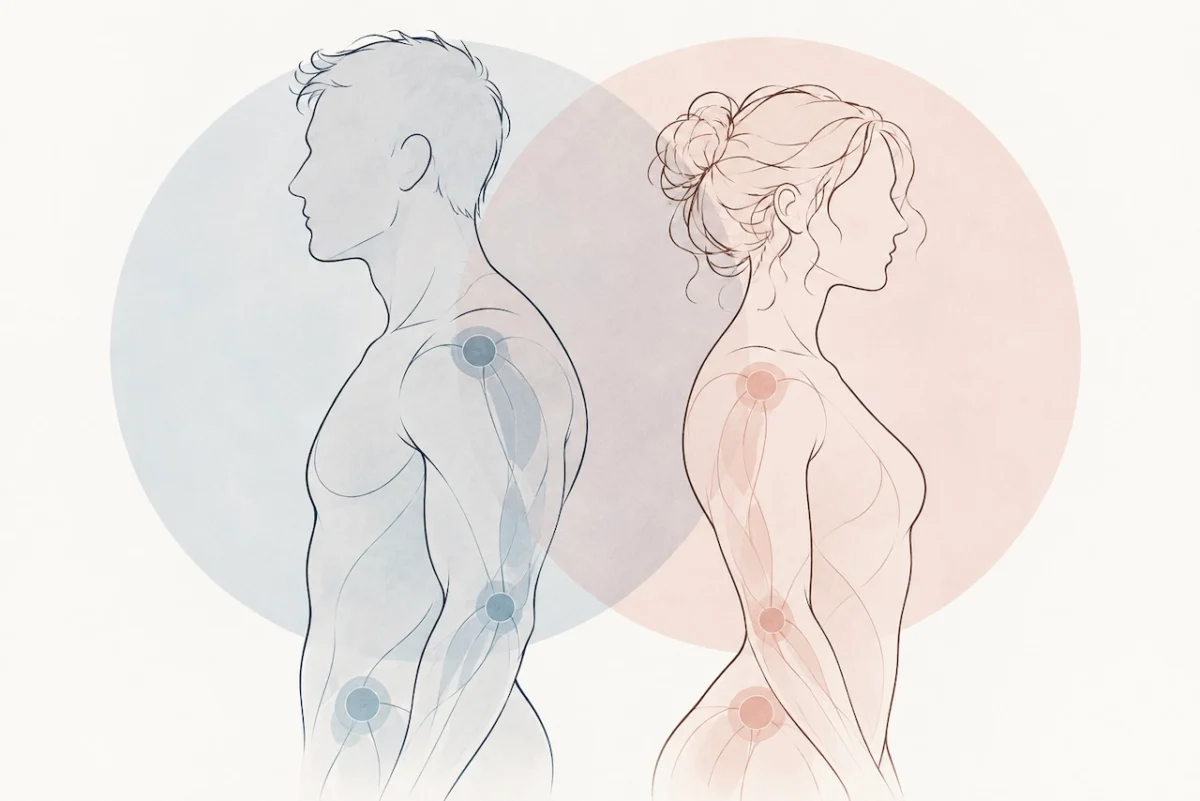
For decades, the clinical perception of Hypermobile Ehlers-Danlos syndrome (hEDS) and Hypermobility Spectrum Disorders (HSD) has been painted in a singular, gendered hue. Visit any support group or consult the existing literature, and you are met with a demographic overwhelmingly composed of women. This historical bias has created a "clinical blind spot," where men presenting with hypermobility-related pain are often overlooked, misdiagnosed, or dismissed entirely.
However, a groundbreaking 2026 study conducted by the Mayo Clinic’s EDS Clinic in Florida is challenging these long-held assumptions. By analyzing the health data of over 2,400 patients, researchers have provided the most granular look yet at how these systemic conditions manifest differently across biological sexes. The results suggest that while there is indeed a disparity in symptom burden, the "male experience" of hEDS and HSD is a distinct clinical reality that requires a paradigm shift in how we approach diagnosis and care.
Main Facts: The Anatomy of a Disparity
The study, which examined 2,451 patients between 2019 and 2025, reveals a stark demographic imbalance. Among those diagnosed with hEDS, only 9.4% were male, resulting in a 10:1 female-to-male ratio. In the broader category of HSD, this gap widened to nearly 20:1.
While the autosomal dominant inheritance pattern of hEDS suggests that men and women should be affected in roughly equal numbers, the clinical data tells a different story. The researchers posit that this imbalance is driven by "disease burden"—the total cumulative weight of symptoms, comorbidities, and systemic dysfunction. Because women often report a higher frequency and intensity of symptoms, they may be more likely to pursue clinical intervention, thereby skewing the recorded prevalence in medical databases.
Chronology: A Multi-Year Deep Dive
The research project represents a multi-year effort to standardize data collection for a notoriously complex group of disorders.
- 2019–2025: The Mayo Clinic’s Florida EDS Clinic implemented a standardized intake questionnaire, capturing data on 122 distinct symptoms and comorbidities. This phase was critical for building a dataset large enough to move beyond anecdotal evidence.
- Early 2026: Researchers compiled the data, categorized by sex, to identify statistically significant differences in symptom presentation.
- October 2026: The study was released as a preprint, sparking a conversation within the medical community regarding the diagnostic criteria and the necessity of gender-specific clinical guidelines.
While the study remains a preprint—awaiting the final seal of peer review—the scale of the sample size provides a robust foundation for what is arguably the most significant investigation into sex-based differences in connective tissue disorders to date.
Supporting Data: Symptom Profiles and Sex Differences
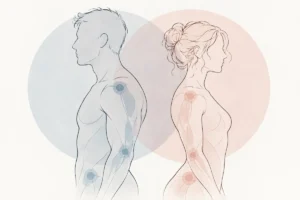
The study utilized a 122-point diagnostic matrix to map the patient experience. The findings indicate that while men and women share many core struggles—such as chronic pain, fatigue, and joint instability—the "symptom architecture" differs significantly.
Neurological and Gastrointestinal Trends
Women consistently reported higher frequencies of neurological and gastrointestinal dysfunction. Migraines, vertigo, brain fog, nausea, and vomiting were notably more prevalent in female cohorts. This trend suggests that hormonal and physiological differences may play a role in how the body’s autonomic nervous system reacts to the underlying connective tissue pathology.
The Mast Cell Factor
Perhaps the most intriguing finding involves mast cell activation. Researchers developed a "mast cell score" based on 11 categories of allergic and immune-related symptoms. In patients with HSD, women showed significantly higher mast cell activity than their male counterparts. This suggests that in HSD, immune-mediated systemic inflammation may be a primary driver of the increased symptom burden in women. Conversely, in hEDS, mast cell activity was more evenly distributed, suggesting that the genetic mechanisms underlying hEDS may be more uniform across sexes, even if the clinical presentation remains skewed.
The "Male" Presentation
The study identified only five categories where men reported higher symptom prevalence: ADHD, developmental delays, autism spectrum disorder, snoring, and obstructive sleep apnea. Crucially, these conditions are already known to occur more frequently in the general male population, suggesting that these findings are consistent with broader epidemiological trends rather than being unique to the pathology of hEDS or HSD.
Official Responses and Clinical Perspectives
The medical community has long acknowledged the "diagnostic odyssey" faced by EDS patients, but this study provides the first quantitative evidence that the odyssey is likely even more arduous for men.
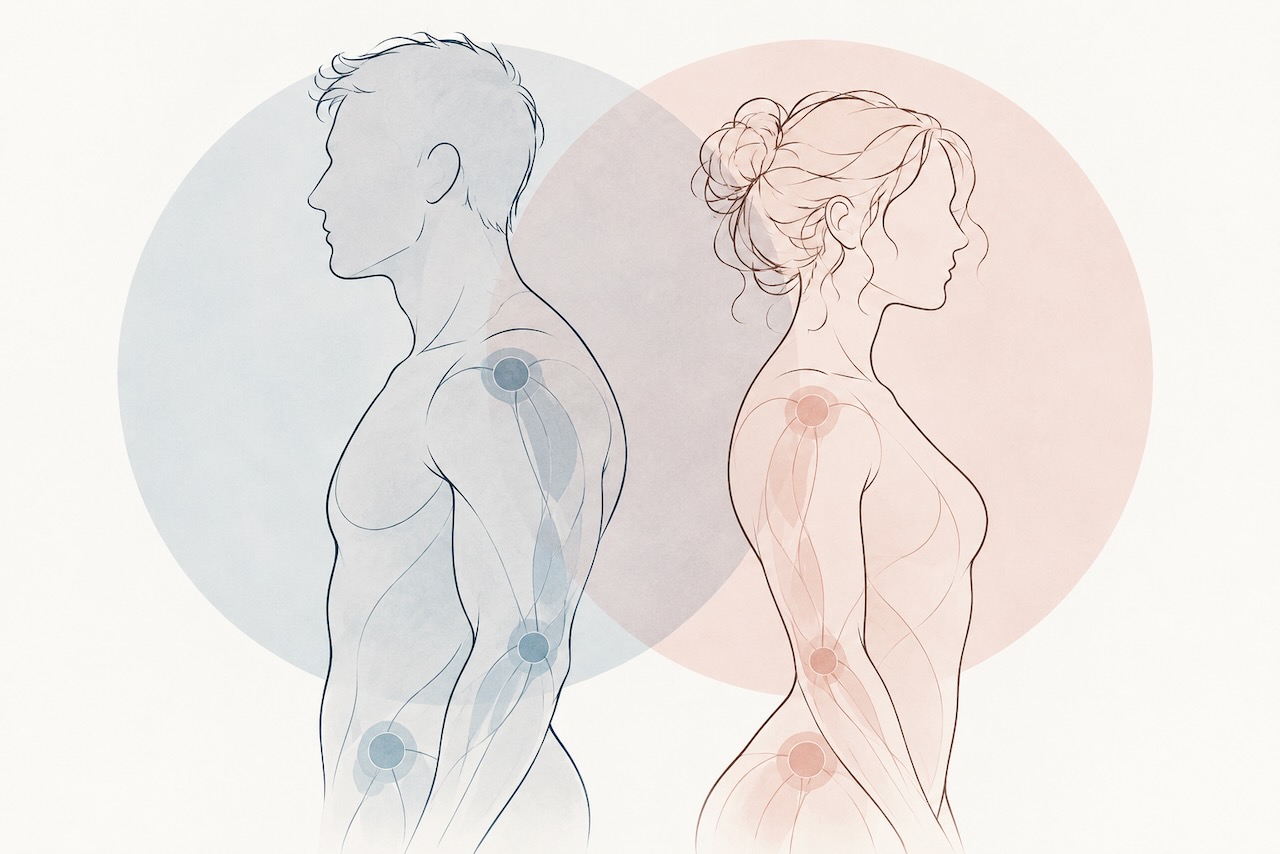
Medical experts associated with the research emphasize that a lower symptom burden in men does not equate to a lower quality of life. Instead, it represents a "different pattern of suffering." For instance, a male patient may not report the same frequency of GI issues as a female patient, but his manifestation of chronic pain or sleep-disordered breathing might be just as disabling.
Dr. Jacqueline Moltzau Anderson, the study’s lead researcher, notes that the current diagnostic criteria may be inadvertently "tuned" to the female presentation. "When a condition is framed as a ‘women’s disease,’ clinicians—consciously or unconsciously—look for the female pattern," she explains. "By expanding our understanding of how these conditions manifest in men, we can reduce the time to diagnosis for a cohort that has been effectively invisible for decades."
Implications for Future Care
The implications of this research are far-reaching, touching on everything from patient advocacy to clinical training.
1. Redefining Diagnostic Criteria
If the current criteria for hEDS are skewed toward female symptom profiles, there is a risk that men are being misclassified into the broader HSD category or left undiagnosed entirely. The study highlights the need for sex-stratified diagnostic tools that account for the different ways systemic dysfunction manifests in the male body.
2. Targeted Screenings for Men
Clinicians should be trained to look for hypermobility in men who present with "atypical" combinations of symptoms, such as sleep apnea paired with unexplained joint pain, or neurodevelopmental disorders (ADHD/Autism) accompanied by a history of recurring orthopedic injuries.
3. Addressing the "Testosterone Hypothesis"
The researchers touched upon the potential protective effect of testosterone on joint stability. While this may explain part of the symptom gap, the study proves that it is an incomplete explanation. The presence of systemic symptoms—neurological and gastrointestinal—that occur regardless of muscle mass suggests that the pathology is deeper than simple joint laxity. Future research must look at the intersection of connective tissue integrity and hormone-regulated inflammation.
4. A Call for Inclusivity in Support Networks
Support groups and clinical resources must evolve to acknowledge the male experience. By validating that men suffer from these conditions, we can foster an environment where male patients feel comfortable seeking help, rather than feeling like outliers in a female-centric health space.
Conclusion: A New Framework for Advocacy
The 2026 Mayo Clinic study serves as a critical wake-up call. hEDS and HSD are not, and have never been, exclusively "women’s diseases." They are complex, systemic, and multi-faceted disorders that cross all biological boundaries.
For the thousands of men who have spent years navigating unexplained pain, this study offers long-awaited validation. It provides a scientific framework for clinicians to move beyond the narrow, gendered stereotypes that have hindered progress for so long. As we look toward the future of EDS/HSD research, the goal is clear: to ensure that every patient, regardless of sex, is accurately identified, understood, and provided with the comprehensive care they deserve.
By deconstructing the gender bias in our medical literature, we aren’t just improving data; we are improving lives. The path forward requires a more nuanced, inclusive, and rigorous approach—one that recognizes that while the patterns of suffering may differ, the need for empathy, recognition, and medical excellence is universal.